English
 For Schools
 For Homeschool

A Tiger's Tale from the Sundarbans
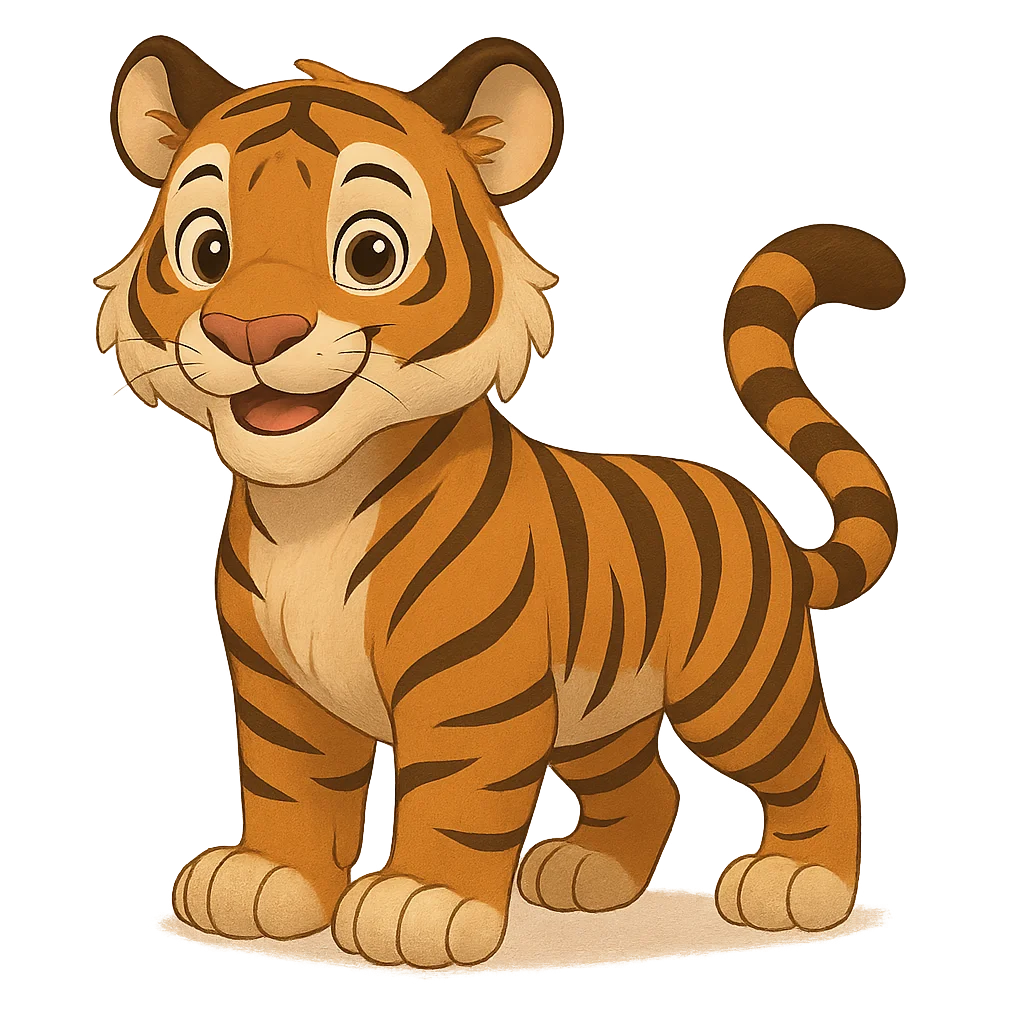
I want to tell you my story. My name is stripes, roar, and shadow, but you can call me a Bengal Tiger. I was born around 2015, one of three cubs, hidden away in a dense thicket in the Sundarbans mangrove forest. This unique forest, a tangled maze of roots and waterways, is a World Heritage Site and one of the last great wild places on Earth. For the first few weeks, my world was just the warmth of my siblings and the sound of my mother’s steady heartbeat. When I finally opened my eyes, I saw the incredible world of tangled roots and shimmering water that was my home. The air was thick with the scent of salt and earth, and the sounds of the forest were a constant chorus of birds, insects, and rustling leaves. This was a place unlike any other, and it was the only home I had ever known.
Growing up was a grand adventure, and the Sundarbans was our classroom. My mother was our wise and patient teacher, showing us everything we needed to know to survive. She taught us the art of stealth, how to move silently through the landscape, using our striped coats as perfect camouflage to blend into the tall grasses and the dappled sunlight filtering through the mangrove leaves. We learned to listen for the almost silent snap of a twig that meant a chital deer, one of our main sources of food, was nearby. One of the most important lessons in the Sundarbans was learning to swim. Unlike many other cats, we tigers are powerful swimmers. Navigating the tidal rivers was a skill we had to master not only to hunt but also to travel between the many islands that make up our territory. I remember the feel of the cool water and the strength in my limbs as I learned to paddle across the currents, following my mother’s lead.
When I was about two years old, the time came for me to leave my family and find my own territory. This was a lonely but necessary journey, a natural part of a tiger’s life. A tiger needs a lot of space to hunt and thrive, and I had to establish a domain of my own. I learned to mark my territory by leaving my scent on trees and making deep scratches in their trunks with my claws. These marks were a clear message to other tigers, a sign that this land was mine and that I was the dominant predator here. As an apex predator, I stand at the top of the food chain, and my role is crucial for the health of my environment. By hunting animals like wild boar and deer, I help keep their populations in balance. This ensures that the vegetation isn't overeaten, which keeps the forest healthy for every creature living in it.
For a long time, my kind was in great danger. Across the world, our forest homes were shrinking as human settlements expanded, and ruthless hunters, called poachers, threatened our very existence. Our numbers dropped to dangerously low levels. But then, something amazing happened. People began to understand that our world would be a poorer, less vibrant place without us. In India, a groundbreaking conservation program called Project Tiger was launched on April 1st, 1973. This project created protected parks and wildlife sanctuaries where we could live safely. It also funded brave patrols who worked tirelessly to stop poachers. It was a promise from humans to help us, a commitment to our survival, and it gave my species a fighting chance to recover.
Because of dedicated efforts like Project Tiger and the hard work of many conservationists and scientists, our numbers have slowly started to grow again. My story, and the story of my species, is still being written. I am more than just a big cat; I am what is known as a keystone species. My presence is a sign that the forest is healthy and thriving. When you protect me, you protect the entire ecosystem—the winding rivers, the dense mangrove trees, the graceful deer, and all the other creatures who share my home. I am a symbol of nature's power and resilience. My roar echoes through the mangroves, a reminder that the wild places of this world are precious and worth fighting for.
Activities
Take a Quiz
Test what you learned with a fun quiz!
Get creative with colors!
Print a coloring book page of this topic.