
 English
 For Schools
 For Homeschool

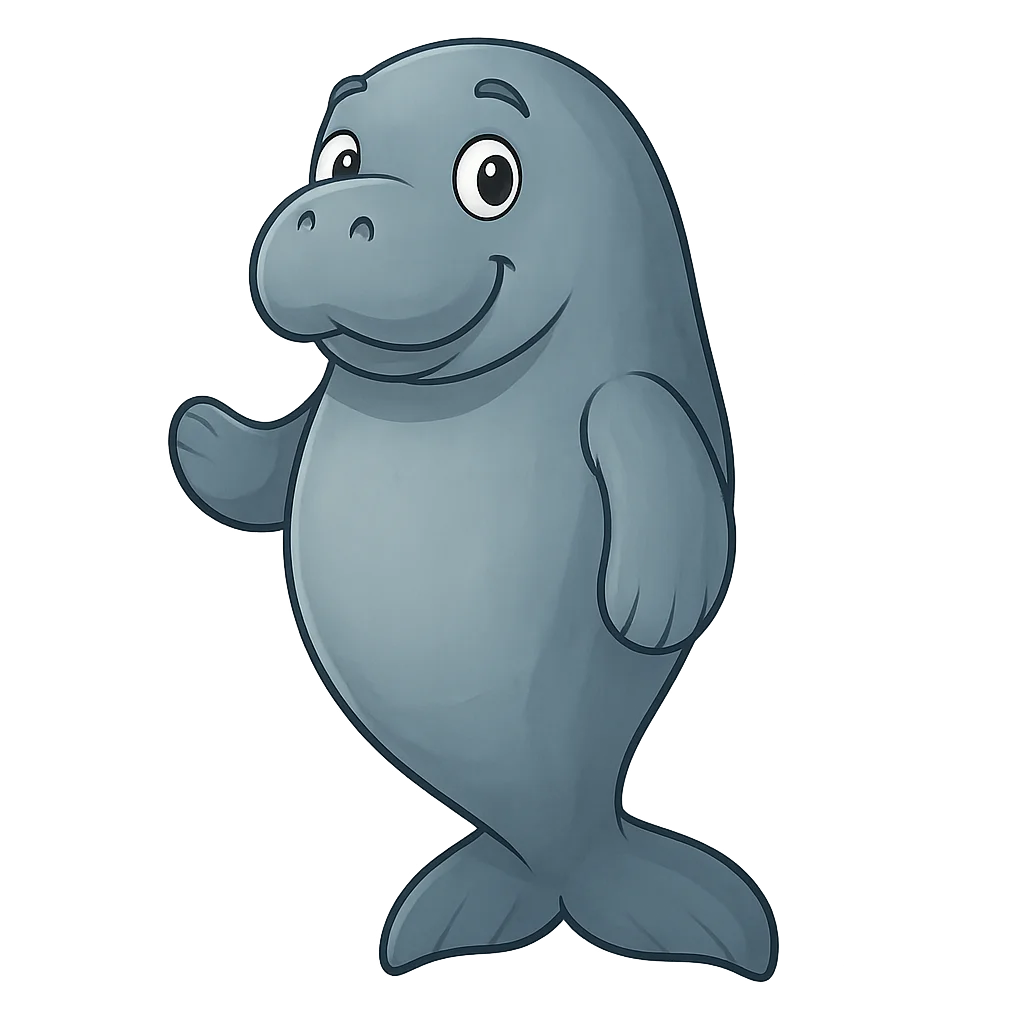
A Dugong's Tale: The Gardener of the Sea
Hello, my name is Dugong, and I am one of the gentle giants of the ocean. Many people call me a 'sea cow' because of my slow, peaceful nature and my love for grazing on underwater plants. My home is in the warm, shallow coastal waters of the Indo-Pacific, where the sun filters down to the sandy bottom. I am a large marine mammal with a body that is perfectly suited for life underwater. I have a powerful, whale-like tail that helps me glide through the water and a unique, bristly snout designed for munching on my favorite food, seagrass. My kind has been swimming in these oceans for millions of years, exploring the seagrass meadows that have sustained us for generations. Although we are an ancient species, it was in 1776 that scientists officially described us and gave us our scientific name.
My days are spent tending to my underwater garden. My diet consists almost entirely of seagrass, and I spend a great deal of my time grazing along the ocean floor. My unique eating technique involves uprooting seagrass while grazing, a behavior known as "cultivation grazing," which can promote the growth of certain seagrass species by creating space for new growth. By clearing patches and turning over the sediment, I encourage new growth and keep the meadows healthy, much like a gardener tends to a lawn. This process is vital because healthy seagrass meadows provide food and shelter for countless other sea creatures, from tiny fish to large sea turtles. To navigate my underwater world, I rely on my keen senses. Although my eyesight isn't the best, my hearing is excellent, and the sensitive bristles on my snout help me find food. Like all marine mammals, I cannot breathe underwater, so I must surface for air every few minutes before diving back down to my peaceful garden.
My family, the Dugongidae, has a long and fascinating history, but today, I am the only living member. I once had a much larger cousin who lived in the cold waters of the North Pacific: the Steller's Sea Cow. This incredible animal was discovered by scientists in 1741. Tragically, within just a few decades, it disappeared forever, with the last one seen around 1768. Their story is a sad reminder of how fragile life can be. On a lighter note, my ancestors have also sparked a bit of folklore. For centuries, sailors on long sea voyages would sometimes spot us from their ships. With our human-like way of nursing our young and our graceful movements, it’s said they might have mistaken us for mermaids, creating legends that have been told for generations.
While my ancestors swam in relatively safe waters, my life today is filled with modern challenges. The busy coastal areas I call home are now crowded with boats, and I have to be careful to avoid being struck. Fishing nets also pose a serious threat, as I can become tangled in them while searching for food. However, the greatest danger I face is the loss of my food source. The delicate seagrass meadows are being damaged by pollution from cities and farms, as well as coastal development that destroys my habitat. The impact of these threats is very real. In 2022, it was announced that my relatives who lived in the waters of China are now considered functionally extinct. This heartbreaking news shows just how critical it is to protect our ocean homes before it's too late.
Despite these challenges, I remain a symbol of hope for the ocean's future. I am important for seagrass ecosystem health but am not typically classified as a keystone species, which means my role as a sea gardener is essential for keeping the entire coastal ecosystem in balance. When my seagrass meadows are healthy, the whole neighborhood of sea creatures thrives. Fortunately, people began to realize our importance, and significant legal protections for dugongs were established in 1988. Marine parks have been created to provide safe havens, and new laws are in place to protect us from harm. My kind can live for up to 70 years, and my life is a long and quiet journey. My story is a reminder that protecting our seagrass homes is not just about saving one animal; it’s about preserving the health and wonder of the entire ocean world that we all depend on.
Activities
Take a Quiz
Test what you learned with a fun quiz!
Get creative with colors!
Print a coloring book page of this topic.