English
 For Schools
 For Homeschool

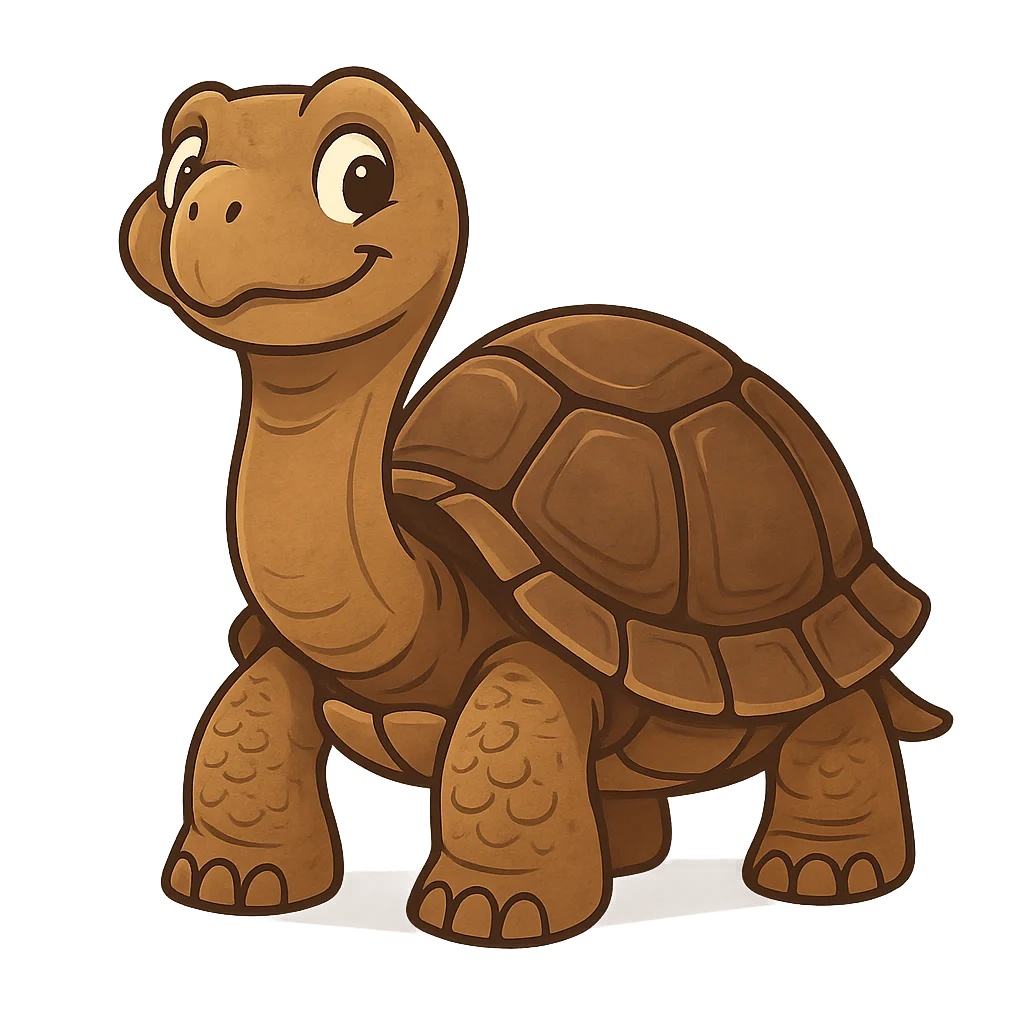
A Tortoise's Tale from the Galápagos
Hello! I am a Galápagos Tortoise, and I want to tell you my story. My life began as a small egg, buried carefully in the warm volcanic soil of my island home. When I finally hatched, the world was full of new sounds and the bright, warm sunshine felt wonderful on my skin. My shell, which started out very small, was already my cozy, protective home. It's a special house that I would carry with me for my entire, very long life.
My days are very peaceful and I never rush. I am an herbivore, which is a scientific way of saying I love to eat plants. My favorite meals are the juicy pads of cacti, sweet fruits I find on the ground, and fresh green leaves. I move very slowly across the land to save my energy, and this is one of the secrets to my long life. Some of my relatives have lived for more than 150 years. My ancestors first arrived on these islands millions of years ago, floating on the ocean currents, and we have been enjoying the sunshine here ever since.
The Galápagos Islands are a chain of many islands, and each one is a little different from the next. Because of this, my cousins on other islands don't look exactly like me. On islands where food grows low to the ground, the tortoises have rounded, dome-shaped shells that protect them well. But on islands with tall cacti, the tortoises have shells that curve up in the front, shaped just like a saddle. This special 'saddleback' shape is amazing because it lets them stretch their long necks up high to reach their food. We are a perfect example of how animals adapt, or change over time, to fit into their unique homes.
For a very long time, it was just us animals living peacefully on these islands. But then, tall ships began to appear on the horizon. During the 1600s and 1700s, pirates and whalers visited our islands. Sadly for us, they saw my kind as an easy source of food because we are so slow. It was a very difficult and dangerous time for my species. Then, on September 15th, 1835, a different kind of visitor arrived. His name was Charles Darwin, and he was a young scientist. He was not there to harm us; he was curious about everything. He observed Galápagos tortoises and noted differences in their shell shapes but did not spend extensive time measuring them or fully recognize their significance during his visit. The things he learned from my family helped him form his great idea about how all living things change over time, which he later called the theory of evolution. His observations in the Galápagos Islands, along with research from other regions during his voyage, significantly influenced the development of his theory of evolution.
Because of the hunting in those years, and because new animals like goats and rats were brought to our islands and ate our food and eggs, our numbers became very small. Some of my relatives on other islands disappeared completely and became extinct. But then, people realized we needed protection before it was too late. In 1959, our home was officially protected and became the Galápagos National Park. Scientists started working hard to protect our nests from harm. They even began raising baby tortoises in safe places until they were big enough to survive on their own in the wild. It was a hopeful time that showed people could help undo the damage that was done.
Today, I still wander my island, munching on plants and soaking up the warm sun, just as my ancestors did. I am a living piece of our planet's long history. By eating fruits, I carry their seeds to new places in my travels, which helps new plants to grow and keeps my island home healthy and green. My kind also helped a curious scientist understand the great story of life on Earth. We are a slow, steady, and strong reminder that every animal has an important role to play in its home and that it's up to everyone to protect our world's special places.
Activities
Take a Quiz
Test what you learned with a fun quiz!
Get creative with colors!
Print a coloring book page of this topic.