
 English
 For Schools
 For Homeschool

A Wolf's Song for the Wild
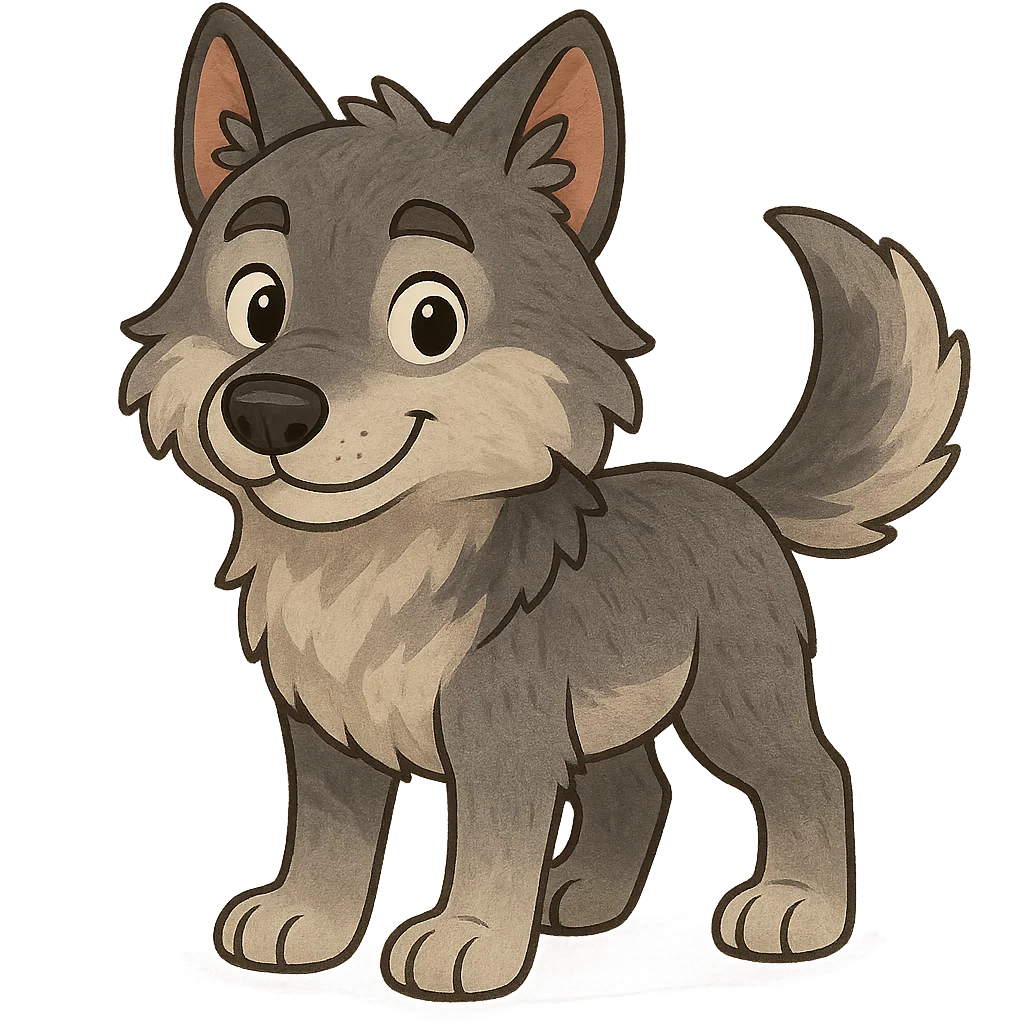
Hello. My name is not one you would know, but my voice is one you might recognize in the deep woods. I am a gray wolf, and my story is woven into the fabric of the wild lands of North America. I was born in a cozy den dug deep into the earth, one of several pups in my litter. When I first opened my eyes, the world was a blurry mix of my fuzzy siblings and the comforting warmth of my mother. We were a pack, a family, led by my parents, the alpha pair. They were our guides and protectors, teaching us the ways of the world. My earliest days were filled with play-fighting, tumbling over my brothers and sisters in mock battles that taught us strength and agility. We didn't use words, but we had a rich language of our own. I learned the meaning of a soft yip, a low growl, and the subtle flick of an ear. The most important lesson, however, came not as a sound, but as a feeling. It was the first time I lifted my small head to the sky and joined the beautiful, haunting chorus of the pack howl, a song that declared our unity and our place in the world.
As I grew, my lessons shifted from play to survival. It was time for me to learn the ways of the hunt. I remember the thrill and nervousness that coursed through me as I followed the older wolves on my first expedition. The air was crisp, and every scent told a story. I learned that hunting was not about brute force, but about incredible teamwork and strategy. Our pack moved like a single organism, using signals and coordination to track our prey. We specialized in hunting large animals like elk, which required patience, intelligence, and the combined strength of every member. My body was perfectly built for this life. My keen nose could detect the scent of prey from over a mile away, guiding us through dense forests. My powerful legs were designed for long, endurance-running chases that could wear down even the strongest elk. And my strong jaws were the tools that ensured our pack would be fed. These hunts were not just about food; they were a ritual that reinforced our bonds and our role in the ecosystem.
When I was around two years old, a powerful instinct began to stir within me. It was a deep, ancient call that told me it was time to leave my birth pack. This journey, known as dispersal, is one that many young wolves undertake to find a mate and establish a territory of their own. Leaving the safety and familiarity of my family was the greatest challenge I had ever faced. Traveling alone through vast, unknown lands, I relied on every lesson I had ever learned. During those long, solitary travels, I often thought of my ancestors. For thousands of years, they had roamed freely across extensive regions of the Northern Hemisphere, including North America, Europe, and Asia, but not the entire hemisphere. But their world changed dramatically during the 1900s. As humans expanded their towns and cities, our habitats shrank, and our numbers were greatly reduced. My journey was not just a personal quest; it was a testament to the resilience of my kind, a step toward reclaiming a piece of our ancestral world.
My personal journey is part of a much larger, more incredible story: the great return of the gray wolf. Just before I was born, a historic event took place that changed the future for my species. On January 12th, 1995, after being absent for decades, wolves were brought back to Yellowstone National Park. This reintroduction was more than just returning an animal to its home; it set off an amazing chain of events that scientists call a 'trophic cascade.' For years, the elk herds in Yellowstone had grown large without a major predator to keep them in check. They ate the young willow and aspen trees along the rivers, leaving the banks bare. When my kind returned, we began to hunt the elk, which naturally kept their herds moving and their numbers in balance. With the elk no longer overgrazing, the willows and aspens grew tall and strong again. This simple change had a ripple effect. The returning trees provided food and building materials for beavers. The beavers built dams, creating ponds and wetlands that became new homes for fish, songbirds, and insects. By playing our natural role, we helped heal the entire landscape, proving that every piece of the wild puzzle is connected.
Today, I am the leader of my own pack, carrying on the legacy of my parents and my ancestors. I have found a mate, and together we raise our pups, teaching them the language of the pack and the lessons of the hunt. My role in this world is that of a keystone species, which means that my presence is vital to holding the entire ecosystem together. The life of a wolf in the wild is often short, averaging around 6 to 8 years, but every moment is spent contributing to the health of the forest. We ensure that the herds of elk and deer are strong by preying on the weak and the sick, and our presence ripples through the environment, supporting countless other species. My story is a living part of the wild. When you hear my howl echoing through the mountains, know that it is more than just a sound. It is a song of balance, a celebration of resilience, and a promise that the wild is strong and thriving.
Activities
Take a Quiz
Test what you learned with a fun quiz!
Get creative with colors!
Print a coloring book page of this topic.