English
 For Schools
 For Homeschool

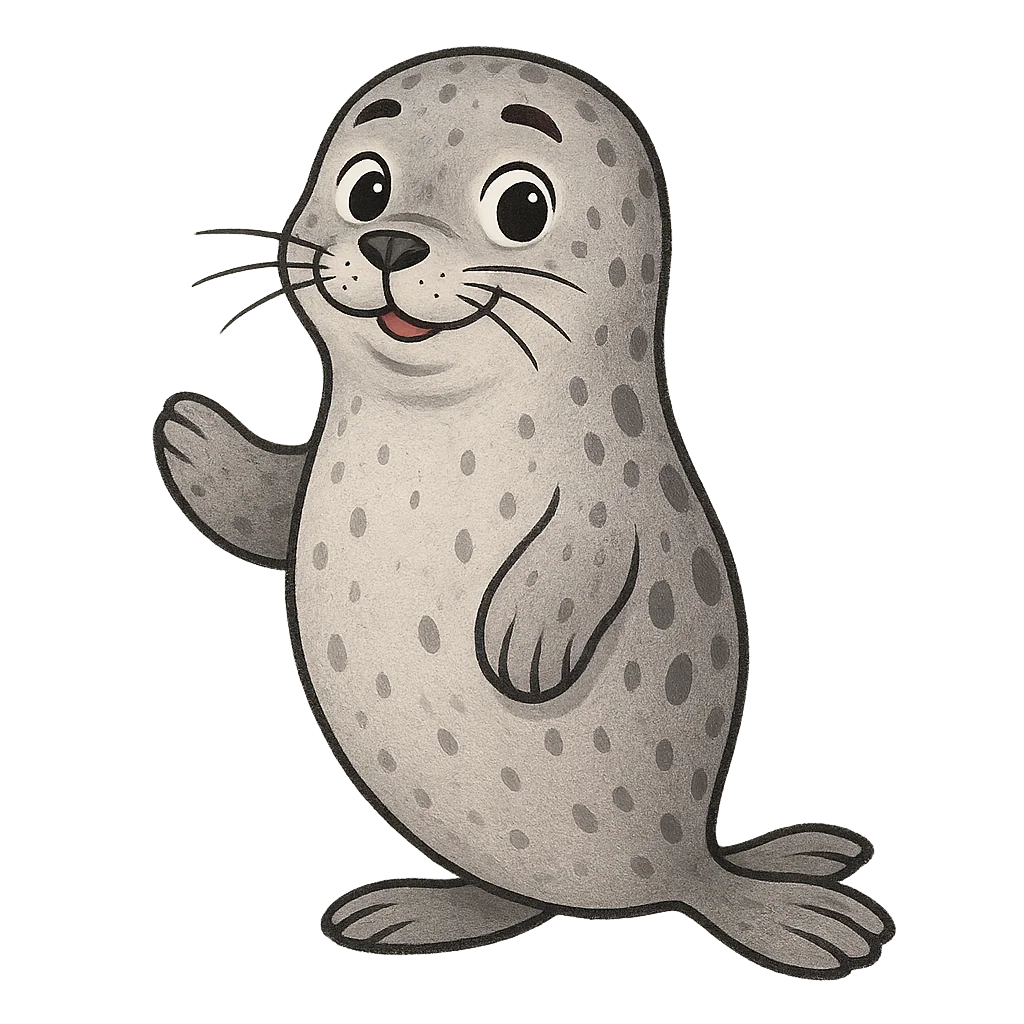
A Harbor Seal's Story
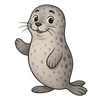
Hello there. My name is Phoca vitulina, which is the scientific name given to my kind by the human scientist Carl Linnaeus all the way back in 1758. But you can just call me a harbor seal. My story began on a rocky shore in the North Atlantic one spring. I was born with a spotted coat, a unique pattern that was all my own, like a fingerprint. Harbor seal pups are typically born with a spotted coat, but some may have a white or gray lanugo that is shed shortly after birth. The world was cold, but my mother’s milk was incredibly rich and fatty. It helped me quickly build a thick layer of blubber, which is like wearing a warm, insulated coat all the time. It’s essential for staying comfortable in the chilly ocean waters. I was a bit wobbly on my flippers at first, but I was a fast learner. Within just a few hours of being born, I followed my mother into the waves for my very first swim. The water felt like home almost immediately.
My mother was my most important teacher during the first month of my life. I stayed very close to her, watching and learning everything I needed to know to survive. She showed me how to hunt for delicious fish like herring and sand lance, which became my favorite foods. One of the most critical lessons was how to hold my breath. With practice, I learned that we harbor seals can stay underwater for up to 30 minutes on a single breath. This allows us to dive deep into the ocean, sometimes to depths exceeding 1,500 feet, but we typically dive to depths less than 300 feet, to chase after a meal. I also discovered the amazing power of my whiskers. They are called vibrissae, and they are incredibly sensitive. They can feel the slightest vibrations in the water, which helps me track the movement of a fish even when it’s too dark to see. It’s a bit like being able to see with my face.
I have always lived a life between two different worlds: the land and the sea. When I am in the water, I feel graceful and powerful. My strong hind flippers propel me through the currents with speed and agility, making me an excellent swimmer. But on land, it’s a different story. I am much more clumsy, and I have to wiggle along on my belly to get around. Despite this, the land is just as important to me as the ocean. My seal friends and I love to gather on the shore in large groups. This behavior is called 'hauling-out.' It’s our time to rest, soak up the warmth of the sun, and socialize. We also keep a watchful eye out for predators like orcas and great white sharks. While we rest, we communicate with each other using a special language of grunts and growls, keeping our colony connected.
Life in the coastal waters has not always been peaceful for my ancestors. During the 19th and early 20th centuries, humans hunted my kind, and our populations became dangerously low. It was a difficult time for harbor seals. Today, the threats have changed, but they are still present. Pollution can make the water murky and unsafe, and we have to be careful to avoid getting tangled in old fishing nets that have been left behind. However, there has also been a great deal of hope. A story passed down through generations of my family is about a law that was created in the United States called the Marine Mammal Protection Act of 1972. This act was a promise from humans to protect us and other marine mammals. It has made a significant difference, and because of it, our numbers have been able to recover in many places.
My kind typically lives for about 20 to 30 years, and I spend my days playing an important role in my ecosystem. As a predator, I hunt fish, which helps to keep their populations in balance. At the same time, I am also prey for larger animals, making me a vital link in the ocean's vast food chain. The presence of a healthy harbor seal population is often a sign that the coastal environment is thriving. When humans work to keep the oceans clean and protect our shores, they are not just helping us. They are helping to ensure that my pups, and all the generations that follow, will have a safe place to rest, hunt, and raise their own families. We are all connected, from the smallest fish to the largest whale, by the constant and gentle rhythm of the tides.
Activities
Take a Quiz
Test what you learned with a fun quiz!
Get creative with colors!
Print a coloring book page of this topic.