English
 For Schools
 For Homeschool

Guardian of the Nile: My Story
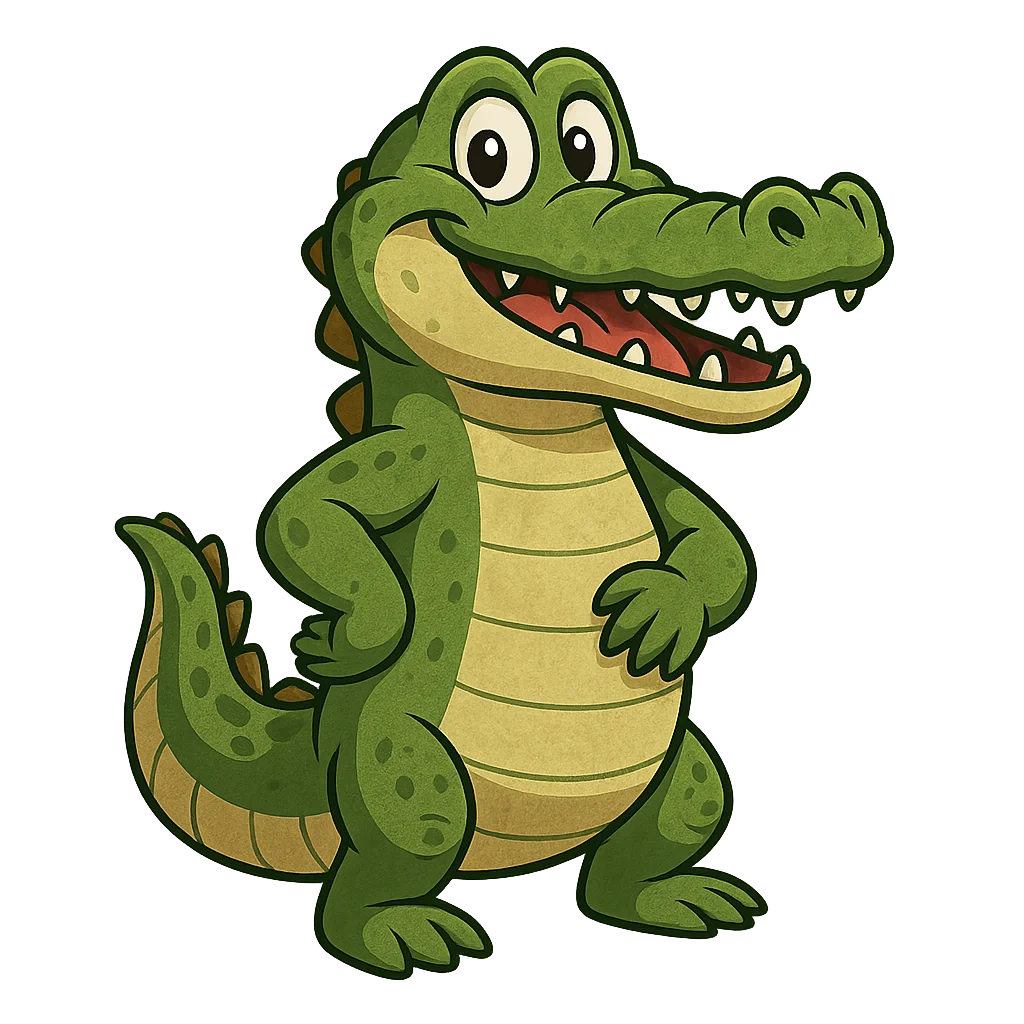
My grand entrance into the world began on a warm, sandy riverbank in Africa. I am a Nile Crocodile, and my first memory is of the tough, leathery shell that encased me. Pushing with all my might, I finally broke free into the bright sunlight. The world was a chorus of new sounds, but one stood out—a series of low rumbles and hisses. It was my mother's call. She was enormous, a giant of scales and power, yet her actions were incredibly gentle. As my dozens of brothers and sisters hatched around me, she carefully scooped us up into her massive mouth. It may sound frightening, but it was the safest place I had ever been. After hatching, the mother Nile crocodile carries her young to the water. In those first few weeks, the world was full of dangers. Large birds, big fish, and other predators saw us as an easy meal. My survival depended entirely on my mother’s watchful eye and the protective shelter of the nursery. She was our first and most important guardian, teaching us the earliest lessons of life on the river.
During my first years, the river was my school, and survival was the only subject. I had to learn the ways of a predator, starting with small, quick prey. I chased after buzzing insects on the water's surface and darted after tiny fish that shimmered just below. My body was perfectly designed for this life. My powerful tail acted like a motor, propelling me through the water with silent speed. To see my prey clearly, I had a special third eyelid, called a nictitating membrane, that slid across my eye like a pair of built-in swimming goggles, protecting it while allowing me to see underwater. I also had a unique valve at the back of my throat. This clever adaptation allowed me to open my mouth to catch food underwater without a single drop of water going down my throat. Despite these advantages, danger was ever-present. Herons, eagles, and larger crocodiles were a constant threat. I learned that my best defenses were my camouflage, which made me look like a floating log, and staying close to my siblings. We were a team, and together, we navigated the challenges of growing up in the great African river.
As I grew, my power and size increased until I became what I was born to be: an apex predator at the very top of the food chain. My diet changed from small fish to the large animals that roamed the African plains. My home was near the Serengeti, and every year, I witnessed the great migration. Thousands of wildebeest and zebra would cross the river, and this was when my skills were truly tested. My strategy was one of patience and ambush. I would lie perfectly still, often with only my eyes and nostrils above the water, waiting for the perfect moment. When an animal came close enough, I would erupt from the water with explosive force. My bite is one of the most powerful in the animal kingdom, and I used a technique known as the 'death roll' to overpower my large prey. As a cold-blooded reptile, my life was ruled by the sun. I would spend hours basking on the riverbank to absorb its heat, a process called thermoregulation, which gave me the energy I needed to hunt. After a large meal, I could go for weeks or even months without eating again, conserving my energy until the river provided another opportunity.
For all my power, there came a time when my kind faced a threat we could not fight with teeth and claws. Between the 1940s and the 1960s, humans began to hunt us in great numbers. Our skin, with its tough and beautiful pattern, was highly valued. Across Africa, our populations plummeted. Nile crocodiles were extirpated from some regions and severely depleted in parts of West Africa, but did not vanish completely from many rivers. It was a time of great uncertainty for Nile Crocodiles. The once-familiar sounds of the river were now mixed with new, frightening noises. The drone of a motorboat, which had once been a curiosity, became a signal of danger. We became ghosts in our own homes, hiding from the hunters who sought our skins. Our very future as a species was in doubt, and we had no way of knowing if we would survive this new and deadly pressure.
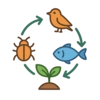
Just when it seemed like our time might be over, human attitudes began to change. People started to understand that we were not just monsters, but a vital part of the river's ecosystem. A major turning point came in 1973 with an international agreement called CITES, which was created to regulate the trade of animals like me and protect us from over-hunting. Thanks to these new laws and other conservation efforts, including sustainable crocodile farming that eased the pressure on wild populations, our numbers began to recover. We returned to the rivers we had been forced to abandon. Today, I am proud of my role as a keystone species. By controlling the populations of certain fish, I help keep the fish stocks healthy. By consuming carcasses, I help keep the waterways clean. I am a living link to the time of the dinosaurs, a survivor of ancient worlds and modern threats. I am a guardian of Africa's rivers, and my story is a reminder that even the most powerful creatures need protection.
Activities
Take a Quiz
Test what you learned with a fun quiz!
Get creative with colors!
Print a coloring book page of this topic.