English
 For Schools
 For Homeschool

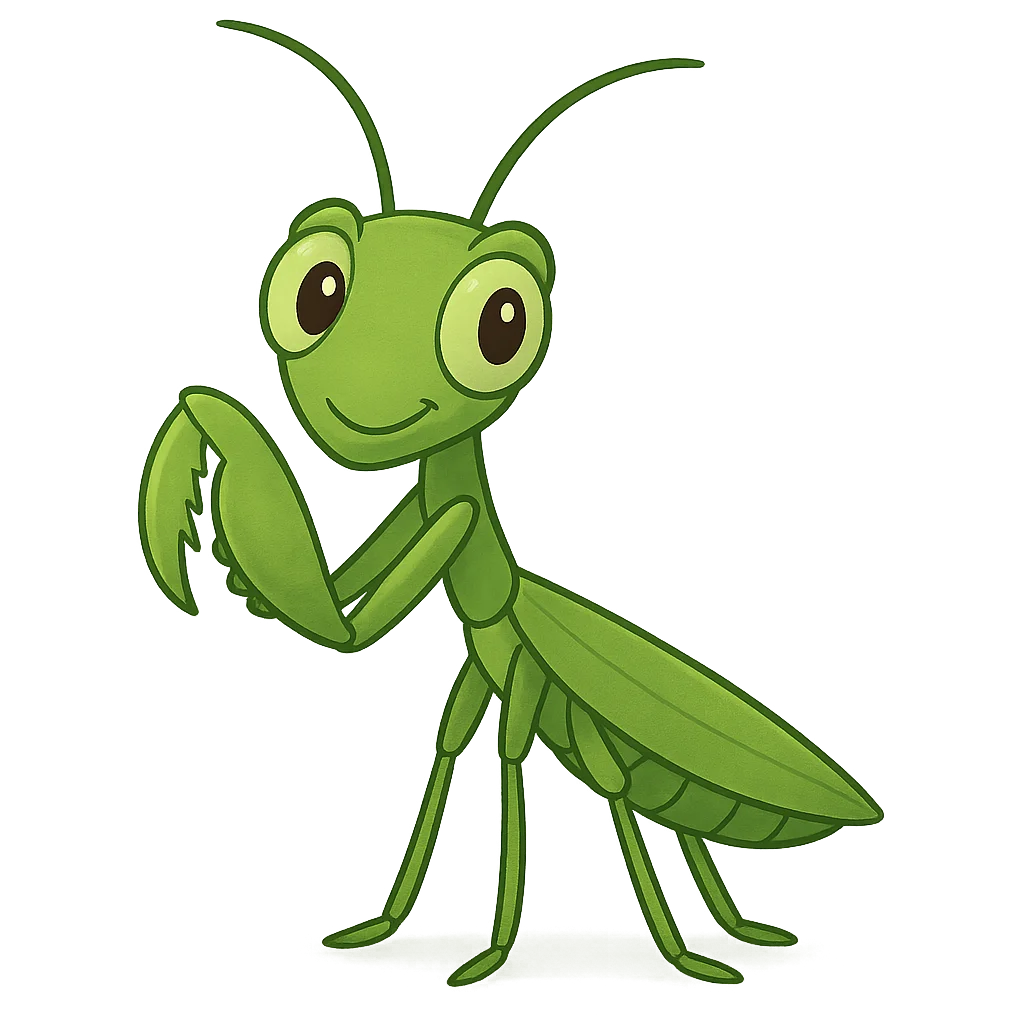
The Garden's Guardian: A Praying Mantis Story
Hello there. I am a Praying Mantis, and my story begins on a warm spring day. I didn't hatch from a regular egg like a bird. Instead, I emerged from a special egg case called an ootheca, which looked like a tiny, foamy package glued to a twig. I wasn't alone, either. Hundreds of my brothers and sisters pushed their way out into the bright, giant world right alongside me. Everything seemed enormous, and the first thing on my mind was food. Finding something to eat was my first big challenge. There were so many of us, and sometimes, the only meal available was one of my own siblings. It may sound strange, but it’s just how we survive when we are tiny and hungry. As a newborn, I was called a nymph. I looked just like a miniature version of my parents, with long legs and a triangular head, but I had one important thing missing—my wings. Those would have to wait until I was all grown up.
Growing up meant I had to molt many times. My exoskeleton, which is like a suit of armor on the outside of my body, doesn't stretch. So, as I got bigger, I had to shed my tight old skin to make room for my growing body underneath. It was a slow and careful process. To survive, I had to be a patient hunter. My body is a masterpiece of camouflage. When I stood on a green leaf, I looked just like part of the plant. When I perched on a twig, I could pretend to be a piece of bark. This helped me hide from birds that might want to eat me and also helped me surprise my own food. You might know me for my famous hunting pose. I fold my spiky front legs together as if I’m praying. But I’m not praying—I’m waiting. I can stay perfectly still for hours, and I can turn my head a full 180 degrees, almost all the way around, without moving the rest of my body. This helps me scan the world for my next meal. I have five eyes to help me do this: two huge compound eyes that see movement very well, and three tiny, simple eyes in between them. Together, they help me spot delicious flies, moths, and aphids from far away. When one gets close enough, I strike. My front legs shoot out faster than you can blink, grabbing my meal with the sharp spikes that line them.
While my kind is known for being patient hunters in gardens, we are also great travelers. My most ancient ancestors have been around since the time of the dinosaurs, but my more recent family has a very special travel story. My European relatives made an incredible journey across the ocean. Around the year 1899, one of my ancestors laid her ootheca on a nursery plant in Europe. That plant was carefully packed up and put on a ship heading across the wide Atlantic Ocean. When the ship arrived, the plant was taken to a nursery in Rochester, New York. The little ootheca survived the entire trip. The following spring, Mantis religiosa was introduced to North America around 1899, leading to the establishment of the species on the continent. From that single egg case, a whole new family of praying mantises began to live and thrive in North America. This journey shows just how adaptable we are. We can make a home wherever we can find food and a safe place to lay our eggs.
Now, as a full-grown adult, my wings have finally grown in, and I have a very important job. I am a gardener's best friend. I spend my days perched among the flowers and vegetables, protecting them from pests that want to eat the leaves and petals. I eat the aphids, moths, and flies that could harm the plants, making me a natural guardian of the garden. My life is short, usually lasting only about a year. Before the weather turns cold in the fall, I complete my life's most important task: I lay my own ootheca. I create a foamy package and carefully attach it to a sturdy stem, where it will keep my babies safe all winter. When spring returns, they will hatch and continue my work. My legacy lives on through my children, the next generation of quiet, patient guardians who keep our gardens healthy and strong.
Activities
Take a Quiz
Test what you learned with a fun quiz!
Get creative with colors!
Print a coloring book page of this topic.