English
 For Schools
 For Homeschool

Enhydra's Story: A Sea Otter's Journey
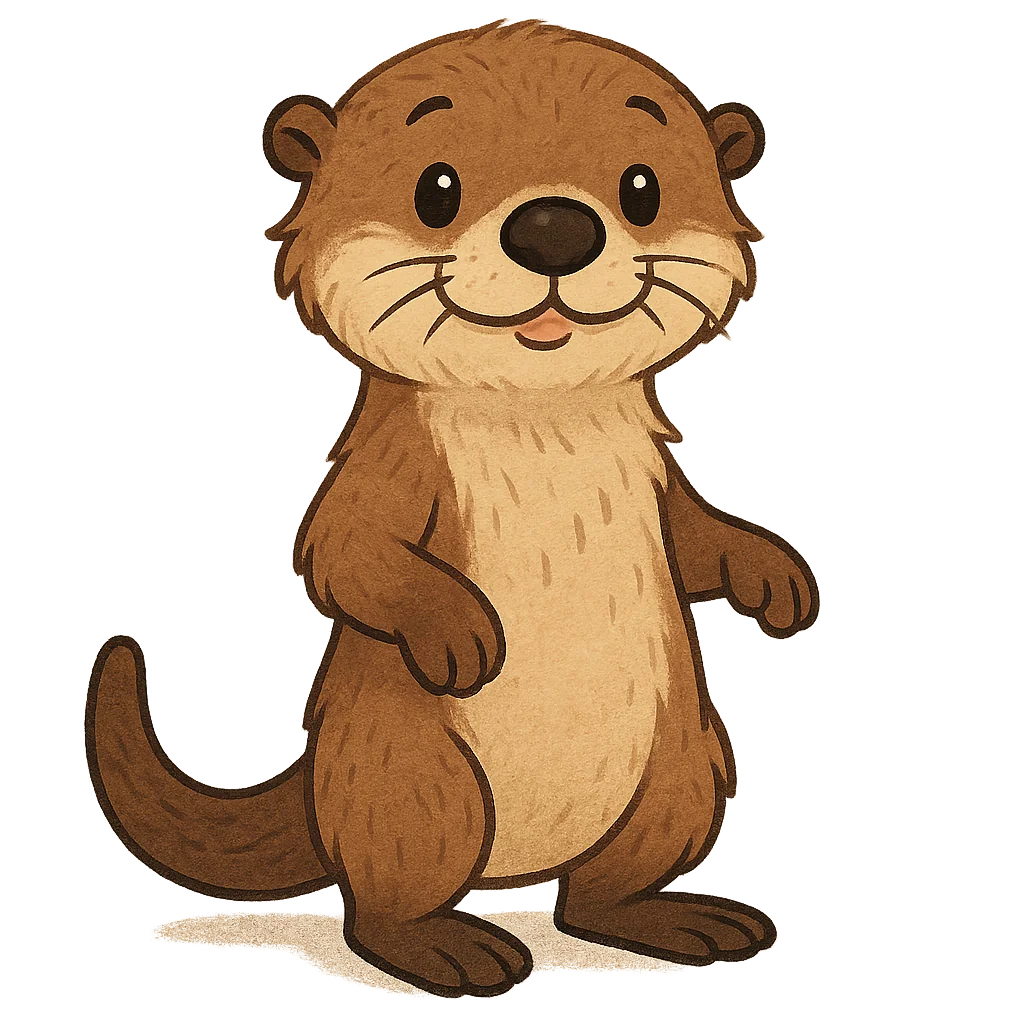
Hello! My name is Enhydra, and I am a sea otter. I want to tell you about my life in the cool, swaying kelp forests of the North Pacific Ocean. This underwater world is my home, a place of constant motion and endless discovery. Unlike whales or seals, I don't have a thick layer of blubber to keep me warm in these chilly waters. Instead, my secret is my fur. It is the densest fur of any animal on Earth, with up to a million hairs per square inch. This incredible coat traps a layer of air right next to my skin, acting as a perfect insulator against the cold. It’s so important that I spend a large part of my day grooming it to keep it clean and fluffy. I also have a neat trick for carrying things. Tucked under each of my front legs is a loose pouch of skin. This is where I store food I find on my dives, but more importantly, it’s where I keep my favorite rock. This rock is my personal tool, perfect for cracking open the tough shells of crabs, clams, and my favorite snack, sea urchins.
My family has lived along these coasts for thousands of years, floating among the kelp and raising our young on the surface of the sea. But our peaceful existence was drastically changed around the year 1741. That was when European fur traders first arrived in our waters and discovered just how soft and warm our fur was. A massive hunt began, and for the next 150 years, my ancestors were hunted without mercy. The demand for our pelts was so high that it nearly wiped us out completely. Imagine an ocean teeming with my kind, a global population that was once as high as 300,000. It’s hard to believe, but by the early 1900s, that number had plummeted to fewer than 2,000 individuals scattered in small, isolated groups. We were on the very brink of disappearing forever, and the vast kelp forests that once echoed with our calls fell silent.
Just when it seemed all hope was lost, a group of people decided to act. On July 7th, 1911, a landmark agreement called the International Fur Seal Treaty was signed. This treaty was not just for seals; it also made it illegal to hunt sea otters in international waters. This was the lifeline my ancestors desperately needed. It gave the few remaining survivors a chance to live without fear and to slowly begin rebuilding our families. The path to recovery was long and difficult. Our numbers grew very slowly at first. Then, decades later, we received another layer of help. In 1977, the southern sea otter population in California was listed as threatened under the Endangered Species Act. This important law provided funding for scientific research and conservation programs dedicated to protecting our habitats and ensuring our safety. It was a second chance, a promise that we would not be forgotten.
Now that you know my history, I can tell you about my very important job. Scientists who study the ocean have a special name for me: a 'keystone species.' This means that the health of my entire ecosystem depends on me, much like a stone arch depends on the central keystone to hold it up. My role is tied to my diet. I absolutely love to eat spiny sea urchins. They are crunchy and delicious, but if left unchecked, they can be very destructive. If my family and I weren't here to eat them, the sea urchin population would explode. These hungry urchins would then crawl across the seafloor, munching on the base of the kelp stalks until nothing was left. They can turn a beautiful, thriving underwater forest into a barren, empty wasteland called an 'urchin barren.' By keeping the urchin numbers in balance, I protect the kelp. This allows the forest to flourish, providing critical food and shelter for hundreds of other species, from tiny fish hiding among the fronds to large seals who hunt in the kelp beds. I am a guardian of the forest.
Today, my life is busy. I spend my days diving for clams and crabs, using my trusty rock tool to get to the juicy meat inside. I groom my precious fur to keep it waterproof and warm, and I often rest by floating peacefully on my back, sometimes wrapping myself in a strand of kelp to keep from drifting away. Thanks to the protections put in place long ago, our populations have shown recovery in some areas of their historic range, but not uniformly across all regions. However, we still face modern challenges, like the dangers of oil spills and the effects of climate change on our ocean home. My story is a powerful reminder of how fragile ecosystems are and how quickly a species can be pushed to the edge. But it is also a story of hope. It shows that with care and decisive action, a species on the brink of extinction can return, allowing us to continue our important work of keeping the oceans healthy for everyone.
Activities
Take a Quiz
Test what you learned with a fun quiz!
Get creative with colors!
Print a coloring book page of this topic.