English
 For Schools
 For Homeschool

The Seven-Spot Ladybird's Garden Adventure
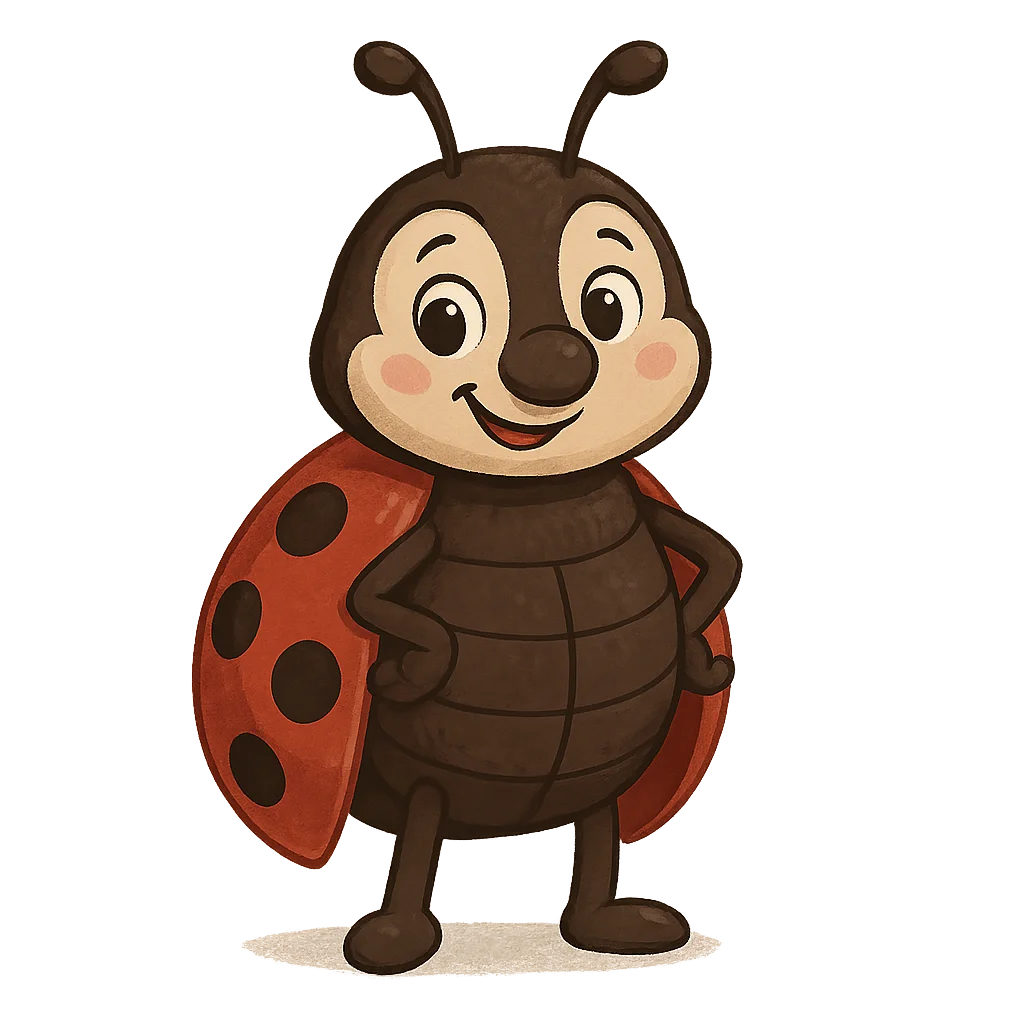
Hello! I am a Seven-spot Ladybird, and my adventure began on a warm day in late spring. My life started as a tiny, bright yellow egg. My mother, with great care, placed me and my siblings in a tidy cluster on the underside of a large leaf. We were positioned perfectly, right next to our very first meal: a bustling colony of green aphids. After only a few days tucked away in my egg, I hatched into a world that felt immensely vast. I didn't resemble the shiny red beetle I would one day become. Instead, I was a long, spiky larva, which some humans say looks like a miniature alligator. While feeding is a primary activity during the larval stage, other instincts such as avoiding predators and eventually pupating are also crucial aspects of their existence.
My larval stage was dedicated entirely to the great aphid hunt. I considered myself a professional hunter of these tiny insects. Aphids survive by drinking the juices from plants, which can cause the plants to become quite sick. For me, however, they were the ideal source of food. I spent my days marching across leaves and stems, consuming every single aphid I could track down. As I feasted, I grew at an astonishing rate, becoming so large that I had to shed my tough outer skin a total of four times. This period of my life was a constant race to consume enough energy to prepare for the remarkable transformation that I knew was just ahead.
Once I had eaten enough and grown to my full larval size, I began the next phase of my journey. I searched for a secure location on a leaf and firmly attached myself to it. My larval skin split down my back for the final time, but instead of revealing a larger larva, it uncovered a smooth, orange case. I had become a pupa. To an outside observer, it might have looked as though I were merely sleeping, but inside that protective shell, a biological miracle was unfolding. My entire body was being completely rearranged. I was growing wings, developing sensitive antennae, and forming my famous spotted shell. It was during the year 1758 that the renowned scientist Carl Linnaeus officially gave my species its scientific name, Coccinella septempunctata. This name is Latin and means 'seven-spotted,' which perfectly describes the pattern I was about to reveal to the world.
After about a week inside my pupal case, I was ready. I pushed my way out and stood on the leaf as a fully formed adult ladybird. My new wing covers, which are called elytra, were soft and a pale yellow color when I first emerged. I had to rest for a while, waiting for them to harden and transform into their brilliant, shiny red hue. Soon after, my seven signature black spots appeared, completing my look. These vibrant colors serve as a critical warning to predators like birds, sending a clear message: 'Don't eat me, I taste terrible!'. If a curious predator dares to get too close, I have another defense mechanism called 'reflex bleeding.' I can ooze a foul-smelling, yellow liquid from my leg joints. This trick is usually effective in deterring many attackers, but not all.
Equipped with my strong new wings, I was finally able to fly and explore the world beyond my birth leaf. I traveled through gardens, across farms, and over meadows, but my mission remained the same. My appetite for aphids was as strong as ever, and I spent my days helping to protect plants from these pests. My kind is so effective at this job that humans decided to bring us from our native home in Europe all the way to North America. Around 1956, people started introducing us to their farms and gardens to help protect their crops from aphid infestations. We became known as a form of natural pest control. When the weather turns cold and winter approaches, my friends and I find a sheltered spot, perhaps under tree bark or inside a log. We then huddle together in a large group to share body heat and stay warm until the spring returns.
The life cycle from egg to adult spans several weeks, and adults can live for several months to a few years. During that time, a single ladybird like me can eat up to 5,000 aphids! Humans often smile when they see me land on a flower, sometimes considering me a sign of good luck. The real good fortune, however, is the important role I play in the environment. By keeping pest populations under control, I help gardens flourish and farms produce the food we all need. I may be a small creature, but I am a mighty guardian of the green world. My story shows that even the tiniest beings have a huge part to play in keeping our planet healthy and beautiful.
Activities
Take a Quiz
Test what you learned with a fun quiz!
Get creative with colors!
Print a coloring book page of this topic.