English
 For Schools
 For Homeschool

A Snowy Owl's Tale
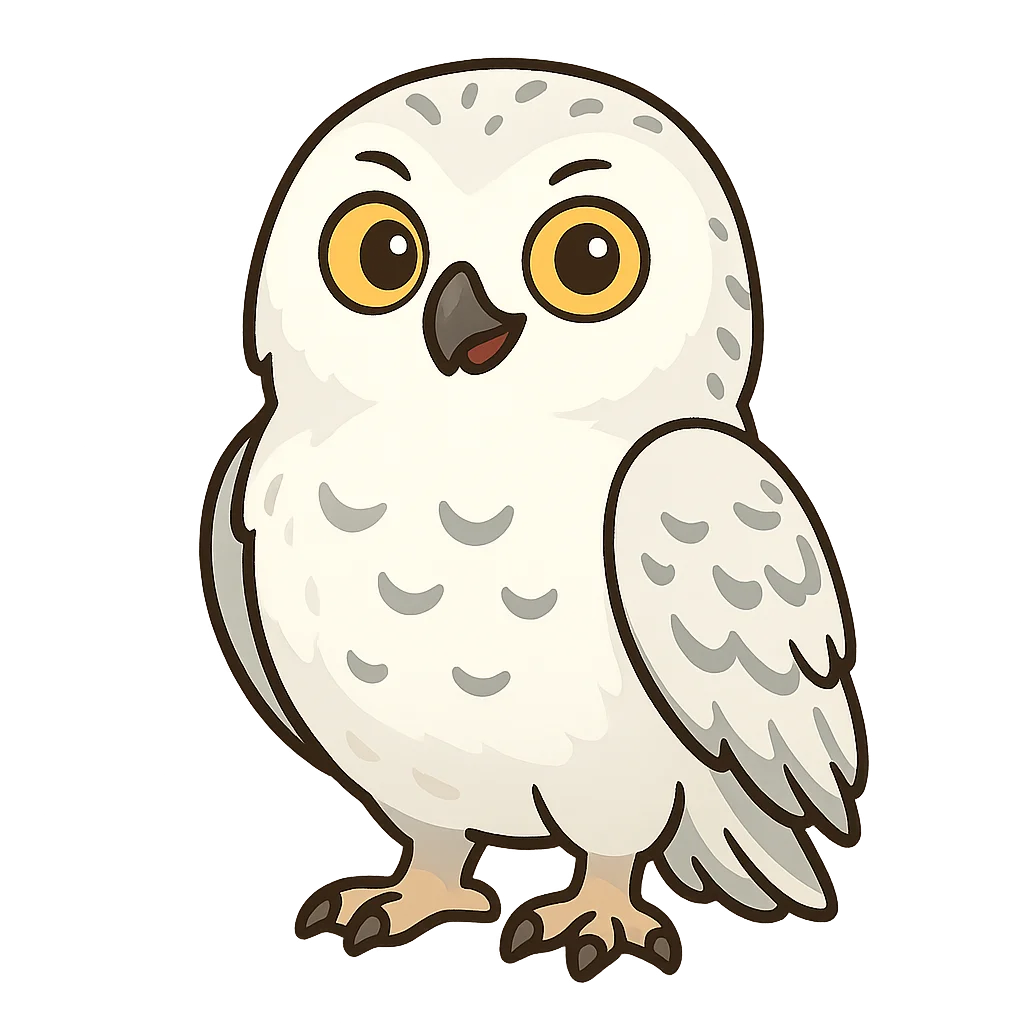
Hello, I am a Snowy Owl, a silent hunter from the vast, cold lands of the Arctic. My world is a sprawling canvas of white, and I am perfectly designed to be a part of it. My feathers are as white as the snow I call home, allowing me to blend in seamlessly with the landscape. My eyes, however, are a brilliant, piercing yellow, always scanning the horizon. The Snowy Owl was first described by Carl Linnaeus in 1758 as Strix scandiaca. It was later reclassified under the genus Bubo, becoming Bubo scandiacus. My life began not in a cozy tree hollow, but in a simple nest on the ground. It was just a scrape on the open tundra, a shallow dip where the wind sweeps endlessly across the land, but it was my first home.
My body is a fortress built to withstand the extreme cold of my Arctic home. Surviving here requires special adaptations, and I have many. I am covered in thick layers of soft, downy feathers that insulate me from the biting winds and freezing temperatures. This protective coat extends all over my body, even down to my feet. My feathered feet are like a pair of fluffy slippers, shielding my talons from the frozen ground as I stand watch or perch on a snowy rise. This incredible insulation is not just for warmth; my white plumage is also the perfect camouflage. Against the snow, I become nearly invisible, a silent, white ghost. This allows me to surprise my prey and helps me hide from any predators that might see me as a meal.
My life is dedicated to the hunt. Unlike most other owls who are nocturnal, I am most active during the daytime. This is especially true during the long Arctic summer, when the sun circles the sky and never sets for months. To be a successful hunter, I rely on my incredible senses. My hearing is so sharp that I can pinpoint the exact location of a lemming as it scurries in its tunnels beneath a thick blanket of snow. My eyesight is equally powerful, but one of my most useful abilities is the way I can turn my head. I can rotate it 270 degrees—almost a full circle—which lets me scan my entire territory for prey without ever having to move my body. My diet can vary, but my favorite food, the one my entire life revolves around, is lemmings.
My connection to the lemming population is so strong that it dictates my movements. The number of lemmings in the Arctic follows a natural cycle; their population booms about every four years, and then it crashes. When the lemming population is low and food becomes scarce, I cannot stay in my northern home. I must embark on a great journey south to find food. These massive, long-distance movements are called irruptions, and they can take me and thousands of other Snowy Owls thousands of miles away from the tundra. We travel to new, unfamiliar lands in search of sustenance. One of the most significant irruptions that humans observed happened during the winter of 2013-2014, when Snowy Owls like me were spotted in places far south of our usual range, surprising people who had never seen us before.
Even though I am a powerful hunter, I face many challenges in a changing world. In 2017, scientists who study my kind listed my species as ‘Vulnerable’ because our global population is decreasing. The most significant threat I face is climate change. My Arctic home is warming faster than any other place on Earth, and this has serious consequences for me. Climate change affects snow cover patterns, potentially impacting species that rely on snow for camouflage, though specific studies on Snowy Owls are limited. The changing climate affects the snow cover I depend on for camouflage, making it harder to hunt and hide. It also disrupts the life cycles of the lemmings that are my primary food source. When I am forced to travel south during irruptions, I face other dangers, such as colliding with cars, power lines, and buildings, which are hazards I never encounter on the open tundra.
My story is more than just my own; it is a reflection of the health of the entire Arctic ecosystem. As a top predator, I play a crucial role in keeping my environment in balance. By hunting rodents like lemmings, I help control their populations, which in turn keeps the tundra vegetation healthy. My presence is an indicator, a sign that the delicate web of life in the north is functioning as it should. When you think of me, remember that my survival is connected to everything around me, from the smallest lemming tunneling under the snow to the vast, frozen landscape that defines my world. Protecting my Arctic home is not just about saving one species of owl; it is about preserving a whole world that depends on the cold to survive.
Activities
Take a Quiz
Test what you learned with a fun quiz!
Get creative with colors!
Print a coloring book page of this topic.