English
 For Schools
 For Homeschool

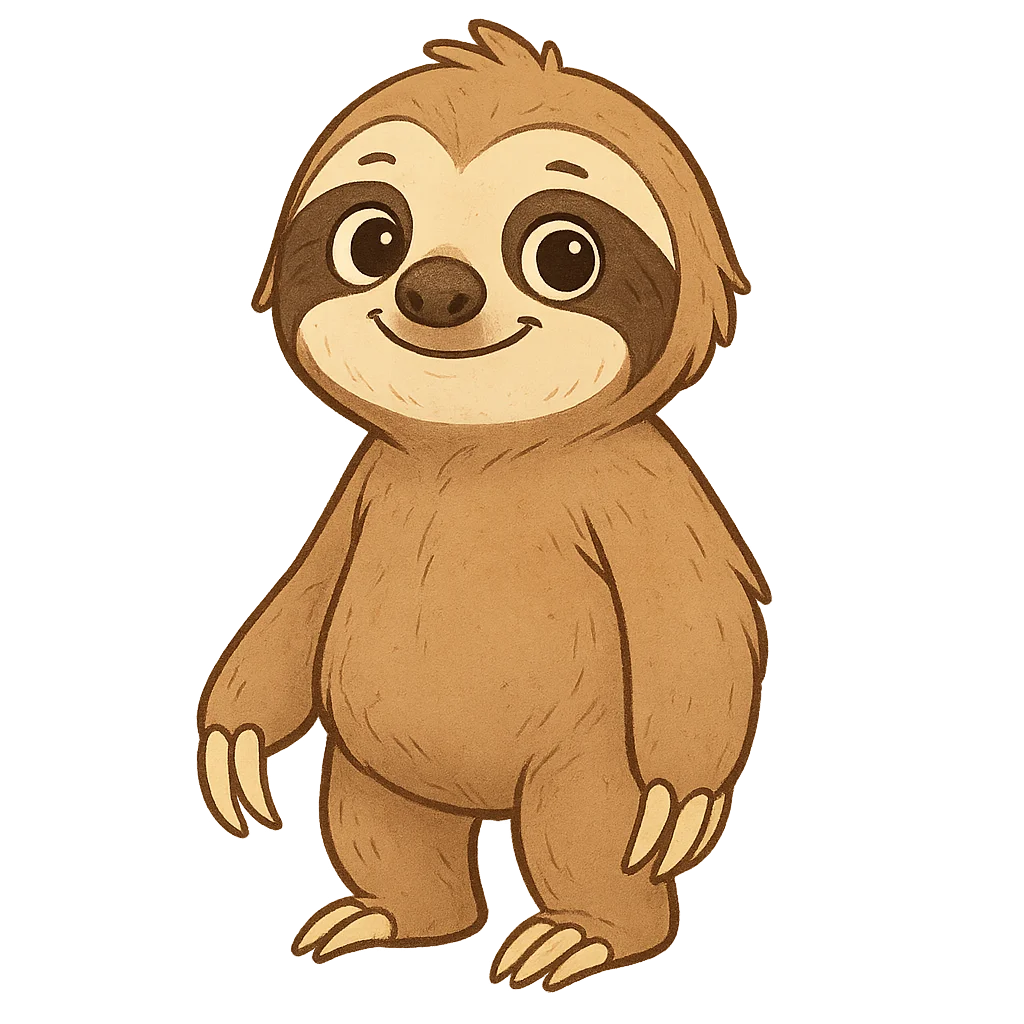
A Sloth's Tale: Life in the Slow Lane
Hello from high up. I’m a three-toed sloth, and I spend most of my life hanging upside down from a branch just like this one, here in the sunny canopy of a South American rainforest. If you look closely, you’ll see my shaggy, grayish-brown coat. It often has a greenish tint, which I’ll tell you more about later. I have a round head and a face that’s fixed in what you might call a permanent 'smile.' My most famous features, of course, are my three long, curved claws on each of my front limbs. They are the perfect tools for my upside-down lifestyle. My family, the Bradypodidae, was officially described by a scientist named John Edward Gray in 1821, but the genus Bradypus has existed for millions of years, but specific fossil records are lacking to determine the exact duration of their arboreal existence. People often think I’m lazy because I move so slowly, but my slowness is actually my superpower. It’s a very clever survival strategy. My diet consists almost entirely of leaves, which don’t provide much energy, so moving slowly helps me conserve every bit of fuel. This deliberate pace also makes me nearly invisible to predators on the prowl. A sharp-eyed jaguar looking up from the forest floor or a harpy eagle soaring overhead might mistake me for just another part of the tree, allowing me to stay safe in plain sight.
My upside-down world is peaceful and predictable. A typical day for me involves a lot of what I do best: eating, sleeping, and resting, all while securely hanging from my incredibly strong claws. My favorite meals come from the Cecropia tree; their leaves are tender and just right. You might be surprised to learn how complex my stomach is. It has multiple compartments, similar to a cow's, and it can take me up to a month to digest a single meal. This slow digestion is another way I get the most out of every leaf. Now, for my secret: my fur is not just fur. It’s a tiny, bustling ecosystem. A special kind of green algae grows in the grooves of my hair, which is what gives my coat that greenish color. This is fantastic camouflage, helping me blend in perfectly with the leafy canopy. I also have some roommates living in my coat—sloth moths. They live, travel, and hide in my shaggy fur, making it their home. Once a week, I embark on my riskiest adventure. I slowly make my way down from the safety of the canopy to the forest floor. It’s the only time I leave the trees, and it makes me very vulnerable. For years, scientists wondered why I took such a risk. A study published around 2014 suggested a fascinating reason: by coming down to the ground to defecate, I help fertilize the soil around my favorite trees, ensuring they stay healthy. This weekly trip also gives my sloth moth friends a place to lay their eggs in my dung, continuing their life cycle.
My family has a long and impressive history. If we could travel back in time to the Pleistocene epoch, which ended around 10,000 years ago, you would meet my ancient relatives. Giant ground sloths, like the incredible Megatherium, were as large as elephants and roamed across the Americas. I am much smaller, of course, perfectly adapted for my specialized life high in the trees. But my modern world has its own giants, and they are not friendly. Since the mid-20th century, bulldozers and chainsaws have become a constant threat. My rainforest home is shrinking as humans clear the land for farming and cities. This process, called deforestation, creates large gaps in the forest canopy, making it very difficult for me to travel between trees to find food and mates. But there is also hope. People have started to understand our challenges and are working to help. Conservation organizations, such as The Sloth Conservation Foundation which was founded in 2017, are dedicated to protecting my rainforest home. They educate people about our importance and find creative solutions to our problems. One of the most helpful inventions is the 'sloth crossing,' which are special rope bridges built high above roads and clearings. These bridges help me and my friends cross dangerous gaps safely, reconnecting our forest world.
My place in this green kingdom is more important than you might think. I'm not just a sleepy tree-dweller; I am a gardener, a mobile home, and a crucial link in the rainforest’s food web. By eating leaves, I help prune the trees, which can encourage new growth. By carrying algae and moths in my fur, I support other tiny forms of life, creating an ecosystem on the move. When I make my weekly trip to the ground, I fertilize the soil, helping new trees to grow and enriching the forest that sustains me and countless other creatures. My slow and steady life is a perfect example of the quiet, interconnected rhythm that keeps the rainforest healthy. In the wild, I can live to be about 20 to 30 years old, enjoying my peaceful life in the canopy. My story is still being written every day in these treetops. As long as people care enough to protect these amazing forests, sloths like me will have a home where we can continue our slow, important work for a long, long time to come.
Activities
Take a Quiz
Test what you learned with a fun quiz!
Get creative with colors!
Print a coloring book page of this topic.