
 English
 For Schools
 For Homeschool

A Manatee's Tale: The Gentle Gardener of the Sea
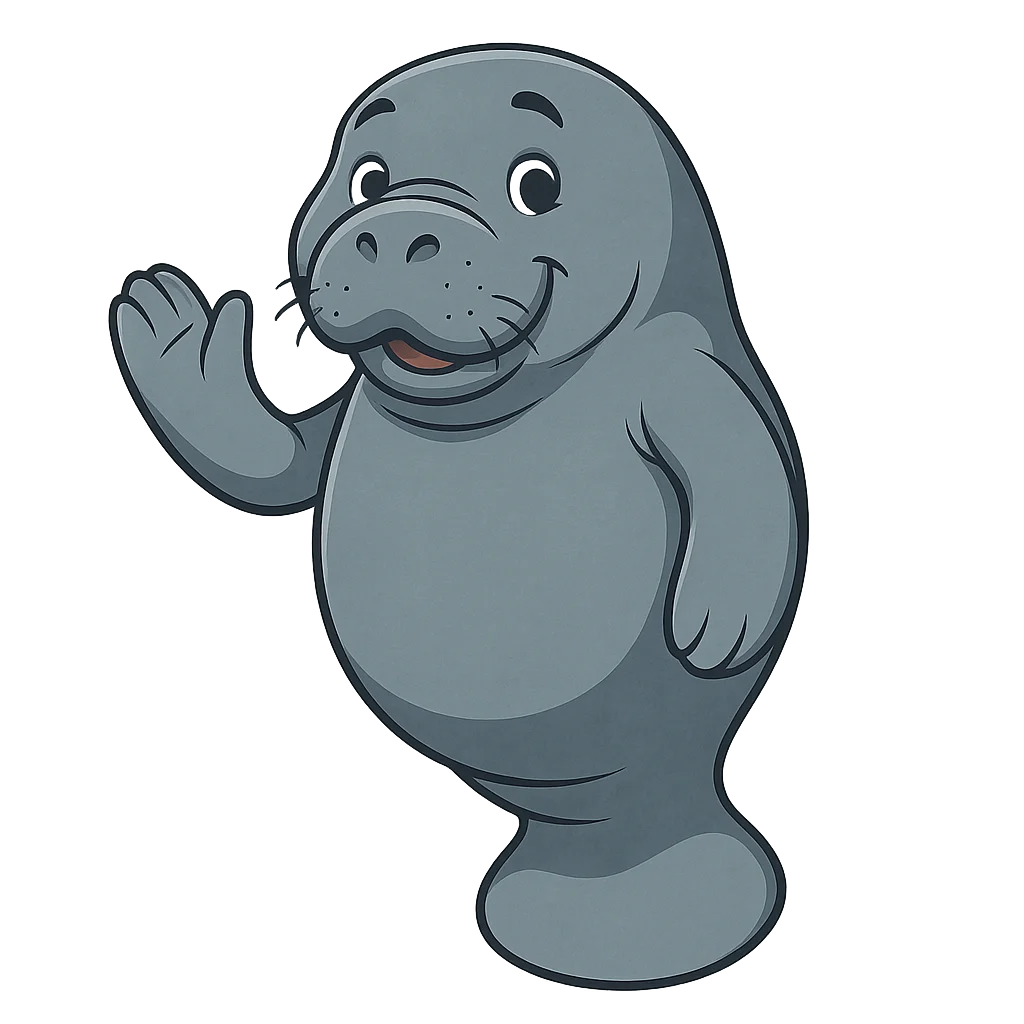
Hello, I am a West Indian Manatee, though many people affectionately call me a 'sea cow.' My body is large, gray, barrel-shaped, with a paddle-shaped tail and two gentle flippers. I spend my days gliding slowly through the warm coastal waters and rivers of the southeastern United States, the Caribbean, and the Gulf of Mexico. My appearance has caused some confusion throughout history. On January 9th, 1493, when the explorer Christopher Columbus and his crew saw my ancestors, they thought they had discovered mermaids. It’s a funny thought, isn't it? While I may not be a mythical creature, my family history is still fascinating. My lineage traces back to the same ancient land-dwelling relatives as elephants, which might explain my large size and gentle nature.
My daily life is a peaceful one, centered around food and warmth. As an herbivore, I spend a significant portion of my day—sometimes up to eight hours—grazing on aquatic plants. Seagrass is my favorite, and I eat a lot of it, consuming about 10% of my body weight every single day. Because I have a very slow metabolism and not much body fat, I cannot tolerate the cold. I must live in water that is warmer than 68 degrees Fahrenheit, or 20 degrees Celsius. When winter arrives and the ocean temperatures drop, I begin my annual migration. I travel to find warmer waters, often seeking refuge in natural springs, like those found in Florida, or the warm water discharged from power plants. These spots become cozy gathering places for many of my kind until the seasons change again.
I began my life as a calf, staying very close to my mother. For up to two years, I relied on her completely. She taught me everything I needed to know to survive, from showing me the best places to find food to guiding me along the important migration routes we follow each year. We manatees are not silent creatures; we communicate with each other using a series of squeaks and squeals. This underwater chatter is especially important between a mother and her calf, helping us stay connected in the vast waters. In the wild, if we are fortunate and can avoid dangers, we manatees can live to be around 40 years old, and some of us have been known to live even longer, peacefully drifting through the currents.
Despite my peaceful existence, my world has become increasingly challenging. Living in coastal areas means sharing my home with humans, which has brought new dangers. Pollution and coastal development have damaged or destroyed the seagrass beds that I depend on for food. However, the most immediate and dangerous threat I face is collisions with boats. Because I swim slowly and close to the surface, I am often in the path of fast-moving watercraft. For many years, my species suffered greatly. A critical turning point came in 1973 when the United States government passed the Endangered Species Act. My species, the West Indian Manatee, was officially listed as 'endangered,' which meant we were finally given special legal protections to help us survive.
That act of protection in 1973 was the beginning of a story of hope. With our new status, people began to work together to help us. Conservation groups and government agencies created 'manatee zones' in the waterways we frequent. In these zones, boats are required to travel at very slow speeds, which gives me enough time to hear them coming and move out of the way. These efforts, along with habitat restoration projects, made a huge difference. By March of 2017, our population had recovered so much that our official status was changed from 'endangered' to 'threatened.' This was wonderful news. It doesn't mean all our problems are gone, but it shows that when people decide to help, conservation efforts can truly succeed.
My journey is a testament to resilience, but my role in my environment is just as important. I am a primary grazer, which makes me a sort of gardener for the sea. By munching on seagrass, I help keep the underwater meadows healthy and trimmed, which allows them to thrive. These seagrass beds are incredibly important ecosystems. They act as nurseries for countless species of fish and shellfish and also help protect the coastline from erosion by stabilizing the seabed. My quiet life contributes to the health of the entire coastal marine world. My story serves as a reminder that with care and respect, humans and wildlife can share the world's beautiful waters, ensuring a healthy planet for generations to come.
Activities
Take a Quiz
Test what you learned with a fun quiz!
Get creative with colors!
Print a coloring book page of this topic.