

 English

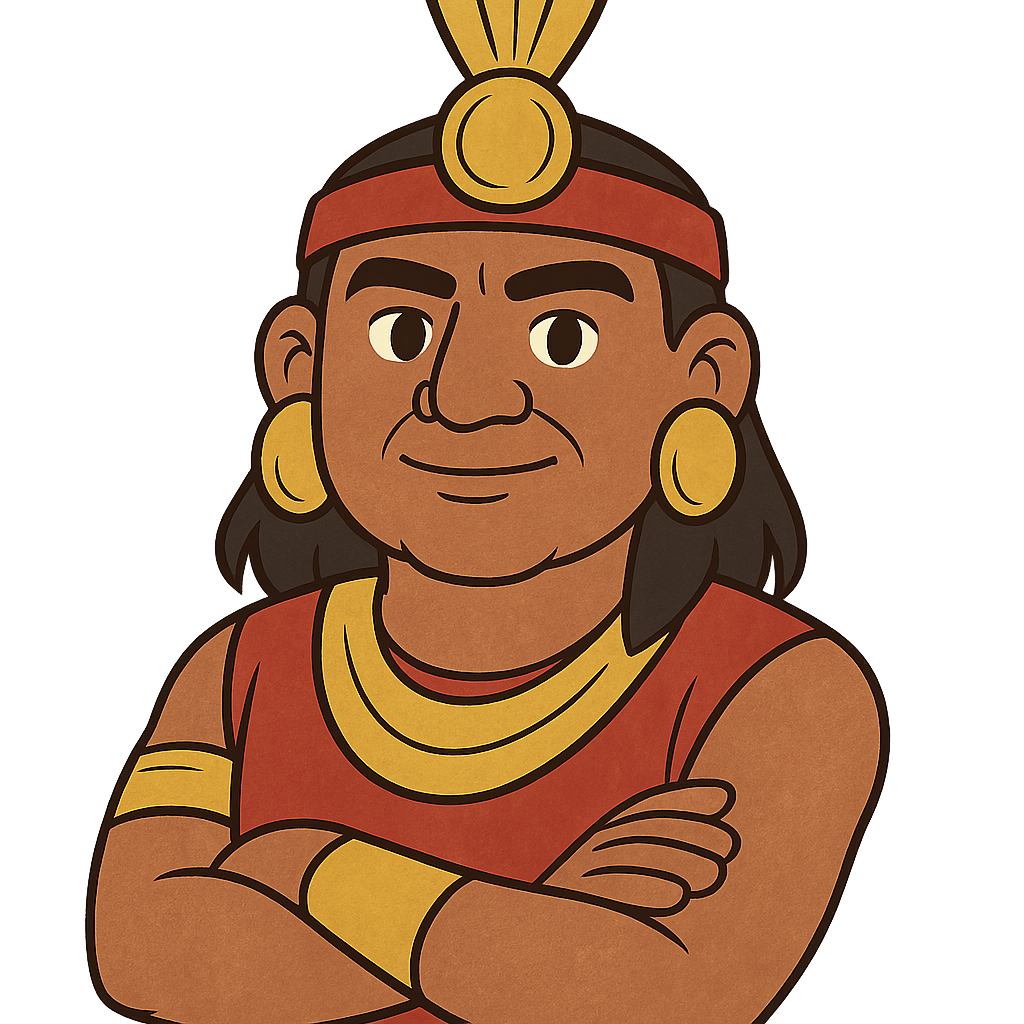
Atahualpa: The Last Sapa Inca
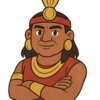
My name is Atahualpa, and I was the last Sapa Inca, the emperor of the vast and powerful Inca Empire. Imagine a kingdom nestled high in the Andes Mountains, a land of sharp peaks and deep valleys connected by clever rope bridges that swayed in the wind. Our cities, like the great capital of Cuzco, were built with stones cut so perfectly they fit together without any mortar. In our temples, the walls were sometimes covered in sheets of pure gold, shining brightly in the sun. My people believed that I was a son of our most important god, the sun god, Inti. I was born far from the capital, in the northern city of Quito. My father, the mighty Sapa Inca Huayna Capac, ruled over all of this land, which we called Tawantinsuyu, or 'the four regions together.' As a boy, I didn't spend my days playing simple games. I learned to be a warrior, to lead armies, and to understand the needs of my people. I was trained to be strong and wise, for one day, a great responsibility might fall upon my shoulders. I watched my father rule and knew that the strength of our empire depended on the strength of its leader.
My father was a great ruler, but around the year 1527, a strange sickness swept through our empire, and he passed away. His death left our kingdom in a state of confusion and sadness. Before he died, he made a difficult decision. Instead of choosing one son to rule, he divided the empire. My half-brother, Huáscar, was given the southern part and the capital city of Cuzco. I was given the northern part, with my home city of Quito. For a while, we tried to rule our separate halves, but our empire had always been one. It was not meant to be split in two. Soon, disagreements turned into arguments, and arguments turned into war. I did not want to fight my own brother, but I knew the empire needed a single, strong leader to survive. For five long years, our armies battled among the mountains. My generals were brilliant, and my soldiers were brave. Finally, in 1532, my forces captured Huáscar, and the war was over. I had united the empire once again. I was now the one true Sapa Inca, ruler of it all. I began the long journey south to the capital to claim my rightful place.
Just as I was celebrating my victory, news arrived of strange visitors. Men with skin as pale as the moon and beards on their faces had landed on our shores. They wore clothing that shone like polished silver, and they rode upon creatures that were like giant llamas, but much faster and stronger. We later learned these animals were called horses. Most frightening of all, they carried sticks that, when pointed, made a sound like thunder and could spit fire. Their leader was a man named Francisco Pizarro. I was curious, not afraid. As the Sapa Inca, a descendant of the sun god, I believed no one could harm me. I sent messages to them, and they sent messages back. I decided to meet them in the town of Cajamarca. On November 16th, 1532, I arrived with thousands of my best warriors, though we carried no weapons for battle. I came in peace, carried on a magnificent golden litter. I believed these men were simply another group of people, and I, their leader, would speak with their leader. I thought we could learn from each other, but I was wrong about their intentions.
When I entered the main square of Cajamarca, it was strangely quiet. The Spanish men were hiding. Suddenly, they rushed out, their thunder-sticks roaring and their sharp metal swords flashing. My unarmed attendants were no match for them, and in the chaos, I was pulled from my litter and taken prisoner. I was shocked and confused. To win my freedom, I made a grand promise to Francisco Pizarro. I told him I would fill the large room where they held me one time with gold and two times over with silver. My loyal people heard my command, and for months, they brought treasures from all across the empire—golden statues, silver jewelry, and precious artifacts. The room was filled, just as I had promised. But the Spanish were not honorable men. They melted down our beautiful art into plain bars of metal and still did not set me free. They put me on trial for crimes I did not commit. On July 26th, 1533, my life came to an end. Even though my time as emperor was cut short, the spirit of my people could not be broken. Today, high in the Andes Mountains of Peru, the descendants of the Inca still live. They speak our language, Quechua, and honor our traditions. The light of my empire never truly went out; it continues to shine through them.
Activities
Take a Quiz
Test what you learned with a fun quiz!
Get creative with colors!
Print a coloring book page of this topic.




 Free for Educators