English

Coco Chanel
A pioneering French fashion designer and businesswoman who founded the Chanel brand…
Reads at Grades 3–5 Listens at Grades 1–5
Print & create
Answer keys·No prep·Free with an account
28 worksheets · answer keys · full story · quiz · Ages 8-10 · CEFR B1
Plus adds 280,000+ more stories in 27 languages, audio for every one, and printables for all of them.
Just want Coco Chanel?
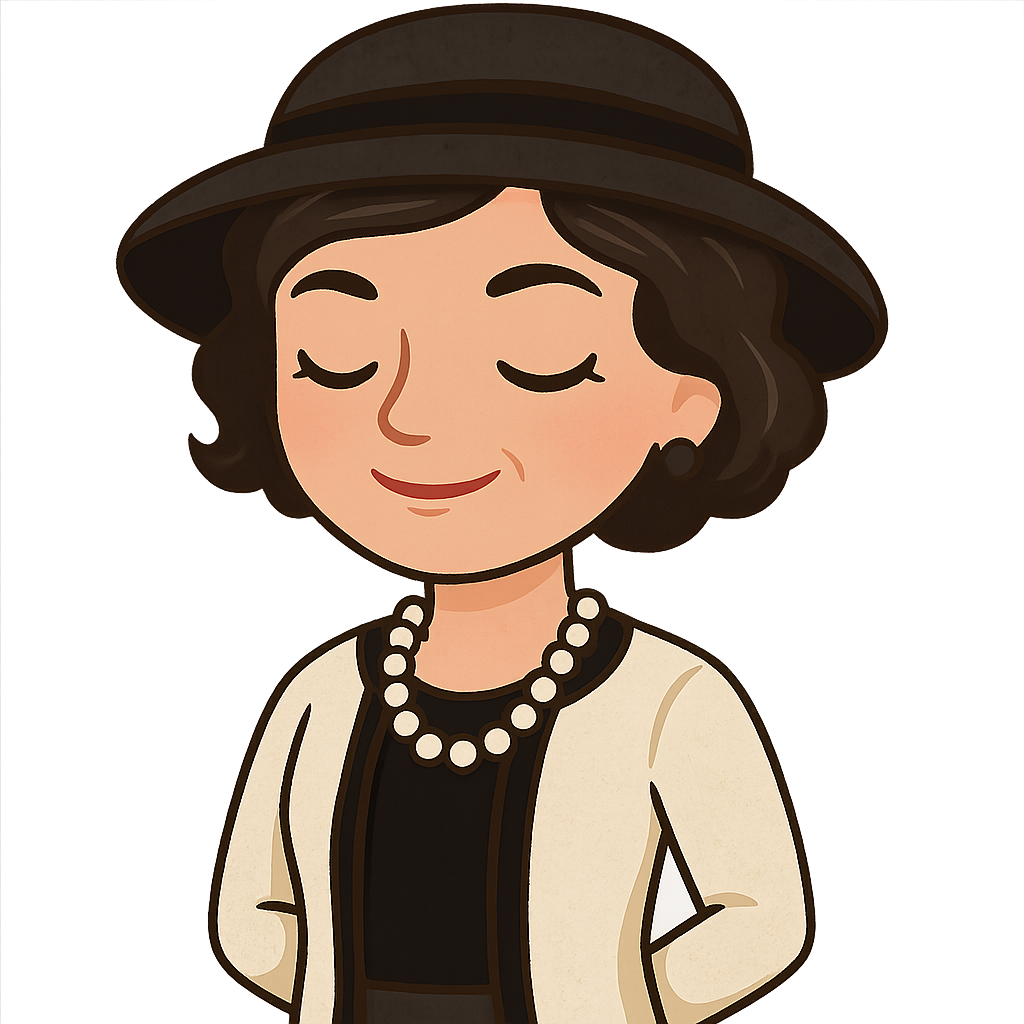
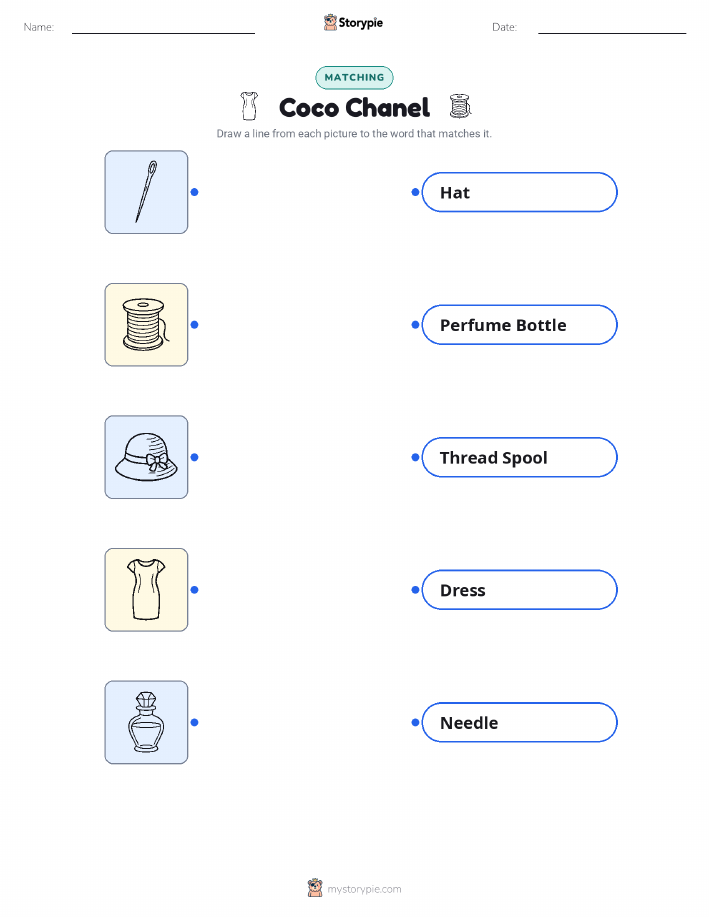
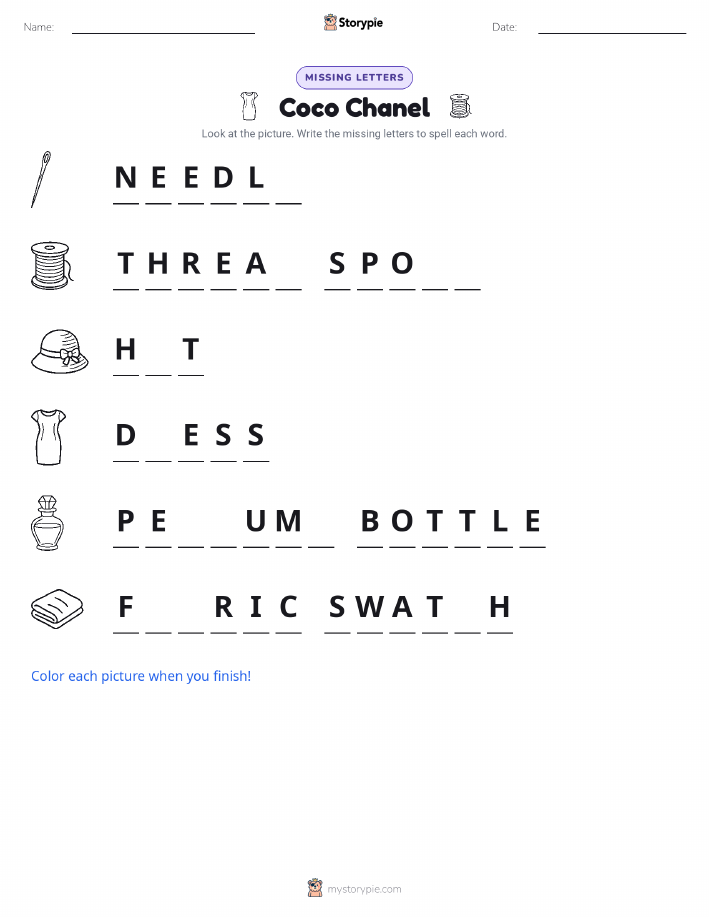
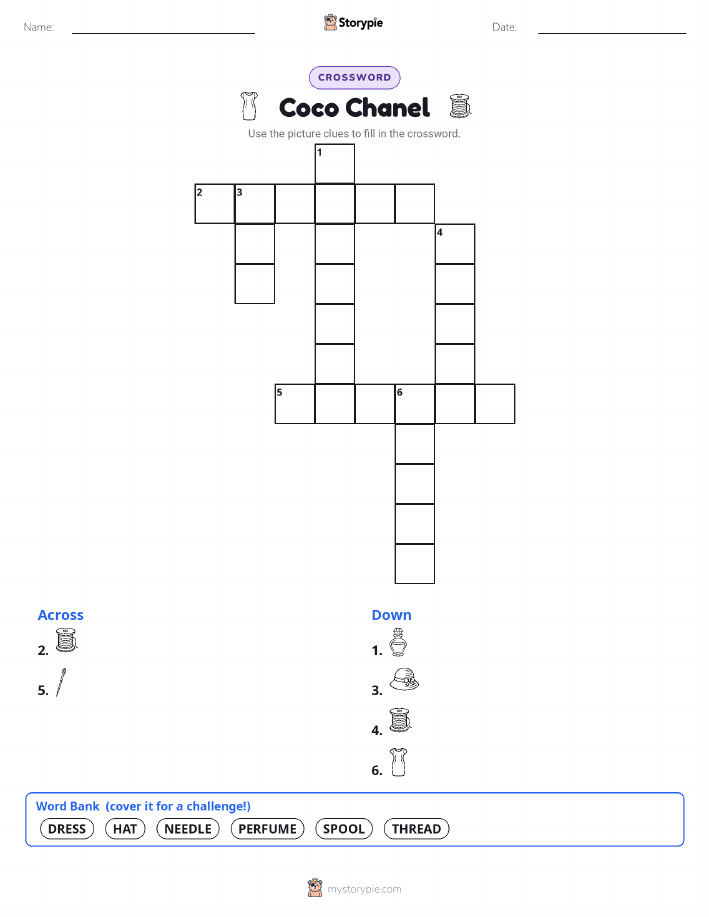
Hello. My name is Gabrielle Chanel, but the world came to know me as Coco. My story begins on August 19th, 1883, in a small town in France called Saumur. My childhood was not easy. After my dear mother passed away, I went to live in an orphanage run by nuns. Life there was very simple and disciplined, but it was where I learned a skill that would shape my entire future: how to sew. The nuns taught me to make strong, neat stitches with a needle and thread. In that quiet place, surrounded by simple black and white fabrics, I learned to appreciate practical, well-made things. It was there that the first sparks of my ideas for a new, freer kind of clothing for women began to form in my mind.
As I grew up, I dreamed of creating clothes for women that were not only elegant but also wonderfully comfortable. In those days, women’s fashion was often very restrictive, with tight corsets and heavy skirts that made it hard to move. I wanted to change all of that. Around 1910, I took my first big step and opened a small shop in Paris where I designed and sold hats. The hats that were popular then were enormous and covered in feathers and ribbons. My hats were the opposite—they were simple, stylish, and chic. People loved them, and soon I was ready for my next idea. In 1913, I opened a boutique in a seaside town called Deauville. There, I did something that shocked the fashion world: I started making clothes from jersey, a soft, stretchy fabric that was only used for men’s underwear at the time. I knew it was perfect for the modern woman who wanted to be active and comfortable.
Coco Chanel: A Story of Style
Hello. My name is Gabrielle Chanel, but the world came to know me as Coco. My story begins on August 19th, 1883, in a small town in France called Saumur. My childhood was not easy. After my dear mother passed away, I went to live in an orphanage run by nuns. Life there was very simple and disciplined, but it was where I learned a skill that would shape my entire future: how to sew. The nuns taught me to make strong, neat stitches with a needle and thread. In that quiet place, surrounded by simple black and white fabrics, I learned to appreciate practical, well-made things. It was there that the first sparks of my ideas for a new, freer kind of clothing for women began to form in my mind.
As I grew up, I dreamed of creating clothes for women that were not only elegant but also wonderfully comfortable. In those days, women’s fashion was often very restrictive, with tight corsets and heavy skirts that made it hard to move. I wanted to change all of that. Around 1910, I took my first big step and opened a small shop in Paris where I designed and sold hats. The hats that were popular then were enormous and covered in feathers and ribbons. My hats were the opposite—they were simple, stylish, and chic. People loved them, and soon I was ready for my next idea. In 1913, I opened a boutique in a seaside town called Deauville. There, I did something that shocked the fashion world: I started making clothes from jersey, a soft, stretchy fabric that was only used for men’s underwear at the time. I knew it was perfect for the modern woman who wanted to be active and comfortable.
My little shop soon grew into a world-famous fashion house, and I continued to create designs that would change how women dressed forever. I believed that a woman's style should be part of who she is, and that included her scent. In 1921, I created my first perfume, which I called Chanel No. 5. I didn't want it to smell like just one flower, like most perfumes. I wanted it to be complex and memorable, what I described as 'a woman's perfume with the scent of a woman.' A few years later, in 1926, I introduced another one of my most famous ideas: the 'little black dress.' Before then, the color black was usually only worn for times of sadness. I showed everyone how a simple black dress could be elegant, versatile, and perfect for any occasion. I also designed the famous Chanel suit, a matching tweed jacket and skirt that was both stylish and comfortable, giving women a look that was perfect for the office or a dinner party.
My work was interrupted by a very difficult time in history, World War II. During the war, I felt it was not a time for high fashion, so I made the hard decision to close my fashion house. After the war ended, I watched as fashion became fussy and complicated again, with the tight waists and heavy skirts I had worked so hard to get rid of. I knew women still needed the comfort and freedom my clothes offered. So, in 1954, at 71 years old, I decided it was time for a comeback. I reopened my couture house in Paris and presented a new collection. Some people thought my simple styles were from the past, but soon the world agreed that my designs were classic. I proved that my ideas about style were timeless. As I always said, 'Fashion fades, only style remains the same.'
I continued to work for the rest of my life, sketching designs and choosing fabrics almost until my very last day. I lived to be 87 years old. My goal was always to give women freedom through fashion—the freedom to move, to work, and to feel like themselves. Today, the brand I built is known all over the world. The ideas I believed in—simplicity, comfort, and timeless elegance—continue to inspire people everywhere, showing that one person's vision can truly change the world.
Wow facts
About
A pioneering French fashion designer and businesswoman who founded the Chanel brand, revolutionizing women's fashion with her emphasis on comfort and simple elegance.
Take a Quiz
Question 1 of 5
In the story, I said that before I designed the 'little black dress,' black was mostly a color for 'sadness.' What does this mean?
Explore next






Want to do even more?
Go beyond exploring. Unlock tools that turn every story into real learning.

Storypie Plus for families
Full stories, quizzes, and printables. Nights and car rides, sorted.
- Unlimited audio stories
- Create Mode: your child stars in the story
- Offline downloads
- Printable worksheets & coloring pages

Why Storypie for Schools
Students engaged. Prep in seconds. Evenings back to you.
- Worksheets & Quizzes
- Classroom Management
- Formative Assessment
- Custom Curriculum & Lesson Plans
- 27 Languages

Why Storypie for Homeschool
Curriculum done. They'll ask for more. Hours back in your day.
- Worksheet Generator
- First-Person Audio Stories
- Built-in Comprehension Quizzes
- Custom Curriculum & Lesson Plans
- Print & Go Activities