Jackie Robinson
Hello, my name is Jack Roosevelt Robinson, but most people know me as Jackie. My story begins in a small town called Cairo, Georgia, where I was born on January 31st, 1919. The world was a different place back then, especially for an African American family like mine. My mother, Mallie, was one of the bravest people I have ever known. When I was just a year old, she decided our family needed a better life, so she packed up everything and moved me and my four older siblings all the way across the country to Pasadena, California. Life in California wasn't without its struggles. We were a poor family, and we often faced prejudice because of the color of our skin. But my mother taught us to stand up for ourselves with dignity and pride. My siblings and I were a tight-knit team, always looking out for one another. To me, sports were everything. It didn't matter what game it was—football, basketball, track, or baseball—I just loved to compete. My older brother, Mack, was my hero. He was a phenomenal athlete who competed in the 1936 Olympics in Berlin and won a silver medal in the 200-meter dash. Watching him inspired me to push myself to be the best I could be. That drive took me to the University of California, Los Angeles, or UCLA. It was there that I made a name for myself, becoming the first student in the school's history to earn a varsity letter in four different sports in a single year. Sports were my passion, but I soon realized they would also become my platform for something much bigger.
My time at UCLA was cut short by financial troubles, and soon after, our country entered World War II. I was drafted into the U.S. Army in 1942 to serve my country. I was proud to wear the uniform, but even in the Army, I couldn't escape the injustice of segregation. The army was separated by race, with black soldiers and white soldiers serving in different units. I was determined to become an officer, and after a long fight against unfair rules, I was accepted into Officer Candidate School. One day in 1944, I was riding an Army bus back to camp. The driver ordered me to move to the back of the bus, where African Americans were expected to sit. I knew this was wrong, and I refused. I had served my country honorably, and I believed I had the right to sit wherever I wanted. My refusal led to a court-martial, but I was eventually found not guilty. The experience was difficult, but it strengthened my resolve to never back down from a fight for equality. After leaving the Army, I returned to my first love: baseball. In 1945, I joined the Kansas City Monarchs, one of the best teams in the Negro Leagues. It was an incredible experience playing with such talented athletes, but it always stung that we were kept separate from the major leagues just because of our skin color. I knew things had to change.
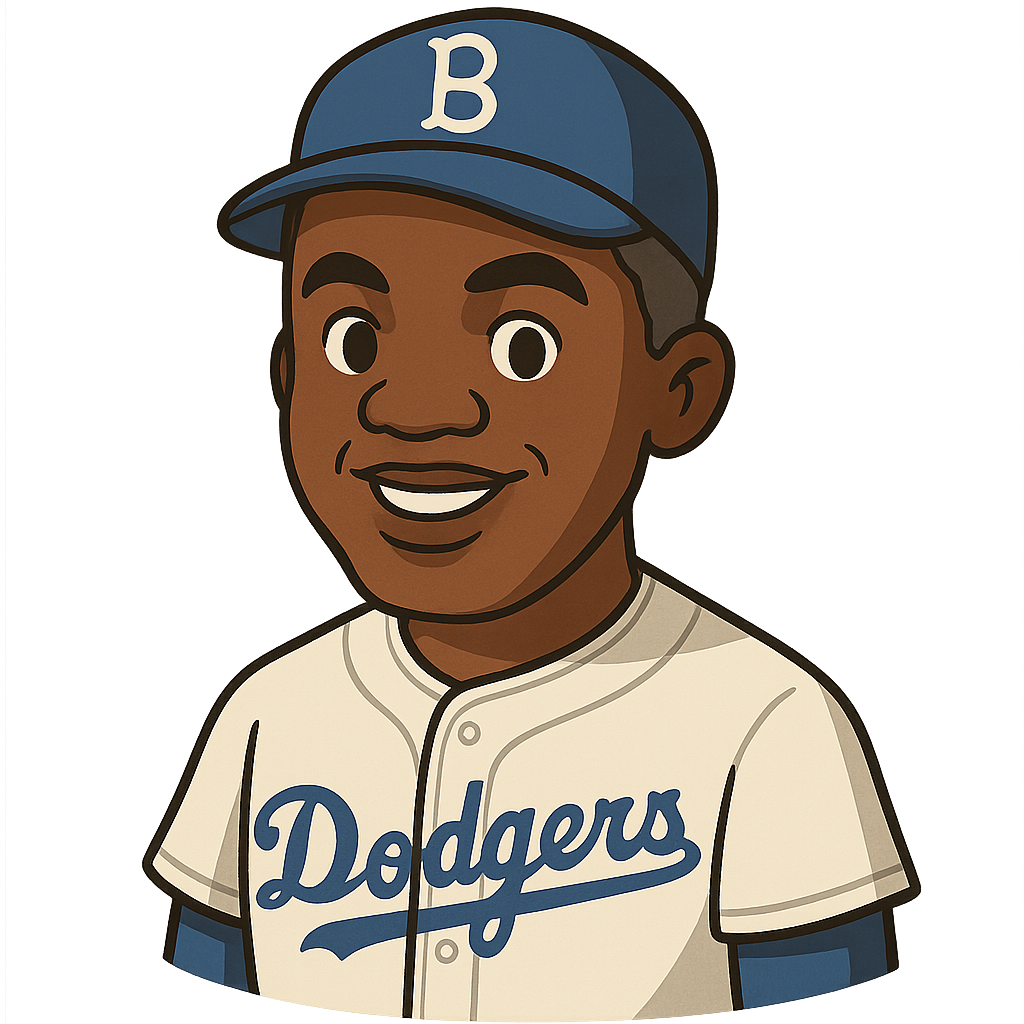
Change came in the form of a man named Branch Rickey. On August 28th, 1945, I had a meeting that would alter the course of my life and the history of America. Mr. Rickey was the general manager of the Brooklyn Dodgers, and he had a revolutionary idea. He wanted to integrate Major League Baseball, and he wanted me to be the first African American player. He called it “the great experiment.” But he was brutally honest with me. He didn't want a player who would fight back physically. He needed someone, as he said, “with guts enough not to fight back.” He acted out the ugly scenes I would face: the insults from the crowd, the pitchers throwing baseballs at my head, the players on other teams trying to hurt me. He needed my promise that I would face it all with dignity and let my talent on the field do the talking. I gave him my word. The weight of that promise felt immense; I was carrying the hopes of millions of people on my shoulders. On April 15th, 1947, the moment arrived. I walked onto the grass of Ebbets Field in Brooklyn, wearing number 42 on my Dodgers uniform. The world was watching. It was as difficult as Mr. Rickey had predicted. I heard terrible names, received threatening letters, and was ignored by some of my own teammates. But I was never truly alone. My wonderful wife, Rachel, was my rock, always there to support me. And slowly, I won over my team. I'll never forget the day in Cincinnati when our shortstop, Pee Wee Reese, a white player from Kentucky, walked over and put his arm around my shoulders in front of a booing crowd. His simple act of friendship silenced the hate and showed everyone that we were a team.
I kept my promise to Mr. Rickey and focused on the game. That first year, I was named Rookie of the Year. In 1949, I was named the National League's Most Valuable Player. And in 1955, we finally did it—the Brooklyn Dodgers won the World Series. It was one of the proudest moments of my life. After a ten-year career, I retired from baseball in 1957. But my fight was far from over. I knew that breaking the color barrier in baseball was just one step in a much larger journey for civil rights. I became a businessman and a vocal activist, working alongside leaders like Dr. Martin Luther King Jr. to fight for equality in housing, employment, and education. I used the fame that baseball gave me to speak out against injustice wherever I saw it. My life came to an end on October 24th, 1972, but I hope my story continues to inspire people. I believe that a life is not important except in the impact it has on other lives. My journey taught me that one person's courage can make a difference, and that true strength is not about fighting back with your fists, but with your character, your talent, and your unwavering belief in what is right.
Reading Comprehension Questions
Click to see answer