

 English

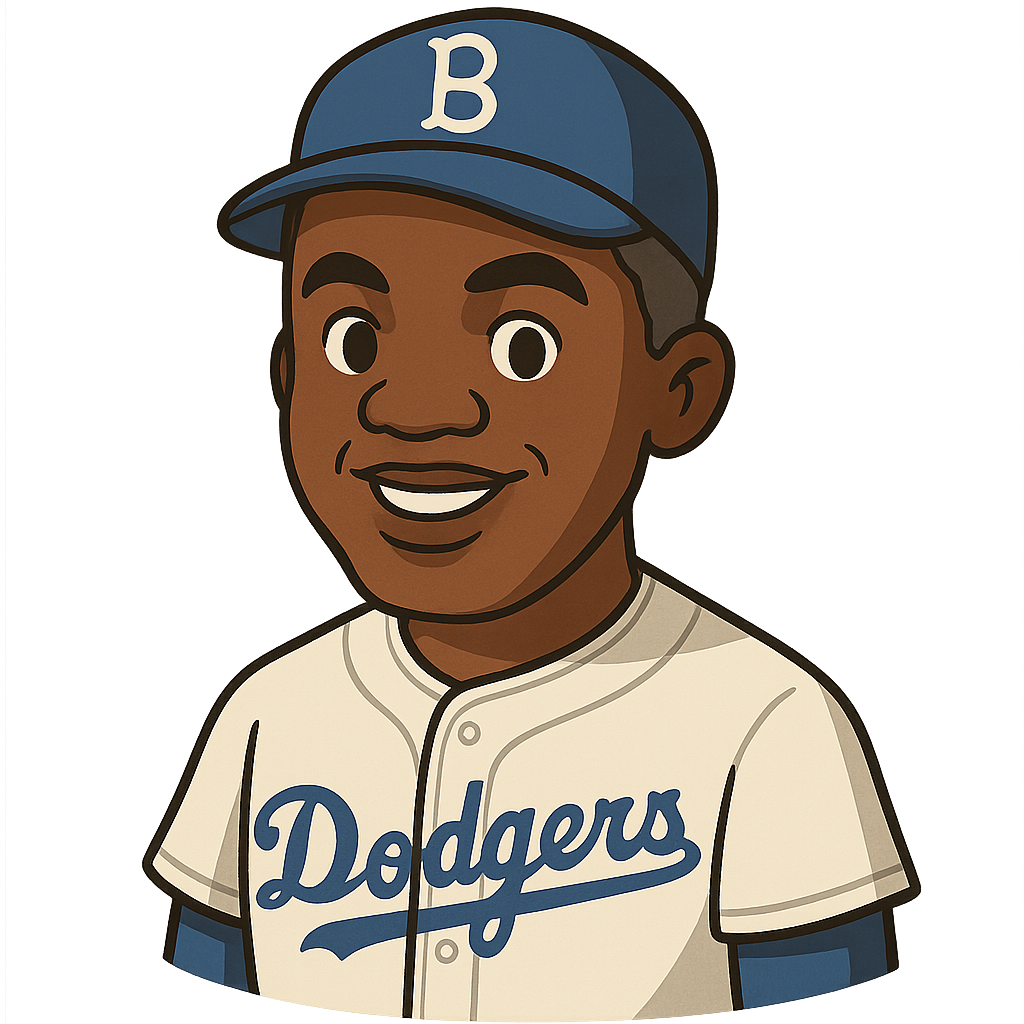
Jackie Robinson
Hello there. My full name is Jack Roosevelt Robinson, but my friends and family always called me Jackie, and you can, too. I was born on a chilly day, January 31st, 1919, in a small town in Georgia. But the place I really called home was Pasadena, California. My mother, Mallie, was one of the strongest people I ever knew. After my father left, she raised me and my four older siblings all on her own. She worked long, hard hours cleaning houses, but she always came home and taught us to be proud of who we were and to stand up for ourselves with dignity. I had a lot of energy as a boy, and I loved to play sports more than anything. My older brother, Mack, was my hero. I watched him train tirelessly for the Olympics, and I was bursting with pride when he won a silver medal in track and field. He showed me that with hard work, you could achieve amazing things, and I wanted to be just like him. That dream pushed me to run faster, jump higher, and play harder in every game I ever played.
When I got older, I went to a big college called UCLA. It was a special time because I became the first athlete there to be a star in four different sports: baseball, basketball, football, and track. I loved competing, but a shadow hung over the world of sports back then. There was an unfair rule in professional baseball called the 'color line.' This rule meant that only white players were allowed to play in Major League Baseball. It didn't matter how talented you were; if your skin was Black, like mine, you couldn't join the teams everyone watched. It was a heartbreaking rule that kept so many gifted players from chasing their dreams. I served my country in the army during a big conflict called World War II, and even there, I had to stand up against unfair rules. After the army, I joined a team called the Kansas City Monarchs. We played in the Negro Leagues, which were created so that Black players could play professional baseball. We had amazing players and passionate fans, but I always dreamed of a day when the color line would disappear and we could all play together on the same field.
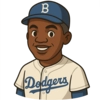
That dream started to become real on August 28th, 1945. I was invited to a meeting with a man named Branch Rickey, the president of a Major League team called the Brooklyn Dodgers. He looked me right in the eye and asked me a question that would change my life. He didn’t ask if I could hit or run. He asked if I had the guts not to fight back. He explained that people would shout horrible things at me, that players might try to hurt me, and that I would face unfairness every single day. He needed a player who was strong enough to take it all without losing his temper. It was the hardest promise I ever made, but I knew it was for something bigger than myself. On April 15th, 1947, I walked onto Ebbets Field in Brooklyn wearing a Dodgers uniform. The crowd was a mix of cheers and angry shouts. I was the first Black player in modern Major League Baseball. In one game, when the taunts were especially loud, one of my teammates, Pee Wee Reese, walked over and put his arm around my shoulders. That simple act of friendship showed everyone we were a team, and it gave me the strength to carry on.
My career with the Dodgers was full of incredible moments. I was named Rookie of the Year in my first season, and in 1955, our team won the World Series. Those victories were sweet, but what mattered most to me was that my journey helped break down the color line forever. Because I was there, the door was opened for other talented Black players to finally get their chance to play in the major leagues. My life wasn't just about baseball. It was about showing that everyone deserves a fair chance and that you should always stand up for what is right, even when it's hard. Looking back, I hope people remember that one person can make a big difference, not just in a game, but in the world.
Activities
Take a Quiz
Test what you learned with a fun quiz!
Get creative with colors!
Print a coloring book page of this topic.









 Free for Educators