

 English

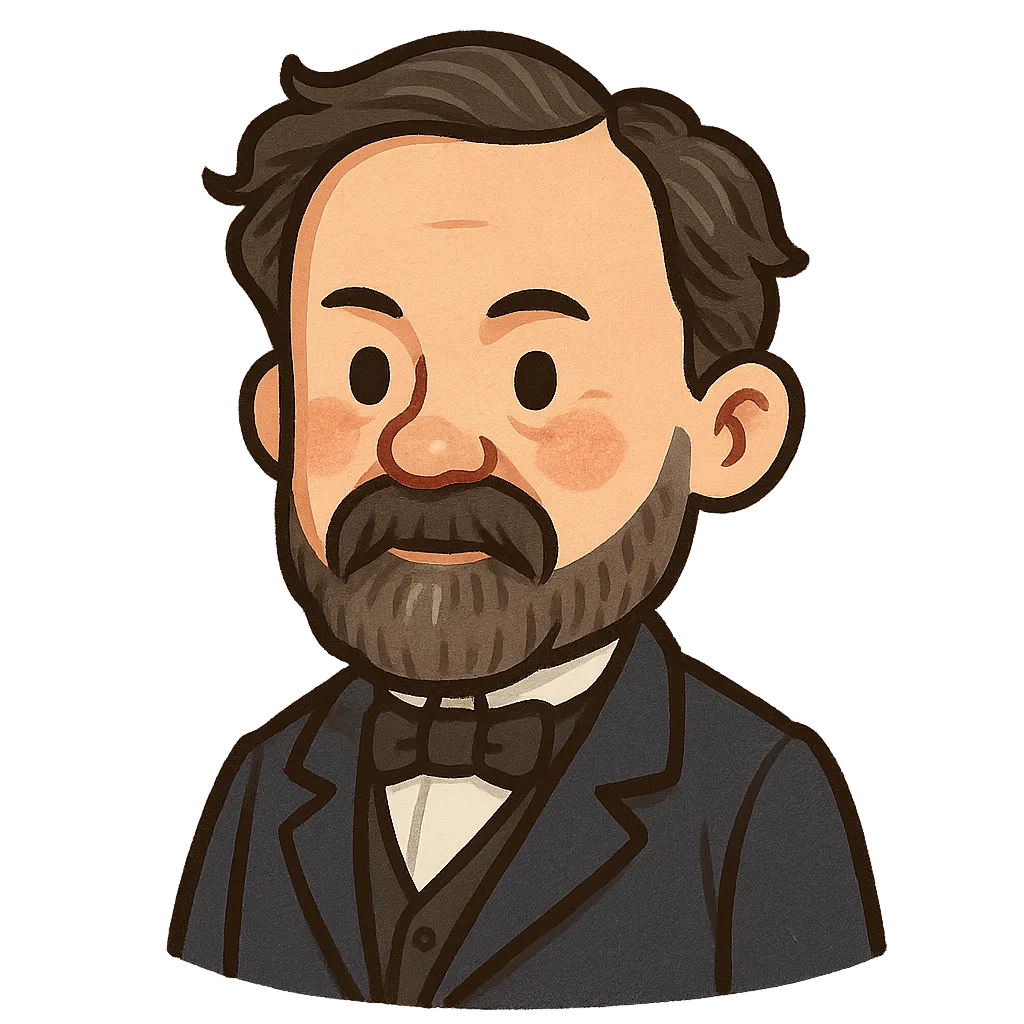
Louis Pasteur: A Journey into the Unseen World
Hello, my name is Louis Pasteur, and I want to share the story of my life with you. I was born on December 27th, 1822, in a town in France called Dole. My father worked as a tanner, a job that requires great patience and hard work, and he instilled in me the importance of perseverance. While I was a young boy, I had a passion for drawing and painting, but an even greater curiosity about the scientific mysteries of the world. I wasn't always a top student in my early years, but thankfully, my headmaster recognized a spark in me and encouraged my studies. His belief in me paid off, and in 1843, I felt a great sense of accomplishment when I was accepted into the prestigious École Normale Supérieure in Paris to study science.
My scientific journey began not with a grand experiment, but with the tiny crystals of a chemical called tartaric acid. In 1848, while looking at these crystals under a microscope, I made a breakthrough discovery. I noticed that the crystals formed in two distinct shapes that were mirror images of one another, much like your left and right hands. This observation was a crucial clue that the fundamental building blocks of life possessed a unique structure. This insight pushed me to investigate fermentation, the process that transforms grape juice into wine. During the 1850s, the common belief was that fermentation was purely a chemical reaction. However, I was able to prove that tiny living organisms, which I called microbes, were the true cause. This realization sparked a revolutionary idea: if these invisible germs could alter food and beverages, could they also be the cause of diseases in humans and animals?
This new idea, which became known as the 'germ theory,' had immediate practical applications that helped many people. At the time, the French wine industry was facing a major crisis because its wine was spoiling much too quickly. I theorized that unwanted germs were the culprits behind the spoilage. Around 1864, I developed a simple yet effective solution. By gently heating the wine to a specific temperature, I could kill the harmful microbes without affecting the wine's taste. This method was named 'pasteurization' in my honor, a process that is still used today to keep milk and other foods safe to consume. Just a few years later, during the 1860s, I was asked to help save another vital French industry: silk. A mysterious disease was killing the silkworms, threatening the livelihood of many. Through careful observation and experiments, I identified the microbes responsible for the illness and developed methods to help farmers select only healthy worms, saving the industry from collapse.
My most significant work came when I applied my germ theory directly to fighting deadly diseases. I reasoned that if germs were the cause of sickness, then perhaps the body could be taught how to fight them off. I created a method of weakening, or 'attenuating,' dangerous microbes so they could be used to create vaccines. In 1881, I developed a vaccine for anthrax, a terrible disease that was killing thousands of sheep and cattle. To demonstrate its effectiveness, I held a public experiment where I vaccinated one group of sheep but left another unprotected. When I exposed both groups to the live anthrax germs, every single one of the vaccinated sheep survived, while the unprotected ones did not. My most famous challenge came on July 6th, 1885, when a nine-year-old boy named Joseph Meister was brought to me. He had been bitten by a rabid dog, and without treatment, he faced certain death. Using my new, untested rabies vaccine on a human was a great risk, but it was his only chance. I administered the series of injections, and we all waited anxiously. To everyone's immense relief, the treatment worked. Joseph lived, and humanity had a powerful new weapon against one of its most feared diseases.
My success with the rabies vaccine brought hope to people across the globe. Donations came from far and wide, allowing us to establish the Pasteur Institute in Paris in 1887. This center was dedicated to the research and prevention of infectious diseases, and it continues its life-saving work to this day. I lived to be 72 years old, continuing my work until I passed away in 1895. I am often remembered as the 'Father of Microbiology,' and I am proud that my discoveries about germs, pasteurization, and vaccines have saved countless lives over the years. My story is a testament to the idea that with endless curiosity, dedicated hard work, and the courage to explore the unseen world, anyone can make a lasting difference.
Activities
Take a Quiz
Test what you learned with a fun quiz!
Get creative with colors!
Print a coloring book page of this topic.













 Free for Educators