

 English

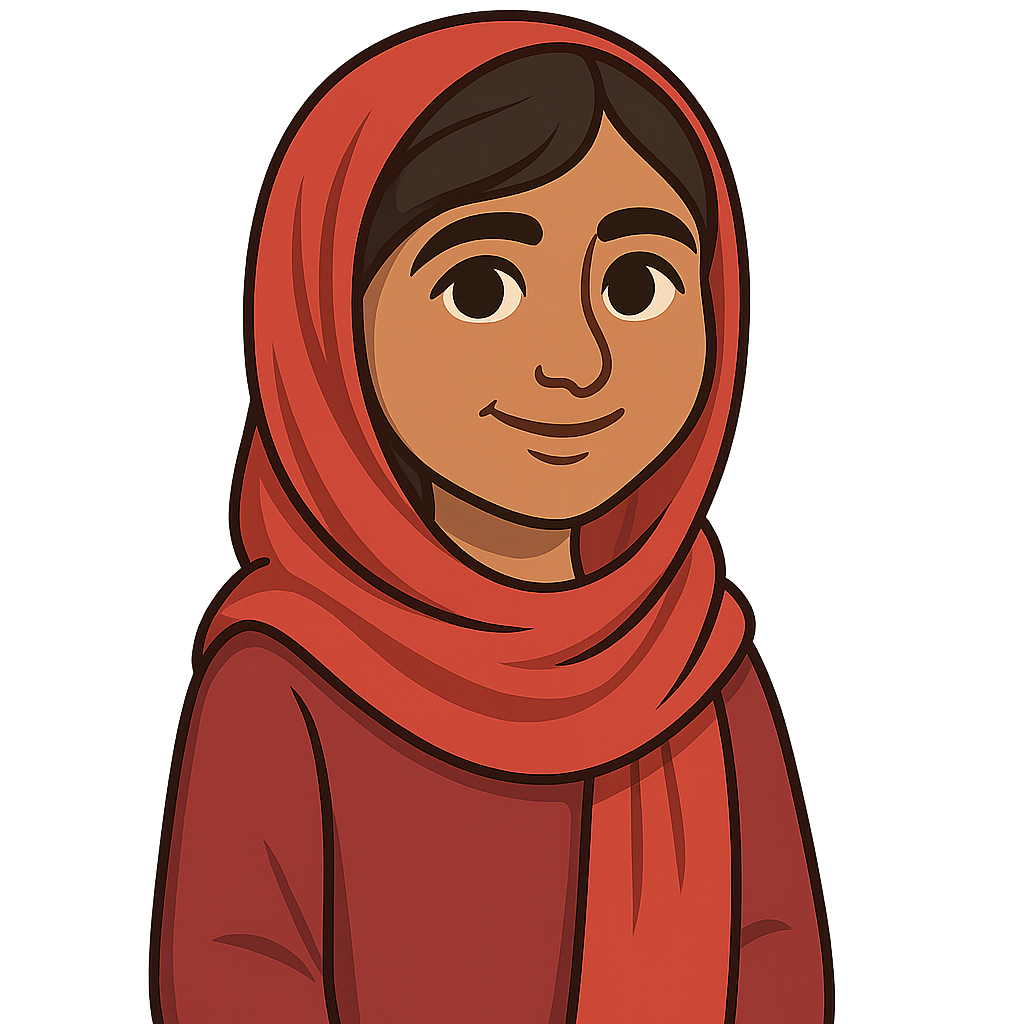
Malala Yousafzai
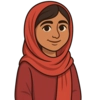
Hello, my name is Malala Yousafzai, and I want to share my story with you. Before the world knew my name, I was a girl who loved school more than anything. I was born on July 12th, 1997, in Mingora, the main town in the beautiful Swat Valley of Pakistan. My home was a paradise of towering mountains, lush green valleys, and crystal-clear rivers. It was a popular tourist destination, and its beauty was famous throughout the country. Life was peaceful, and I spent my days playing cricket in the street with my brothers, Khushal and Atal, and, most importantly, immersing myself in my studies. My father, Ziauddin, was not just my father; he was my guide and my greatest inspiration. He was a passionate educator who ran a school, and he believed in something that was quite radical in our conservative region: that girls deserved a full education, just as much as boys. This belief was the cornerstone of our family. He named me after Malalai of Maiwand, a legendary Pashtun heroine who rallied soldiers against British troops in the 19th century. Hearing her story always filled me with a sense of purpose, as if my name itself was a promise I had to keep and a destiny I had to fulfill. My mother, Toor Pekai, also encouraged my studies, even though she herself had not been given the chance to attend school as a child. Her support was a quiet but powerful force in my life. Their belief in me was my foundation. I dreamed big dreams, as children often do. Some days, I wanted to be a doctor, to heal the sick and serve my community. On other days, I imagined myself as a politician, speaking out for justice and working to make my country a better, fairer place for everyone. My school was my sanctuary. I loved the smell of new books, the challenge of a difficult math problem, and the lively debates I had with my best friend, Moniba. School wasn't just about memorizing facts; it was about learning to think for myself, to question the world, and to believe in my own potential. For the first decade of my life, my world was filled with the simple joys of childhood and the exciting promise of the future. I had no idea how quickly that peace would be shattered, or that my simple desire for an education would soon become a dangerous act of defiance against powerful forces.
The peace of my valley began to crumble around 2008. A group called the Taliban started gaining power in Swat. At first, their influence was subtle, but soon it grew into an oppressive shadow that covered everything. They broadcast their strict rules over the radio every night, and their commands filled our homes with fear. Music was banned. Watching television was forbidden. Women were ordered to stay indoors unless accompanied by a male relative. Their rules were designed to control every aspect of our lives and erase our culture and our joy. But the rule that struck my heart with the most terror was their declaration that girls could no longer go to school. They believed that education was not for girls. I was just eleven years old, and I couldn't understand. How could anyone think learning was a bad thing? My school was my world, and they were trying to take it away. The fear in our community was thick enough to touch. We heard stories of people being punished for disobeying the rules, and schools for girls were being blown up in the middle of the night. Despite the danger, my father and I felt we could not remain silent. He continued to speak out publicly against the Taliban, and I felt a fire light up inside me. My education was my right, and I was not going to give it up without a fight. My voice felt small, but I knew I had to use it. In early 2009, an opportunity came. A journalist from the BBC was looking for a teacher or a student to write a secret diary, or blog, about life under the Taliban. It was too dangerous for most, but I volunteered. I chose a pseudonym, a fake name, to protect myself: Gul Makai, which means 'cornflower' in my language. Under this name, I started to write. I wrote about my fears, my dreams, and my frustration. I described what it was like to hide my books under my shawl, to hear the sounds of fighting outside my window, and to worry that each day at school might be my last. My blog was a small light in a very dark time, a way to tell the world that we were still here and that girls in Swat Valley still yearned to learn.
My public advocacy for education grew, and though I was still young, my voice was being heard. But with that came greater risk. The day my world changed forever was October 9th, 2012. I was fifteen years old. It started as an ordinary day, full of the familiar routines of school. We had just finished our exams, and a feeling of relief and happiness filled the air as my friends and I boarded the old bus to go home. We were chatting and laughing, talking about our plans for the holidays. The bus rumbled along its usual route, and I remember looking out at the familiar streets of my town, feeling content. Suddenly, the bus stopped. Two young men in the street flagged it down. One of them boarded our bus. 'Who is Malala?' he demanded. No one said anything, but some of the girls instinctively looked toward me. That was all he needed. He raised his hand, and the last thing I remember was a deafening sound and a bright flash. Then, everything went dark. I don’t remember the pain or the panic that followed. My next conscious thought was waking up in a place I did not recognize. The room was white and sterile, and I was connected to machines that beeped and whirred. I was confused and couldn't speak because of a tube in my throat. I learned I was in a hospital in Birmingham, England, thousands of miles from my home. I had been in a coma for days. As my mind slowly cleared, my parents told me what had happened and about the incredible wave of support that had risen up for me from all over the world. People from every country were sending prayers, letters, and gifts. They were holding signs with my name on them and demanding that all girls have the right to an education. In trying to silence me, my attackers had done the opposite. They had made my voice echo across the globe.
My recovery was long and difficult, involving many surgeries, but with every passing day, I grew stronger. I realized that I had been given a second chance at life, and I knew I had to use it for a purpose. The men who attacked me thought a bullet could silence me and my cause, but they had failed spectacularly. In fact, they had ignited a global movement. My personal fight for my own education became a universal fight for the education of all children. My family and I built a new life in England, but our hearts remained with our mission. On my 16th birthday, on July 12th, 2013, I was given the incredible honor of speaking at the United Nations in New York. Standing before leaders from around the world, I declared, 'They thought that the bullets would silence us. But they failed... The terrorists thought that they would change our aims and stop our ambitions, but nothing changed in my life except this: Weakness, fear and hopelessness died. Strength, power and courage was born.' That same year, my father and I co-founded the Malala Fund, an organization dedicated to breaking down the barriers that prevent more than 130 million girls around the world from going to school. Our work took me to many countries, where I met other girls who were fighting their own battles for the right to learn. Then, on December 10th, 2014, I received the Nobel Peace Prize, becoming the youngest-ever recipient. It was a humbling honor that I shared with every child who has ever struggled for their education. My journey is far from over, but it has taught me a powerful lesson: never underestimate your own power. One child, one teacher, one book, and one pen can change the world. Your voice matters, so use it to speak up for what is right, and together, we can create a world where every child can go to school and achieve their dreams.
Activities
Take a Quiz
Test what you learned with a fun quiz!
Get creative with colors!
Print a coloring book page of this topic.






 Free for Educators