

 English

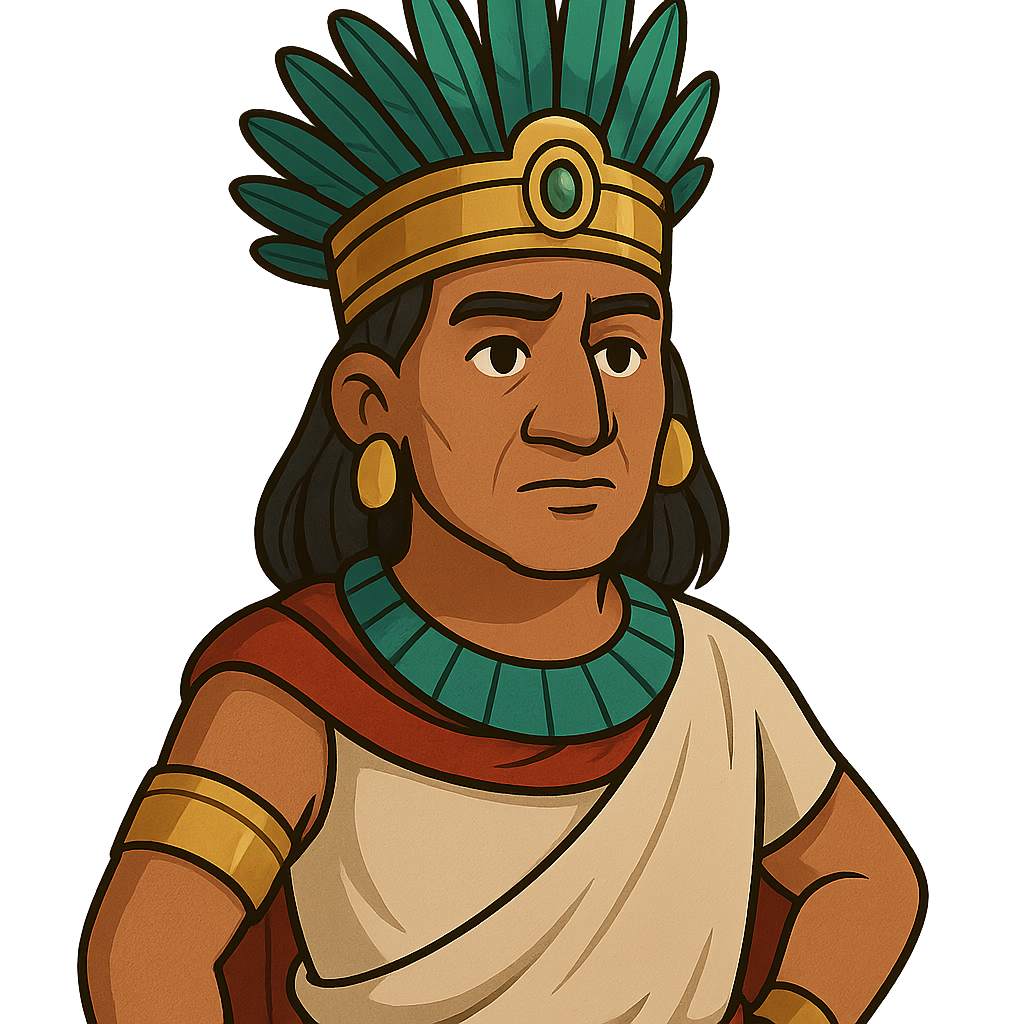
Moctezuma II: The Last Ruler of a Floating City
Hello, my name is Moctezuma, and I was the leader, the Huey Tlatoani, of the mighty Aztec people. My story begins in a place that must sound like a dream to you. I grew up in Tenochtitlan, a magnificent city that seemed to float on the waters of Lake Texcoco. Instead of dusty roads, we had sparkling canals where canoes glided like silent birds. We even had gardens that floated on the water, called chinampas, where we grew flowers, vegetables, and corn. It was a city of breathtaking beauty and perfect order, a jewel in the middle of a great lake. As a young boy, my life was filled with purpose. I was chosen for a special path, learning to be both a fierce warrior and a devoted priest. My days were spent studying the movements of the stars, learning the sacred stories of our gods, and memorizing the long, proud history of our ancestors. I learned how to read the world around me, from the flight of an eagle to the rustle of the wind. I was taught that everything had its place in the universe, and it was our duty to keep the world in balance. The world I knew was strong, organized, and full of wonder.
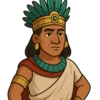
In the year 1502, I was given the greatest honor and the heaviest responsibility. I was chosen to wear the feathered crown and become the Huey Tlatoani, the Great Speaker for my people. It was my job to be their voice, their protector, and their leader. My days were filled with important duties. I led our brave armies to protect our lands and expand our empire. I made sure that our gods were honored with grand festivals and solemn ceremonies, because we believed their happiness ensured that the sun would rise each day and the rains would come for our crops. I also had to make sure my people were cared for, that justice was fair, and that our great city continued to shine. During my time as ruler, I worked to make Tenochtitlan even more beautiful. We expanded our markets, built new temples, and made our central pyramid, the Templo Mayor, grander than ever before. It was a golden time for our empire, and I was proud to lead my people.
Then, in the year 1519, everything began to change. Strange news reached me from the coast. Messengers spoke of men who had arrived from the sea in giant floating hills, or ships. They said these men had skin as pale as the moon, hair like the sun, and they wore clothes made of shining metal. They rode on enormous beasts that we had never seen before, creatures they called horses. My people and I were filled with confusion and wonder. Our ancient stories spoke of a god, Quetzalcoatl, who had promised to return from the east one day. Could these strangers be gods? Or were they just men? I did not know, but I knew I had to be careful. Their leader was a man named Hernán Cortés. On November 8th, 1519, I made the decision to welcome him and his soldiers into Tenochtitlan. I hoped that by meeting them peacefully, I could understand who they were and prevent any fighting. When they walked into our city, it was like two different worlds meeting. They stared at our temples and canals, and we stared at their cannons, their metal armor, and their powerful horses. We offered them gifts of gold and feathers, and they showed us things we had never imagined.
But the peace between our peoples did not last. The friendship we tried to build began to break apart. Their ways were so different from ours, and their desire for gold was very strong. Soon, I found myself a prisoner in my own palace, and my beautiful city became a place of fear and tension. The trust was gone. Eventually, the quiet worry turned into open fighting in the streets. During a terrible conflict in June of 1520, I was badly hurt, and my life as the leader of my people came to an end. My world, the great Aztec empire, was changed forever by the arrival of these visitors. But even though our city fell, the spirit of my people did not vanish. Looking back, I know that our culture was too strong to disappear completely. Today, you can still see our legacy in the heart of modern Mexico. The language we spoke, our amazing art, and the powerful stories of our gods and heroes live on, a lasting memory of a magnificent civilization that once ruled from a floating city.
Activities
Take a Quiz
Test what you learned with a fun quiz!
Get creative with colors!
Print a coloring book page of this topic.











 Free for Educators