

 English

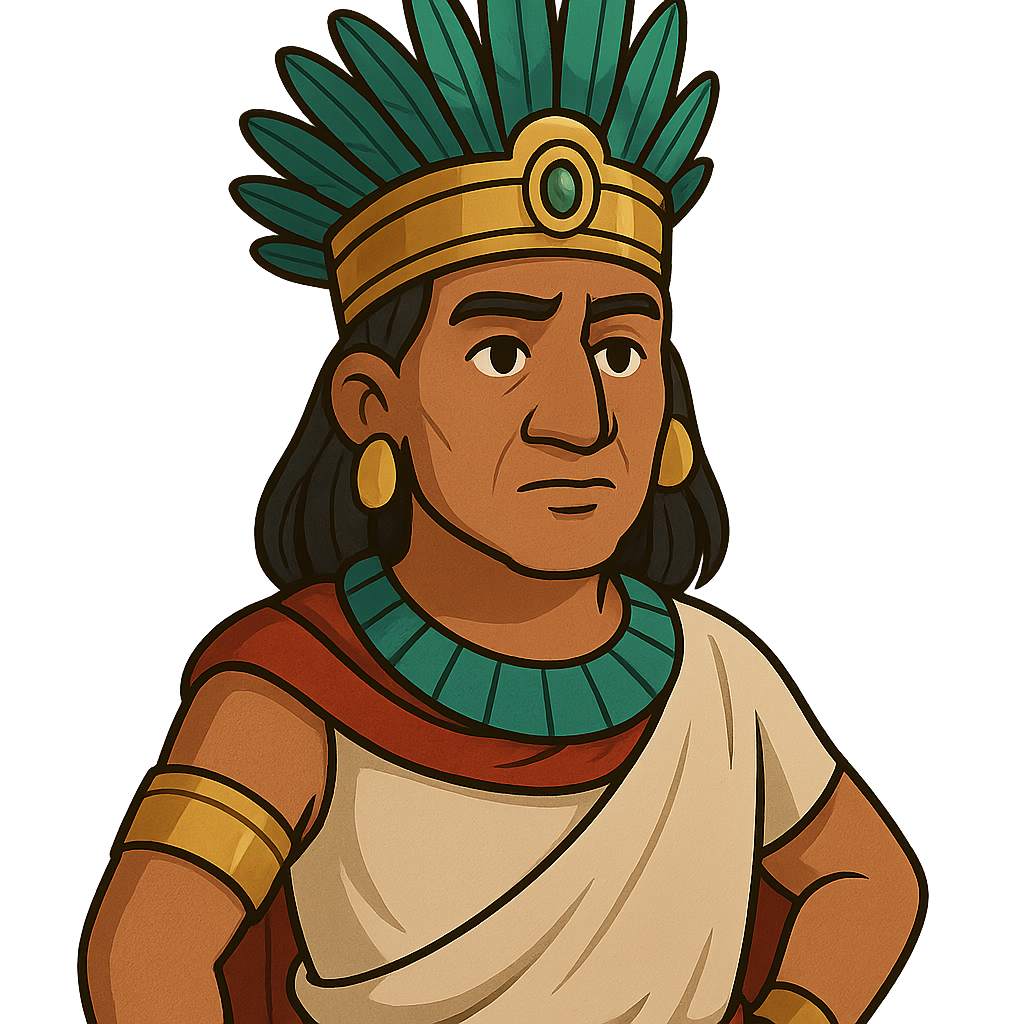
Moctezuma II: The Voice of the Last Aztec Emperor
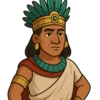
My name is Moctezuma Xocoyotzin, and I was the Huey Tlatoani, the Great Speaker, of the mighty Aztec Empire. My story begins long before my rule, in a time of splendor in my home, the magnificent city of Tenochtitlan. I was born around the year 1466 into a royal family, destined for a life of great responsibility. The world I grew up in was one of towering pyramids, floating gardens, and a deep devotion to our gods. As a young prince, my path was not one of simple luxury; it was one of intense discipline and learning. I was sent to the calmecac, a special school for the sons of nobles. There, my mind was sharpened with the study of our history, astronomy, and religion. I learned the sacred calendars and the will of the gods, preparing to one day become a priest. But a leader of my people also had to be a warrior. I trained relentlessly, mastering the arts of combat and strategy, proving my courage on the battlefield. Around the year 1502, the council of elders chose me to be the new emperor. The weight of the turquoise crown felt heavier than any stone, for I knew I was now responsible for the fate of millions and the honor of the gods who watched over us.
My capital, Tenochtitlan, was a city of dreams built on an island in the heart of Lake Texcoco. It was a marvel of engineering, a testament to the ingenuity of my people. Great stone causeways, as wide as highways, connected our island city to the mainland. Within the city, we traveled by canoe through a network of canals that crisscrossed our neighborhoods. At the center of it all stood the Templo Mayor, a massive double pyramid dedicated to Huitzilopochtli, the god of the sun and war, and Tlaloc, the god of rain. From its peak, I could see the entire valley. The marketplace of Tlatelolco was a whirlwind of activity, a place where merchants from every corner of my empire brought their goods. You could find everything there, from brilliant feathers of the quetzal bird and precious jade to everyday foods like corn, beans, and chocolate. As Huey Tlatoani, my duty was to ensure the prosperity and stability of this world. I expanded the empire through careful alliances and, when necessary, military campaigns. I oversaw the construction of new temples and aqueducts that brought fresh water into the city. Every decision I made, from judging a dispute to decreeing a festival, was guided by our sacred traditions and the signs from the gods.
For many years, my reign was prosperous, but then a shadow of unease began to fall over my empire. Strange and terrifying omens appeared, unsettling the order of our world. One year, a comet, like a fiery serpent, blazed across the daytime sky. Another time, the waters of Lake Texcoco began to boil and foam without any explanation. We heard strange voices in the night, a woman weeping for her children. My priests could not fully explain these signs, but they reminded us all of an ancient prophecy. It was said that the god Quetzalcoatl, the Feathered Serpent, a fair-skinned and bearded deity, had sailed east long ago, promising to one day return from that same direction. My heart was filled with apprehension. Were these omens heralding his arrival? Then, in the year 1519, messengers arrived from the coast, breathless and afraid. They spoke of 'floating mountains' upon the eastern sea, carrying men with skin as pale as the moon and hair on their faces like fire. They wielded weapons that shot thunder and lightning. I was torn. Was this the fulfillment of the prophecy? Was Quetzalcoatl returning to his people, or was this something far more dangerous?
I made a decision that would change the course of history. I chose to believe these men might be emissaries of the gods, and I sent them gifts of gold and turquoise. When their leader, Hernán Cortés, marched toward my city, I decided to meet him not with armies, but with diplomacy. On the 8th of November, 1519, I greeted him on one of the great causeways leading into Tenochtitlan. I welcomed him and his men into my city, housing them in one of my father’s palaces. I hoped to show them our strength and sophistication through hospitality, to understand their purpose. But this welcome soon became a gilded cage. Before long, I found myself a prisoner in my own palace, a hostage to ensure my people’s cooperation. The Spanish were amazed by our city, but they were also greedy for our gold and dismissive of our gods. Tensions grew until they erupted into violence. While Cortés was away, his men attacked my people during a religious festival, and our city rose up in fury. The Spanish forced me to speak to my people from a rooftop, to command them to lay down their arms. But they no longer saw me as their powerful leader; they saw a captive. In the chaos of that day in June of 1520, I was struck down. My life ended not in a glorious battle, but amidst the confusion and sorrow of a city under siege, my empire’s future hanging by a thread.
Though my reign ended in tragedy, and the great Aztec Empire would eventually fall to the invaders, the story of my people did not end with me. I ask you to remember the civilization we built. We were brilliant astronomers who created a calendar more accurate than any in Europe at the time. We were skilled engineers who constructed a magnificent city on a lake and fed its people with ingenious floating gardens called chinampas. Our artists created breathtaking sculptures and featherwork, and our poets sang of beauty and the fleeting nature of life. My story is a painful reminder of how two different worlds can collide, but it is also a testament to the enduring spirit of my people. The echo of our culture, our language, and our traditions can still be heard in the heart of Mexico today.
Activities
Take a Quiz
Test what you learned with a fun quiz!
Get creative with colors!
Print a coloring book page of this topic.












 Free for Educators