

 English

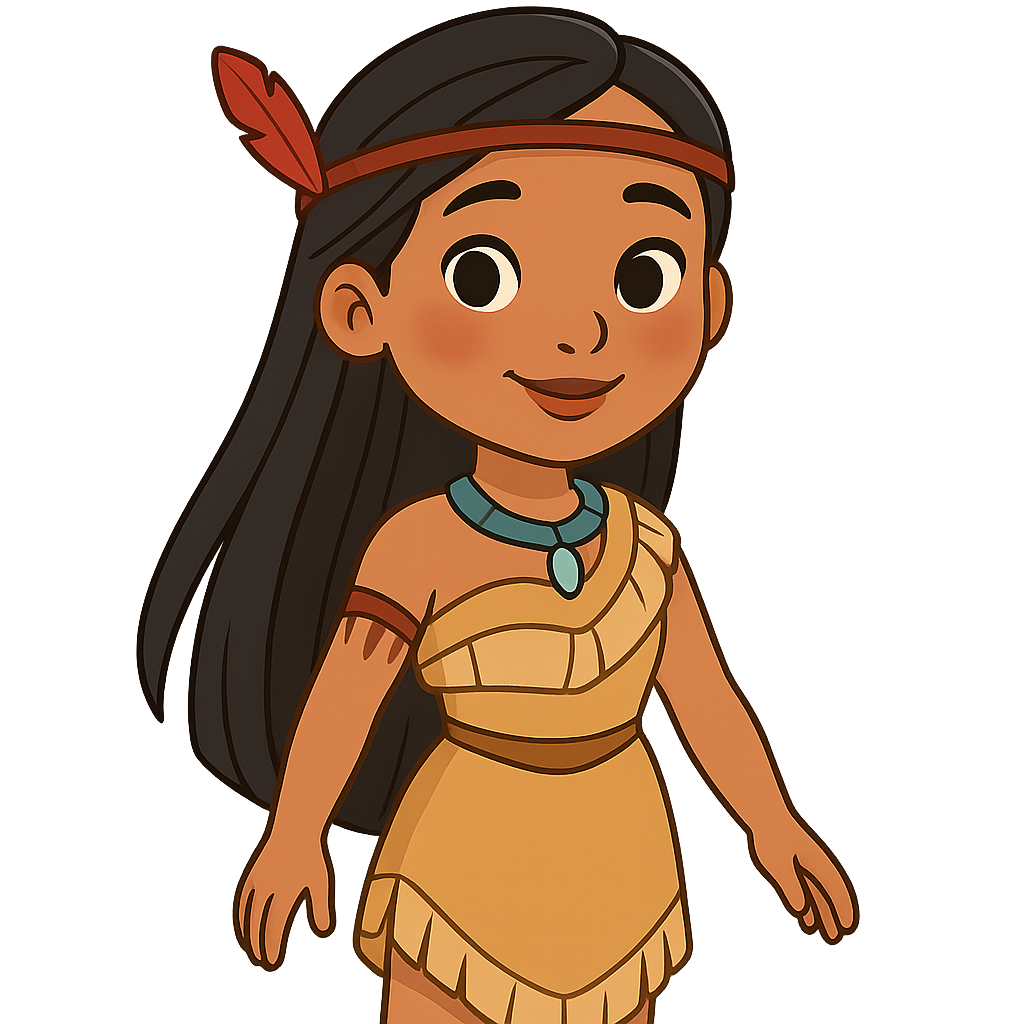
Pocahontas: A Bridge Between Two Worlds
My World Before the Ships
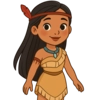
Hello. You may know me by my childhood nickname, Pocahontas, which means 'playful one,' but I was born Amonute, and later known as Matoaka. I was the daughter of the great Mamanatowick, the paramount chief Wahunsenacawh, whom the English would come to call Chief Powhatan. My world was a vast and beautiful land my people called Tsenacommacah, a territory of forests, rivers, and thriving villages that stretched across what is now Virginia. Life moved with the rhythm of the seasons. In the spring, we planted corn, beans, and squash. In the summer, the air was filled with the sounds of children laughing and the scent of woodsmoke from our cooking fires. We understood the earth as our mother, a provider who gave us everything we needed. We lived in balance with nature, taking only what was necessary and giving thanks for its gifts. My father was a powerful and wise leader, respected by all the tribes under his rule. I grew up learning the stories of my ancestors, the ways of our people, and my place within our community. It was a life of purpose and connection, a world that was whole and complete long before I ever saw the strange, tall ships with their white sails appear on the horizon.
The Tassantassas (Strangers)
In the spring of 1607, when I was about eleven years old, those ships arrived, bringing with them the Tassantassas, the strangers. Their skin was pale, their language was harsh and unfamiliar, and their ways were a mystery to us. My father and our people watched them with a mix of curiosity and caution as they built a fort they called Jamestown. The relationship between our peoples was tense, filled with misunderstanding. That winter, one of their leaders, a man with a fiery beard named Captain John Smith, was captured by our warriors. He was brought before my father in December of 1607 for a great ceremony. Many stories have been told about what happened next, but it was not a simple rescue. It was a complex ritual to show my father’s power. When I stepped forward and placed my head upon John Smith’s, it was a symbolic act. My father was adopting him into our tribe, making him a weroance, or a subordinate chief, who would now be loyal to the Powhatan people. After this ceremony, I became an important link between our two worlds. I was a frequent visitor to Jamestown, often leading processions that brought food to the starving colonists. I served as an ambassador for my father, carrying messages and trying to help our cultures find a way to coexist. It was a heavy responsibility for a young girl, but I believed peace was possible.
A New Path, A New Name
Peace was fragile, and the years that followed were filled with conflict. In April of 1613, I was lured onto an English ship and taken prisoner. I was held for ransom, and for over a year, I lived among the English in a settlement called Henricus. At first, I was frightened and lonely, separated from my family and my people. But I was also resilient. I began to learn their language, their customs, and their religion. A minister named Alexander Whitaker taught me about Christianity, and I found comfort in its teachings. I was baptized and given a new name: Rebecca. It was during this time that I met a kind tobacco planter named John Rolfe. He treated me with respect and seemed to truly care for me. Our feelings for each other grew, and on April 5th, 1614, we were married. Our marriage was not just a union of two people; it was a political alliance. It brought a period of peace between the English and the Powhatan people, a time the colonists called the 'Peace of Pocahontas.' This peace was sealed with the birth of our son, Thomas. He was a symbol of hope, a child of two different worlds, and I loved him more than anything.
A Strange New World
In 1616, John, our son Thomas, and I, along with several of my people, sailed across the vast ocean to England. The journey was long, but nothing could have prepared me for London. It was a city of stone giants, so different from the forests and open skies of my home. The streets were crowded and noisy, and the air was thick with unfamiliar smells. We were presented as curiosities to English society. They called me 'Lady Rebecca,' and I was treated as a symbol of the 'tamed' New World, a testament to the success of their colony. We even met King James I and his queen. It was all so overwhelming. While in London, I had a surprising and emotional reunion with Captain John Smith. For years, I had been told that he was dead. Seeing him again brought back a flood of memories from a life that felt a world away. He seemed changed, and so had I. Though I was celebrated and wore fine English clothes, a part of my heart ached for the shores of Tsenacommacah. I was a stranger in a strange land, and I longed to go home.
My Spirit's Journey Home
Finally, the time came to return to Virginia. In March of 1617, we boarded a ship and prepared for the long voyage home. But before our ship could even leave the River Thames, I fell gravely ill. My body grew weak, and I knew in my heart that I would never see my homeland again. I was only about twenty-one years old. I faced my end not with fear, but with peace, comforted by my Christian faith and by the knowledge that my son, Thomas, would carry on my legacy. My life was short, but it was a bridge. I stood between two cultures, two peoples, and two worlds, and I spent my life trying to connect them with peace and understanding. My body was laid to rest in a churchyard in England, far from the land of my birth, but my spirit will forever belong to the rivers and forests of Tsenacommacah. It is there that I will always be home.
Activities
Take a Quiz
Test what you learned with a fun quiz!
Get creative with colors!
Print a coloring book page of this topic.









 Free for Educators