

 English

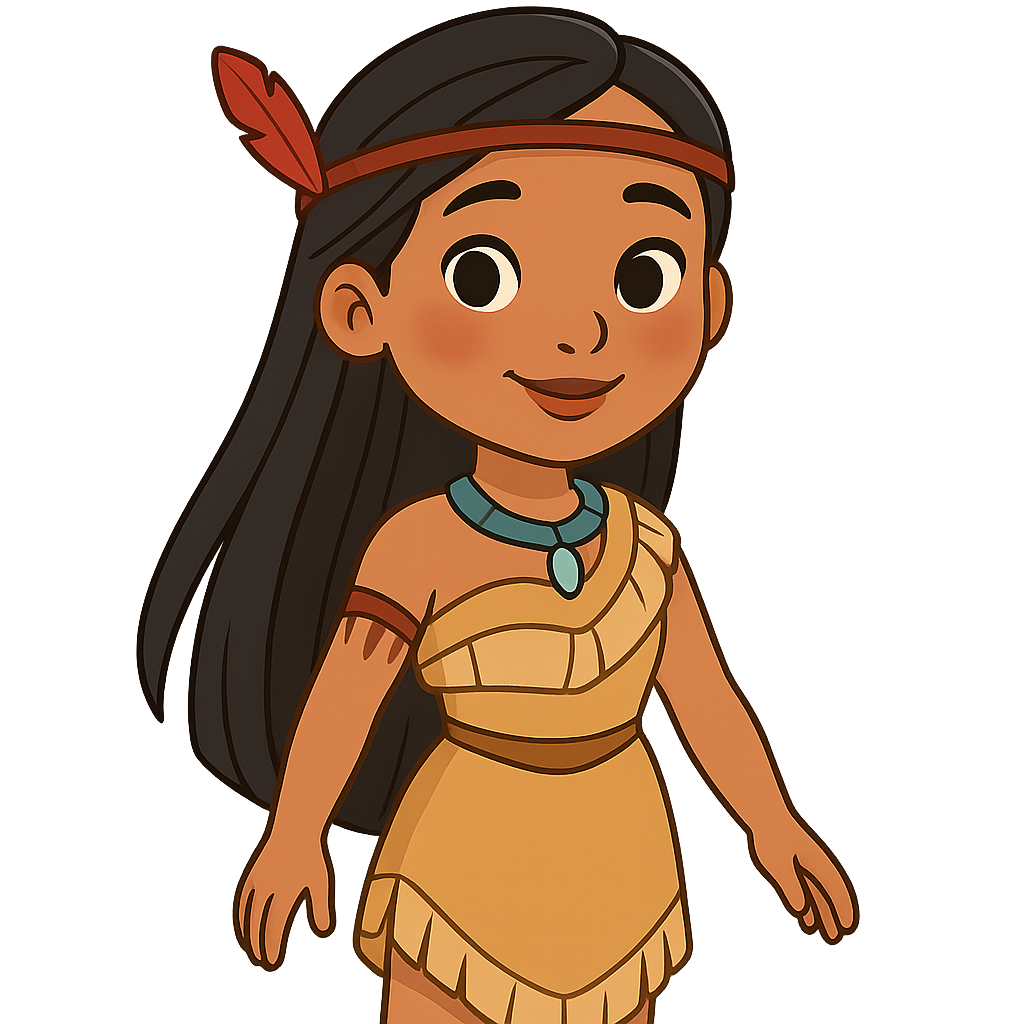
Pocahontas: My Life as a Bridge
My secret name, the one given to me at birth, is Matoaka. But you probably know me by my nickname, Pocahontas, which means “the playful one.” It was a good name for me because I spent my childhood running free and happy in my village of Werowocomoco. My home was part of a great land my people called Tsenacommacah, which you now know as Virginia. The forests were my playground, and the rivers were my teachers. I learned the songs of the birds, the language of the rustling leaves, and the best places to find sweet berries. My father was the great Chief Powhatan, the leader of many tribes. He was strong and wise, and I loved him very much. I would watch him lead our people and learn what it meant to be brave and caring. My days were filled with joy, playing games with other children, helping my mother with chores, and feeling the warm earth beneath my feet. I felt connected to everything around me—the trees, the animals, and my people. I never imagined how much my world was about to change.
Then one day in the spring of 1607, something new and strange appeared on our river. Giant ships with tall white sails, like the wings of huge birds, floated on the water. Men with pale skin and hairy faces came ashore. They looked so different from us, and we were all very curious, but also a little bit scared. We didn't know who they were or why they were here. One of their leaders was a man named Captain John Smith. He was brought to my village in December of 1607 as a captive. I remember the air being thick with tension. My father and the other leaders were trying to decide what to do with this stranger. The English later told a story that I threw myself over him to save his life from being ended. But what I remember is a solemn ceremony. I stepped forward to show that this man could be welcomed, that he could become a friend to our people. It was my way of showing that we wanted peace, not war. My father made John Smith an honorary member of our tribe, a son. I was only a young girl, but at that moment, I felt I was helping to build a path between our two peoples.
After that ceremony, I became a frequent visitor to the English fort, which they called Jamestown. I saw how much they were struggling. They didn't know how to grow food in our land, and many of them were hungry and sick. I would bring them baskets of corn and other food from my village to help them survive. My father sent me as a messenger, a sign of our friendship. It was exciting, but also a little strange to walk through their fort made of wood and mud. It was so different from my village of woven longhouses. I started to learn some of their words, and I taught them some of ours. I became a link between our cultures, a bridge between two very different worlds. It wasn't always easy. There were many misunderstandings because our ways of life were not the same. But I made friends, and I believed that if we could just learn to understand each other, we could live together in peace.
As time passed, the peace between our people grew thin. In April of 1613, I was tricked and taken to live among the English. It was a frightening time, but I tried to be brave and learn what I could. I was treated with kindness by many, and I learned all about their customs and their religion. I decided to be baptized, and they gave me a new name: Rebecca. During my time there, I met a kind and gentle Englishman named John Rolfe. He was a farmer who had learned to grow tobacco. He and I grew to care for each other deeply. We were married on April 5th, 1614. Our marriage was more than just a union between two people; it brought a wonderful period of peace between the English and my Powhatan people. For a while, the fighting stopped, and we lived side-by-side as friends.
In 1616, my husband John, our little baby son Thomas, and I set out on the greatest adventure of my life. We sailed across the vast, endless ocean to England. I couldn't believe my eyes when we arrived in London. It was a city made of stone and brick, with buildings so tall they seemed to touch the clouds. There were so many people, and the sounds and smells were completely new to me. I was presented to the English people as a princess, and I even met their King and Queen. I wanted to show them that my people were dignified and strong. I hoped my visit would help them understand us better. Sadly, just as we were preparing to sail back home, I became very sick. The English air did not agree with me. My journey on this earth ended there, in a town called Gravesend, in March of 1617. I never saw my beautiful forest home again, but I hope my life's story lives on. I spent my life trying to build bridges of understanding and peace between two worlds, and I hope that is my legacy.
Activities
Take a Quiz
Test what you learned with a fun quiz!
Get creative with colors!
Print a coloring book page of this topic.







 Free for Educators