

 English

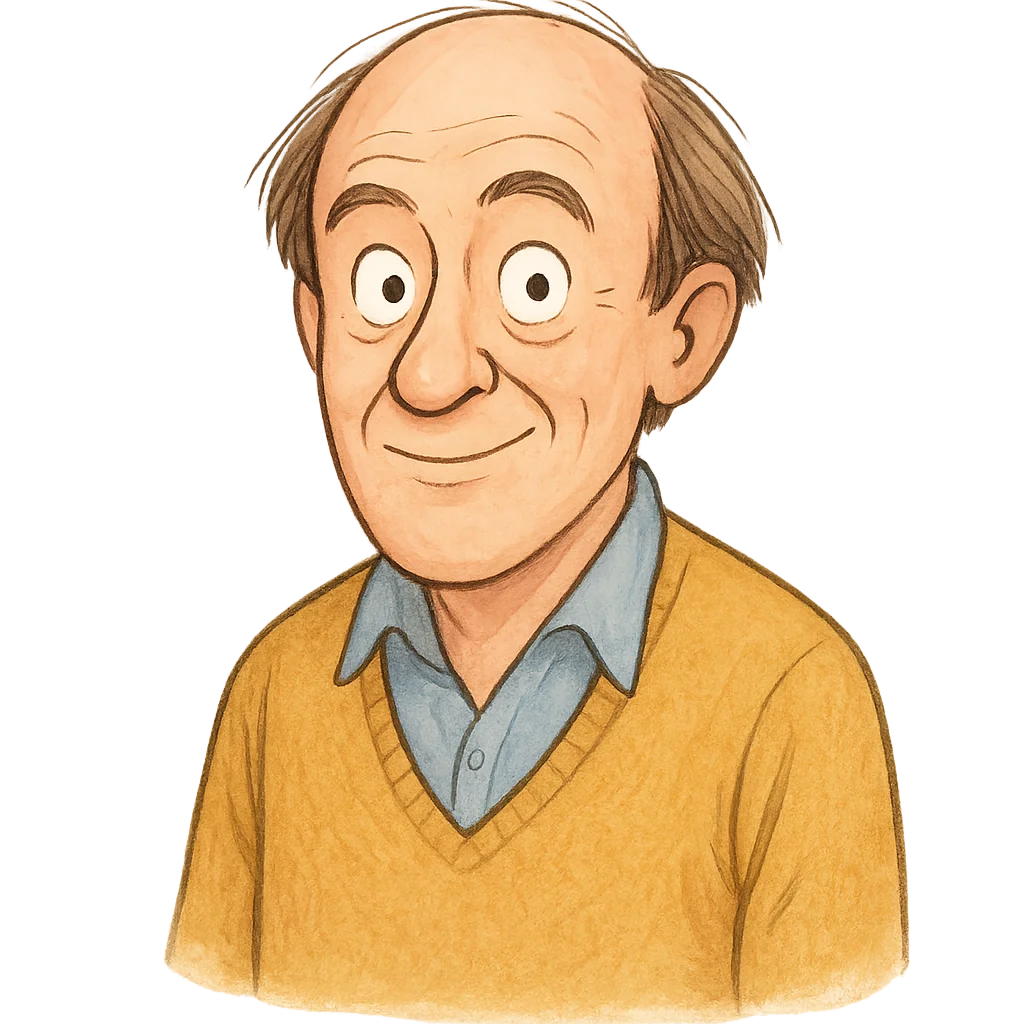
The Fantastic Life of Roald Dahl
Hello there. My name is Roald Dahl, and I am a storyteller. You might know me from my books about a giant peach, a clever fox, or a boy who found a golden ticket. My own story, however, began long before any of those, on September 13th, 1916, in a town called Llandaff in Wales. Though I was born in Britain, my parents, Harald and Sofie, were from Norway, a land of deep, dark forests and thrilling old myths. My mother, Sofie, was a marvelous storyteller herself, and I would sit captivated as she told my sisters and me tales of trolls and other strange creatures from her homeland. Her stories planted a seed of magic in my mind that would grow for the rest of my life. My childhood was a mix of wonder and mischief. I suppose I was what grown-ups would call a handful. In 1924, my friends and I hatched what we called 'The Great Mouse Plot,' which involved hiding a dead mouse in a jar of gobstoppers at the local sweet-shop to teach the horrid owner, Mrs. Pratchett, a lesson. It was a rather beastly trick, I admit. My school days were not always so amusing. I was sent away to boarding schools where the rules were strict and the headmasters were terrifying figures. But even in those dreary places, a bit of magic found its way to me. The Cadbury chocolate company would sometimes send boxes of new chocolate bars to my school for us boys to test. We were official chocolate tasters. I used to dream of inventing a new chocolate bar that would win the praise of Mr. Cadbury himself. I never forgot that feeling, and decades later, it became the tiny spark for a story about a certain chocolate factory.
When I finished school, the idea of going to a university seemed dreadfully boring. I craved adventure and wanted to see the world. So, instead of studying books, I got a job with the Shell Oil Company, which sent me all the way to East Africa. Living in Tanzania was a tremendous adventure. I learned to speak Swahili, encountered deadly snakes, and saw landscapes so vast and wild they seemed to belong to another world. But in 1939, a shadow fell over everything when World War II began. I knew I had to do my part, so I left my job and drove hundreds of miles to Nairobi, Kenya, to join the Royal Air Force. Learning to fly a Tiger Moth biplane over the plains of Africa was the most thrilling thing I had ever done. Soon, I was flying a Gladiator fighter plane, and my life was filled with a sense of purpose and danger. My career as a fighter pilot, however, came to a sudden and violent end. On September 19th, 1940, while flying over the Libyan desert, I was given incorrect directions and ran out of fuel. My plane crashed into the sand, and the impact was tremendous. I suffered serious injuries and was lucky to be rescued by British soldiers. I didn't know it then, lying there in the wreckage, but that terrible crash was the event that would unexpectedly push me toward the one thing I was truly meant to do: tell stories.
My injuries were too severe for me to return to flying, so the RAF sent me to a much quieter post in Washington, D.C., as an assistant air attaché at the British Embassy. My job was to help promote Britain's interests in America during the war. It was there that my life took another surprising turn. I met a famous author named C.S. Forester, who was writing about the war. He wanted to hear about my experiences as a pilot, so we met for lunch. He intended to take notes while I spoke, but I found it was easier to just write the story down for him myself. When I gave him what I had written, he was so impressed that he sent it to a magazine exactly as I had written it. It was my very first published piece. That small success gave me a new kind of confidence. I started writing more, and soon I had an idea for a children's story about mischievous little creatures that caused problems for airplanes. I called them 'The Gremlins.' In 1943, the story was published as a book, and it even caught the attention of the great Walt Disney, who considered making it into a film. Although the film was never made, that little book was my true beginning. The pilot had become a storyteller.
For many years, my writing took place in a special, secret place. At my home in the English countryside, which I called Gipsy House, I had a small white hut in the garden. This was my writing sanctuary. It wasn't very tidy, but it was all mine. Inside, I had a worn-out armchair that had belonged to my mother. I would prop my feet up on an old trunk, place a special writing board on my lap, and get to work. I never used a typewriter or a pen, only a stock of finely sharpened yellow pencils and yellow paper. I would write every day, from ten in the morning until noon, and again in the afternoon. My family was the center of my world, and my own children often inspired the characters and adventures in my books. Life, however, brought great sadness along with its joys. When my daughter Olivia died from measles when she was only seven, my heart was broken. It was a pain so deep that I felt I had to create worlds where children could be powerful, where they could triumph over mean adults, and where magic was real. It was during these years in my hut that some of my most famous characters were born, from a boy traveling in a giant fruit in 'James and the Giant Peach' in 1961, to a kind boy inheriting a magical factory in 'Charlie and the Chocolate Factory' in 1964, to a brilliant girl with magical powers in 'Matilda' in 1988.
Looking back, my life was as full of unexpected twists as one of my stories. I learned that even the most frightening experiences can lead to something wonderful, and that the greatest magic can be found in the power of imagination. My books are often filled with nasty villains and dreadful situations, but they are also filled with kindness, courage, and the belief that a good heart will always win in the end. I passed away on November 23rd, 1990, but I hope my stories will live on forever. My greatest wish is that they continue to bring a little bit of sparkle and mischief into the world and remind every child—and every grown-up—that those who don't believe in magic will never find it.
Activities
Take a Quiz
Test what you learned with a fun quiz!
Get creative with colors!
Print a coloring book page of this topic.









 Free for Educators