

 English

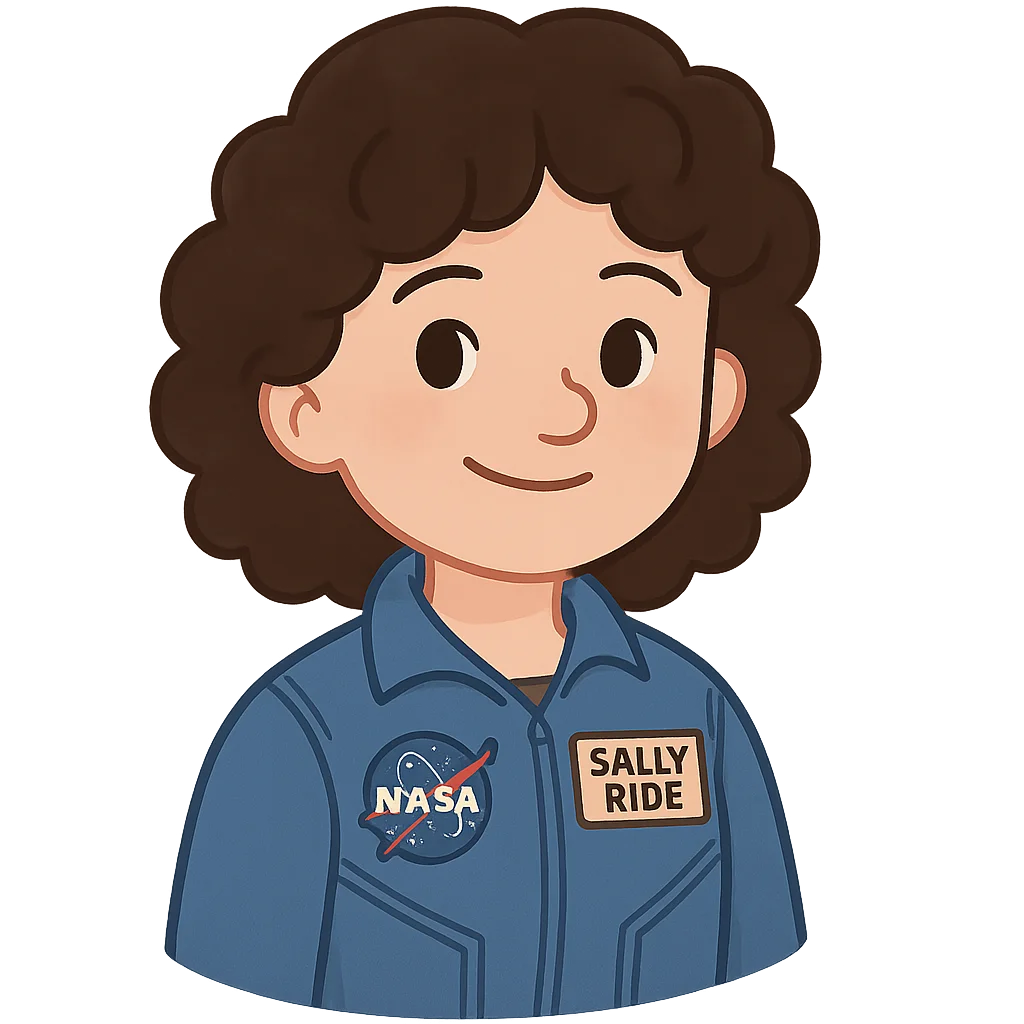
Sally Ride
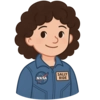
Hello, my name is Sally Ride, and I was the first American woman to travel into space. But long before I was an astronaut, I was just a curious kid growing up in Los Angeles, California. I was born on May 26th, 1951, into a world that was just beginning to explore the vastness of space. My parents, Dale and Carol, were wonderful. They never told me that I couldn't do something just because I was a girl. Instead, they filled our home with books and encouraged my sister, Karen, and me to ask questions about everything. I loved puzzles, figuring out how things worked, and reading Sherlock Holmes mysteries. But my curiosity wasn't just for science; I was also a very serious athlete. Tennis was my passion. I spent hours and hours on the court, practicing my serve and perfecting my backhand. For a long time, I dreamed of becoming a professional tennis player. I even ranked nationally as a junior player. That dedication taught me discipline and the importance of hard work. The focus I learned on the tennis court—the drive to push myself to be better—was the same focus that would later help me reach for the stars.
After high school, I went to Stanford University, a place buzzing with new ideas. I found myself pulled in two different directions. I loved the beauty and structure of language, so I studied English literature. At the same time, I was fascinated by the laws of the universe, so I also studied physics. It felt like I was using two different parts of my brain, and I loved it. One day in 1977, while reading the student newspaper, an advertisement caught my eye. It was from NASA. They were looking for a new class of astronauts to fly their new vehicle, the Space Shuttle. The most amazing part was the last line: for the first time ever, they were encouraging women to apply. A jolt of excitement ran through me. Could I really become an astronaut? I was one of more than 8,000 people who applied. The selection process was incredibly intense. We went through rigorous physical tests, psychological screenings, and interviews with panels of serious-looking officials. I remember feeling nervous but also determined to show them I had what it took. Then, on January 16th, 1978, the phone call came. I had been chosen. I was going to be an astronaut, one of the first six women ever selected by NASA.
Training to become an astronaut was the hardest work I had ever done. We spent years learning everything about the Space Shuttle, from its complex computer systems to how to handle emergencies. I even learned to fly a jet. My big moment came on June 18th, 1983. I was a mission specialist aboard the Space Shuttle Challenger. As the countdown reached zero, the engines ignited with a deafening roar that shook my entire body. We were pushed back into our seats with incredible force as we rocketed toward the sky. Then, suddenly, the engines cut off, and we were floating. The feeling of weightlessness was pure magic. I floated over to the window and looked out. There it was: our planet, a stunning swirl of blue, white, and green, hanging silently in the blackness of space. It was the most beautiful sight I had ever seen. During our six-day mission, one of my main jobs was to operate the shuttle's 50-foot robotic arm, deploying and retrieving a satellite. It required precision and focus, just like a tough tennis match. When I returned to space for my second mission in 1984, the feeling of responsibility was even stronger. I knew that millions of girls were watching, and I wanted to show them that their dreams were within reach.
After my time in space, my journey took a different path. A great tragedy struck NASA on January 28th, 1986, when the Space Shuttle Challenger was lost shortly after liftoff. It was a heartbreaking time for our country and for me personally. I was asked to serve on the presidential commission that investigated the accident, a somber but important duty to ensure we learned from our mistakes. Later, I left NASA and became a physics professor, sharing my love for science with college students. But I wanted to do more to reach younger kids, especially girls and young women who might not think science or engineering was for them. So, with my partner, Tam O'Shaughnessy, I started a company called Sally Ride Science in 2001. Our goal was to create fun science programs and books that would inspire the next generation of explorers, innovators, and leaders. My life came to an end on July 23rd, 2012, after a private battle with cancer. But my mission continues. My story shows that you should never let anyone tell you what you can or can't do. Follow your curiosity, explore all of your interests, and never, ever stop reaching for your own stars.
Activities
Take a Quiz
Test what you learned with a fun quiz!
Get creative with colors!
Print a coloring book page of this topic.




 Free for Educators