

 English

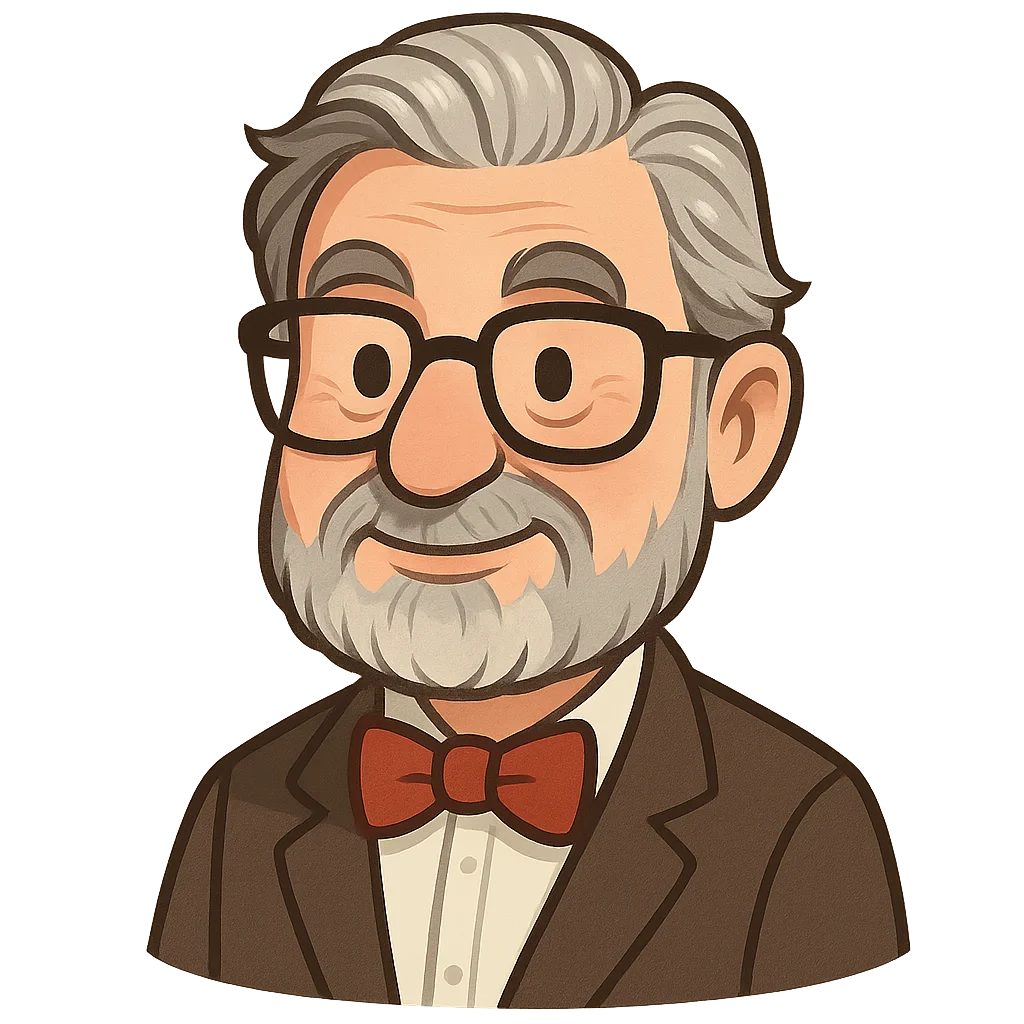
My Life of Rhymes and Doodles
Hello there. You might not recognize my real name, Theodor Geisel, but I bet you’ve met some of my friends, like the Cat in the Hat or the Grinch. People know me better as Dr. Seuss, the writer and illustrator of zany stories. My own story began back on March 2nd, 1904, in a town called Springfield, Massachusetts. The world was a different place then, filled with clattering horse-drawn carriages and brand-new inventions. My imagination was fueled by two wonderful things: my mother and the zoo. My father was a zookeeper, and I spent hours wandering around, sketching the elephants, tigers, and turtles. But my drawings never looked quite like the real animals. My elephants had extra-long legs, and my turtles had peculiar hats. In my head, I was creating my own zoo of fantastic creatures. At night, my mother, who came from a family of bakers, would soothe me to sleep not with stories, but by chanting rhymes she remembered from her childhood. Those rhythms and playful sounds stuck with me. Life wasn't always easy, though. When World War I began, having a German last name like Geisel made my family a target for suspicion and unkindness. It was a confusing time, and to escape, I would retreat into my notebooks, doodling even more outrageous creatures and making up silly words. It was my private world, a place where I could make sense of things through humor and imagination.
After high school, I packed my bags for Dartmouth College, eager to see more of the world. It was the Roaring Twenties, a time of great energy and change. I became the editor of the college's humor magazine, the Jack-O-Lantern, where I could finally share my goofy drawings and stories with everyone. However, I got into a bit of trouble with the dean and was told I could no longer contribute to the magazine. But I was determined to keep writing. So, I came up with a clever plan and started signing my work with a pen name: my middle name, 'Seuss.' After Dartmouth, I sailed across the Atlantic Ocean to attend Oxford University in England in 1925, planning to become a serious, respectable English professor. I sat through long lectures and tried my best to focus on Shakespeare, but my notebooks told a different story. They were filled not with notes, but with winged cows and bizarre, bug-eyed birds. One day, a bright American girl in my class named Helen Palmer peeked at my drawings. Instead of laughing at me, her eyes lit up. She looked at me and said something that changed my life forever: 'You're a fool to be a professor. You should be an artist!' She believed in my strange creatures, and soon, I believed in them too. I left Oxford, and Helen and I moved to New York City, where I began a career drawing cartoons for magazines and advertisements. My most famous work from that time was for a bug spray called Flit. I drew pictures of people being chased by giant, silly-looking insects with the tagline, 'Quick, Henry, the Flit!' My doodles were finally paying the bills.
Even though my advertising cartoons were popular, I dreamed of creating something more, something that was entirely my own. In 1936, Helen and I were on an ocean liner, returning from a trip to Europe. The journey was long, and the constant, chugging rhythm of the ship's engine—da-da-DA-da, da-da-DA-da—got stuck in my head. I started making up words to match the beat, and a story began to form. It was about a boy named Marco who sees a simple horse and cart on his way home from school and imagines it transforming into an increasingly wild parade. I called it And to Think That I Saw It on Mulberry Street. I was so proud of it and was sure a publisher would love it. I was wrong. I submitted my book to one publisher, then another, and another. Each time, the answer was the same: 'No.' They said it was too different, too strange, that it didn't sound like other children's books. I received 27 rejection letters in total. Feeling completely defeated, I was walking down Madison Avenue in New York City, about to go home and burn the manuscript. Just then, I bumped into an old friend from college, Mike McClintock. As fate would have it, he had just started a new job that very morning as an editor at a publishing house. He asked what I was holding, I told him my sad story, and he insisted on taking a look. A few hours later, he called and offered to publish it. In 1937, my first book was finally on the shelves.
For nearly two decades, I continued writing children's books, but the biggest challenge of my career arrived in the 1950s. At that time, many experts and parents were worried. They believed that the books used to teach children how to read were dreadfully boring. They were filled with dull sentences like 'See Spot run.' They thought these uninspired stories were the reason kids weren't excited about reading. In 1954, a publisher from a company called Houghton Mifflin read an article about this problem and decided to do something revolutionary. He knew about my playful style, so he challenged me to write a book for first-graders that was actually fun. But there was a catch, and it was a big one. I could only use words from a specific list of 250 words that young children were expected to know. I thought it would be easy, but it was agonizingly difficult. For months, I stared at that list, trying to find a story. I couldn't find a single spark. I was about to give up when I scanned the list one last time and two words suddenly jumped out at me because they rhymed: 'cat' and 'hat.' In that instant, an image exploded in my mind: a tall, mischievous cat wearing a red-and-white striped hat. From there, the story of a chaotic, rainy-day adventure poured out of me. In 1957, The Cat in the Hat was published, and it changed everything. It proved that books for early readers could be clever, exciting, and absolutely hilarious. It gave children a reason to love reading.
As my career went on, I realized my stories could be more than just funny rhymes and silly pictures. I could hide important ideas inside the nonsense. My book How the Grinch Stole Christmas! wasn't just about a grumpy green creature; it was about realizing that community and kindness are more important than presents. I wrote The Lorax as a warning to protect our beautiful planet, giving a voice to the trees. In The Sneetches, I told a story about how silly it is to judge others based on whether or not they have a star on their bellies, reminding everyone that we should accept people for who they are. I wanted my stories to make children think and feel, long after they turned the final page. After my dear Helen passed away, I married my second wife, Audrey, who became the greatest protector of my work and my legacy. My own story came to a peaceful end on September 24th, 1991, but my characters live on. My hope was always to spark the imagination inside every child. So, be yourself, think big, creative thoughts, and never be afraid to embrace a little bit of nonsense. You might be surprised at how it can change the world for the better.
Activities
Take a Quiz
Test what you learned with a fun quiz!
Get creative with colors!
Print a coloring book page of this topic.










 Free for Educators