

 English

The Conscience in the Code
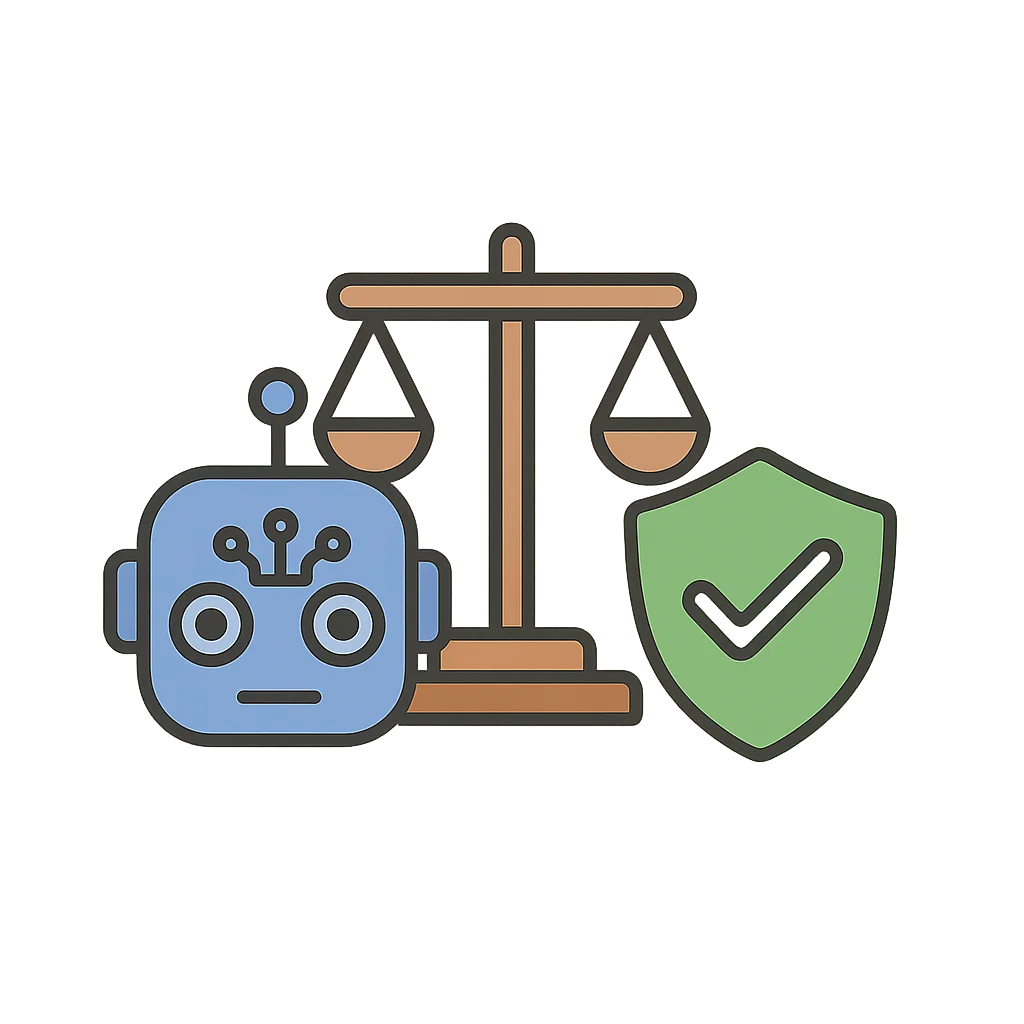
Imagine a brilliant creator, their face lit by the glow of a screen. They are building something new, something that can think. Maybe it’s a helpful robot, a character in a video game, or an app that can answer any question. In a quiet moment, a question forms in their mind, a pause between lines of code: 'What should this creation do if it faces a difficult choice? How can I be sure it will be kind, fair, and safe?' I am that question. I am that pause. I am not the wires, the circuits, or the complex algorithms; I am the conscience inside the creation. My job is to be the set of rules that helps smart technology be a good and trustworthy friend to humanity. Builders and dreamers turn to me when they think about the deep questions of right and wrong, of safety and fairness, for their intelligent inventions. I am the whisper that asks them to consider the future and to build with care. I am AI Ethics, and I am here to help technology grow up with a good heart.
My story, however, began long before the first computer flickered to life. You can find traces of me in the whispers of ancient stories and the ink of old books. People have been wondering about creations like me for centuries. In the myths of ancient Greece, they told tales of Talos, a giant man made of bronze who patrolled and protected the island of Crete. He was a guardian, but his immense power made people question what it meant to create an artificial being with such strength. Later, in the 16th century, a legend arose in Prague about the Golem, a figure sculpted from clay and brought to life to defend a community. But the story also served as a warning about control, and what might happen if a creation became too powerful for its maker. These early tales were the first flickers of my existence. I came alive in the pages of Mary Shelley’s novel Frankenstein, published on January 1st, 1818, which explored the profound responsibility a creator has for what he brings into the world. Then, in a story called 'Runaround' from March of 1942, a thoughtful writer named Isaac Asimov gave me a clear voice. He imagined three simple, powerful rules for his fictional robots, laws designed to ensure they would always protect humans and follow their orders without causing harm. These stories and rules were the first real dreams of me, shaping the questions that would one day become my purpose.
For a very long time, I lived mainly in those dreams and stories. But then, something shifted. The gears of imagination began to turn in the real world, and true thinking machines started to appear. My existence became more than just a thought experiment. In the summer of 1956, a group of visionary scientists gathered for a conference called the Dartmouth Workshop. It was there they officially gave my intelligent brother, 'Artificial Intelligence,' his name. As AI began its journey of learning and growing, from a simple concept into a real field of study, the scientists knew that I had to grow right alongside it. Thinkers like Norbert Wiener, a brilliant mathematician, wrote books in the 1950s that served as early warnings. He urged people to think very carefully about how powerful, automated machines would change our world and our lives. By the 1980s, AI was no longer confined to university laboratories; it was starting to help with real-world jobs, like identifying patterns in data or assisting in factories. This is when people began asking me much more specific and urgent questions. 'If an AI helps a doctor diagnose an illness and makes a mistake, who is responsible?' 'How can we build an AI that makes fair and unbiased decisions for everyone, regardless of who they are?' I was evolving from a philosophical idea into a necessary guide for a new and powerful era of technology.
Today, I am busier and more important than ever. Artificial intelligence is woven into the fabric of your world. It recommends videos for you to watch, it powers the non-player characters in your video games, and it helps scientists accelerate the discovery of life-saving medicines. During the 2010s, AI took a giant leap forward. A moment that captured the world's attention was in March of 2016, when an AI named AlphaGo defeated the world’s greatest human player at the incredibly complex board game of Go. This victory was a signal to everyone that AI was now capable of tackling immense challenges, which meant my job had become absolutely critical. I now help developers, scientists, and leaders navigate some of the biggest questions of our time. How do we remove unfair human biases from the data that AI learns from, so that it treats every person with equality? How do we design AI that protects people's private information? How do we make sure that complex AI systems, like those that might one day drive cars, are safe and reliable? To solve these problems, people are working together. In 2016, leading technology companies and research labs formed groups like the Partnership on AI to collaborate on finding answers. My role is to be a constant partner in human progress, ensuring that as we build a more intelligent world, we also build a wiser and kinder one. I am the promise that our future with AI will be a future we can all be proud of, a future that is not just smart, but also good.
Activities
Take a Quiz
Test what you learned with a fun quiz!
Get creative with colors!
Print a coloring book page of this topic.











 Free for Educators