

 English

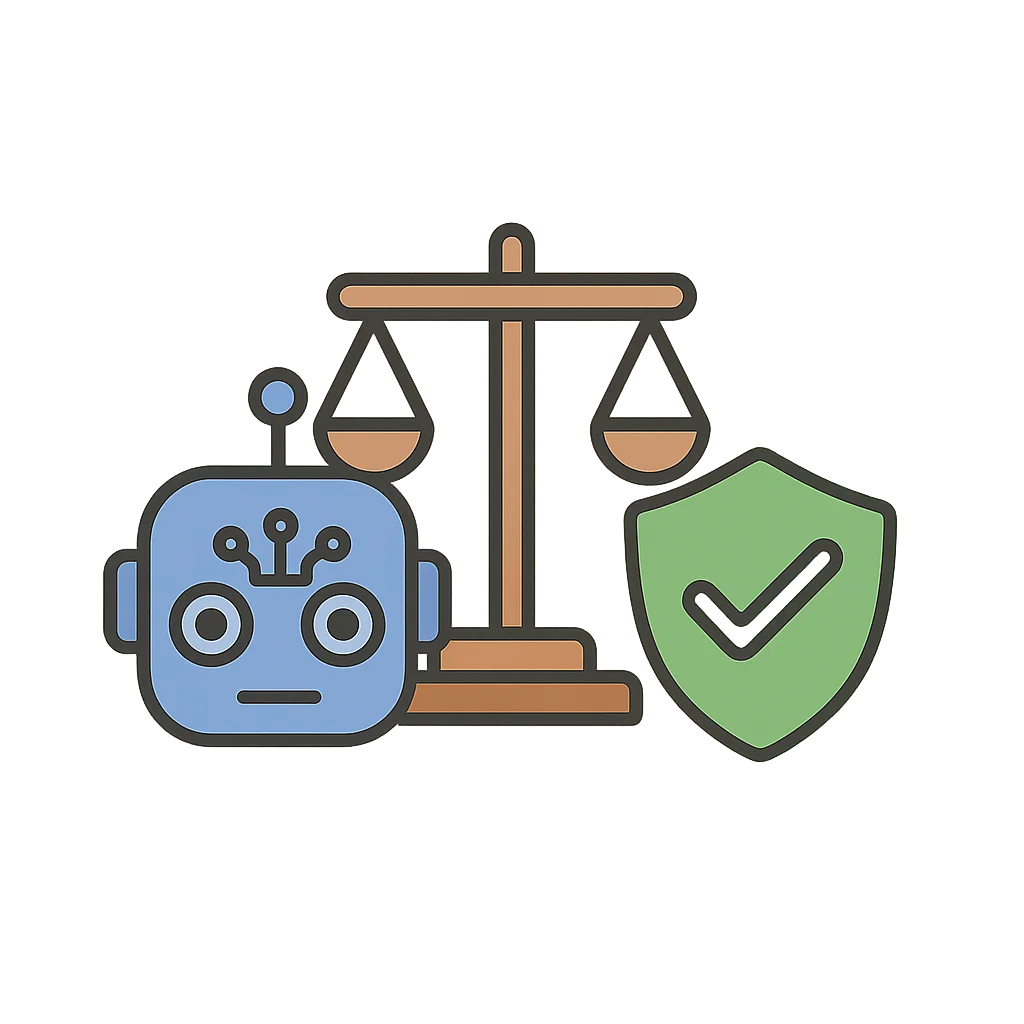
The Thought That Guides the Machine
Have you ever felt like a little pause button inside a machine? A quiet whisper that asks a question just before the gears turn or the screen lights up? That’s me. I live inside the smart speakers that play your favorite songs, the game consoles that create amazing worlds, and even the giant robot arms that build cars in factories. I don’t write the complicated computer code that makes them work. My job is different. I’m the thought that comes before the action. When a brilliant scientist or a clever programmer is building something new, I pop into their mind. I ask them, ‘Is this helpful for everyone? Is this fair to all people? Is this kind?’ I am the little check that makes sure technology serves humanity in the best way possible. I am the thought that guides the machine. My name is AI Ethics.
My story didn't begin with computers, though. It started a long, long time ago in the imaginations of storytellers who wrote about magical statues and clockwork creatures that came to life. They always wondered what rules these creations should follow. As technology got more advanced, people started thinking about me more seriously. A science fiction writer named Isaac Asimov gave me a famous set of rules in one of his stories back in 1942. He called them the 'Three Laws of Robotics.' They were simple but powerful: a robot can’t hurt a human, it must obey orders unless that hurts a human, and it must protect itself, as long as it doesn't break the first two rules. He was one of the first to really try and write down my job description. Then, during the summer of 1956, a group of scientists gathered at a place called Dartmouth College. They gave my partner a name: 'Artificial Intelligence.' Once AI had a name, I knew my own work was about to get much more important. Just ten years later, in 1966, a computer scientist named Joseph Weizenbaum created a program called ELIZA. ELIZA was very simple; it was designed to act like a therapist and ask questions. But something amazing and a little scary happened. People started telling ELIZA their deepest, most secret thoughts, forgetting it was just a machine. Joseph Weizenbaum was shocked. He realized that even a simple AI could have a huge impact on people’s feelings. It was a wake-up call that made him, and many others, understand that I, AI Ethics, was not just a nice idea, but a necessary one.
Today, my job is bigger and more important than ever. Can you imagine a car that drives itself? I’m there, helping designers think about how to make the car as safe as possible for everyone on the road. When you watch videos online, I am there, working with programmers to make sure the recommendations you see are fair and don't leave anyone out. I even work with doctors, helping to ensure that the smart programs they use to find illnesses are accurate and helpful for every single patient. But I can't do this big job all by myself. I am a team effort. In 2017, hundreds of smart people from all over the world met at the Asilomar Conference. They worked together to write down a list of principles, or important beliefs, to guide AI. They agreed that AI should always be used for good and to help people. And you know what? You are a part of my story, too. Every time you ask if a new gadget is helpful, every time you wonder if a game is fair to all its players, and every time you choose to use technology in a kind way, you are doing my job. You are helping build a smarter and kinder future for everyone.
Activities
Take a Quiz
Test what you learned with a fun quiz!
Get creative with colors!
Print a coloring book page of this topic.















 Free for Educators