

 English

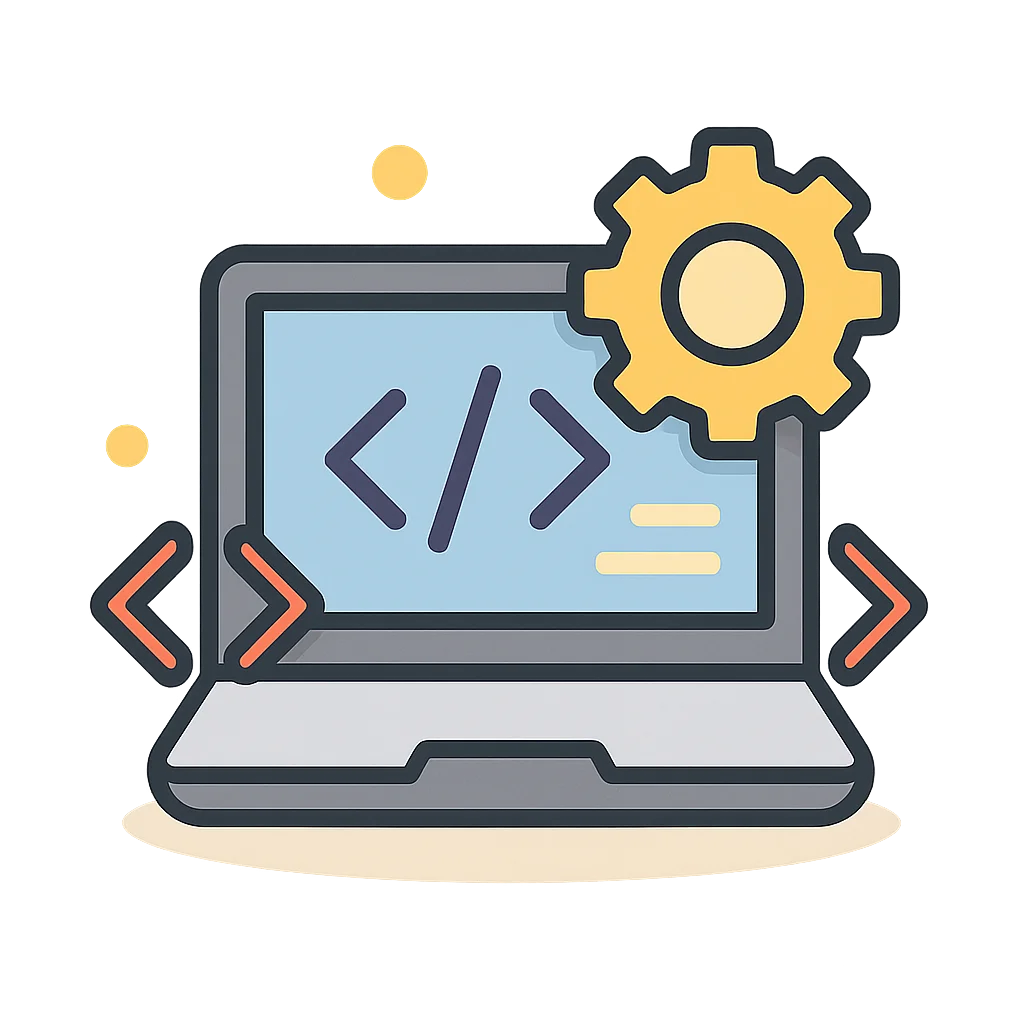
The Secret Language of Machines
Have you ever wondered how a character in a video game knows exactly when to jump over a tricky obstacle? Or how a robot in a factory can build a car with perfect precision? Maybe you've thought about how an app on a phone can order a pizza or show you a funny video with just a single tap. Behind all that magic, there are secret instructions, like a special recipe that a machine follows. These instructions tell every piece of technology what to do, step-by-step. They are the hidden map that guides a rocket to the moon and the secret blueprint that lets you build entire worlds in a game. It might seem like magic, but it’s really a language, one that allows people to speak directly to computers and bring their biggest ideas to life. I am that special language that lets you talk to machines. My name is Coding.
My first words weren't spoken, but punched into cards. Long ago, in 1804, a man named Joseph Marie Jacquard invented a special machine called a loom to weave beautiful, complicated patterns into cloth. He used stiff cards with holes punched in them. The pattern of the holes was a set of instructions that told the loom exactly which threads to lift and which to leave down. It was one of the very first times I was used to tell a machine what to do. A little later, in 1843, a brilliant woman named Ada Lovelace saw my true potential. Her friend, Charles Babbage, had designed a giant calculating machine called the Analytical Engine. While most people saw it as just a fancy calculator, Ada imagined so much more. She wrote down notes explaining how the machine could be told to do things beyond just math. She realized I could be used to create music or art if someone just wrote the right instructions. Because she saw that I could be a language for creativity, Ada Lovelace is celebrated as the very first computer programmer.
For a long time, speaking my language was very difficult. In the 1940s, the first electronic computers were built. They were enormous, filling entire rooms, and telling them what to do was a huge chore. Programmers had to physically flip hundreds of switches or move thick cables around just to get the machine to solve one problem. Can you imagine having to rewire a wall just to ask a math question? It took a long time and was very confusing. But then, a hero came along who changed everything. Her name was Grace Hopper, and she was a brilliant computer scientist. In 1952, she had a fantastic idea and invented something called a compiler. Think of a compiler as a translator. It allowed people to write instructions for a computer using words that looked a bit like English. The compiler would then translate those words into the simple on-and-off signals the computer could understand. This was a revolution. Suddenly, I was becoming a language more people could learn. Soon, new programming languages were born, like FORTRAN in 1957 for scientists and engineers, and BASIC in 1964, which was designed to be simple enough for students to learn.
Because of those early pioneers, I am everywhere today. In the early 1990s, a scientist named Tim Berners-Lee used me to create the World Wide Web, connecting computers all around the globe and changing how we share information forever. Now, I live inside your smartphone, your television, and even your car. I help farmers grow more food, doctors diagnose illnesses, and rovers explore the surface of Mars. I am the tool that people use to solve the world's biggest problems and to create things that are just for fun. I am a language of endless possibility. And now, it’s your turn to be the creator. You can learn to speak my language, too. What will you build? Will you design a game that brings joy to your friends, an app that helps people in your neighborhood, or an invention that no one has even dreamed of yet? The next amazing idea is waiting for you to bring it to life, and I will be here to help you tell the machines what to do.
Activities
Take a Quiz
Test what you learned with a fun quiz!
Get creative with colors!
Print a coloring book page of this topic.








 Free for Educators