English
 For Schools
 For Homeschool

The Story of Light and Shadow
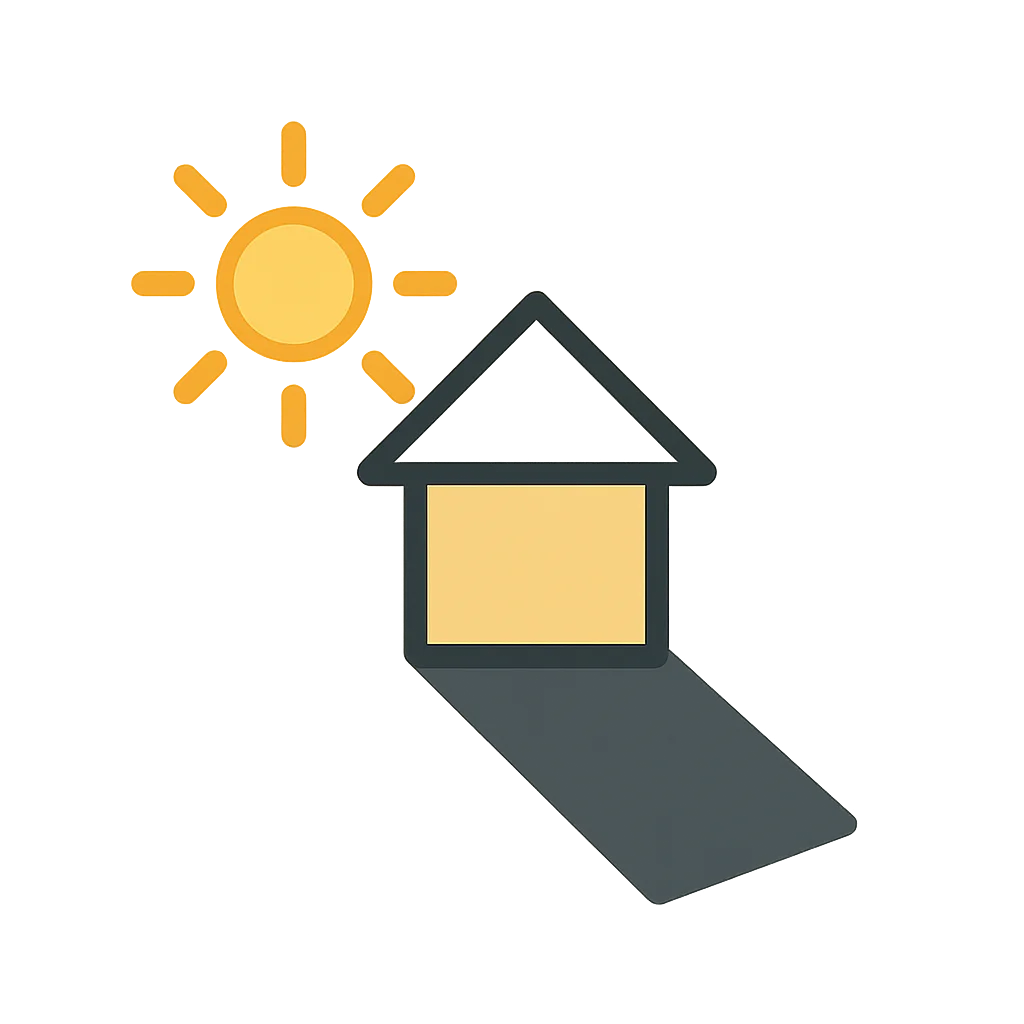
Every morning, I wake up and begin my journey. It’s a sprint, really, across ninety-three million miles of empty space. In just over eight minutes, I leave the fiery surface of the Sun and arrive on Earth, spilling over hills, warming the oceans, and peeking through your window to say hello. When I arrive, the world explodes into being. I give the sky its blue, the grass its green, and the roses their deep red. I reveal the shape of every leaf and the texture of every stone. But I never travel alone. Where I go, my constant companion follows. He is my silent, dark twin, a perfect silhouette that stretches and shrinks and dances with me throughout the day. He traces the edges of buildings, hides under trees, and follows you down the street. For a long time, humans wondered about us, this inseparable pair that defined their world. They didn't know our names, but you do. I am Light, and this is my partner, Shadow.
For thousands of years, your ancestors knew me mostly as fire. They would huddle around a crackling bonfire, using my warmth to push back the cold and my glow to keep scary, unseen things at bay. In the flickering firelight, they discovered my partner, Shadow, was an excellent storyteller. On the walls of their caves, they would make figures with their hands, and Shadow would obediently play the part of the leaping deer or the mighty hunter, acting out tales of the day’s adventures. For a very long time, people thought I worked in reverse. Great thinkers in ancient Greece believed your eyes sent out invisible beams to touch objects, which is how you saw them. It was a fascinating idea, but it was backward. The truth was far more elegant, and it took a brilliant man in the 11th century to figure it out. His name was Ibn al-Haytham, and from his study in Basra, he conducted careful experiments. He realized that I am the one who does the traveling. I stream from a source, like the sun or a candle, bounce off the things you see—a book, a face, a flower—and then I enter your eye. He showed the world that seeing wasn't about reaching out, but about letting me in.
That was just the beginning of unlocking my secrets. For centuries, people saw me as a simple, pure, white thing. But on a quiet day in 1666, a young, intensely curious man named Isaac Newton changed everything. He sat in a darkened room and let a single beam of sunlight pass through a triangular piece of glass called a prism. What happened next was magic. I burst apart, splashing a stunning rainbow of colors onto his wall: red, orange, yellow, green, blue, indigo, and violet. He proved that I wasn't simple at all; I was a team, a whole spectrum of colors combined to look white. Two centuries later, another brilliant mind, James Clerk Maxwell, discovered something even more profound. He showed that I was a form of energy, an electromagnetic wave rippling through space, a cousin to the invisible radio waves that would one day carry music and voices through the air. But my story still had one more astonishing twist. On March 17th, 1905, a patent clerk named Albert Einstein proposed a revolutionary idea. He suggested that sometimes I don't act like a smooth wave at all, but like a tiny, zipping particle, a little packet of energy he called a 'photon.' This strange 'wave-particle duality'—being both a wave and a particle at the same time—is one of my biggest mysteries, a puzzle that still fascinates scientists today.
Today, you see the results of all that curiosity everywhere. I am the workhorse of your modern world. I zip through hair-thin fiber-optic cables, carrying your voices, movies, and messages across continents in the blink of an eye. I land on solar panels, giving up my energy to power your homes and schools. My partnership with Shadow has inspired artists for centuries, from Renaissance painters who used our contrast to make their figures look real—a technique they called chiaroscuro—to the filmmakers who use us to create drama and mood in your favorite movies. I even work quietly in the background of the natural world, fueling the process of photosynthesis that allows plants to grow and create the very air you breathe. I reveal the beauty of the universe, from the grandest galaxy to the smallest dewdrop. Shadow gives the world depth, form, and mystery. Together, we paint your reality. So the next time you step outside, look for us. Watch how we dance together, and never stop wondering what other secrets I might be waiting to share.
Activities
Take a Quiz
Test what you learned with a fun quiz!
Get creative with colors!
Print a coloring book page of this topic.