English
 For Schools
 For Homeschool

The Story of Rain
Listen closely. Can you hear it. A gentle tap-tap-tapping against the window, like a secret message from the clouds. Or maybe you feel it first, a single cool drop landing on your arm, a tiny surprise from the sky. Breathe in deeply. That fresh, earthy perfume that rises from the dry soil when I arrive is a special scent called petrichor, a smell that promises new life. I have many moods, you see. Sometimes, I am a soft, misty drizzle, a whisper that gently kisses your cheeks and settles like a blanket of dew on spiderwebs. I make the world quiet and gray, a perfect time for curling up with a book. Other times, I am a powerful, drumming downpour, a wild symphony played on rooftops and streets. In these moments, I dance with flashes of lightning and sing along with the deep rumble of thunder, washing the world with energy and excitement. I fill gutters, create rivers in the streets, and give you the very best puddles for splashing in with your rain boots. I am the artist who paints the world in shimmering reflections and the musician who provides the rhythm for a cozy afternoon. I bridge the vast expanse above with the ground below, carrying messages and nourishment between them. I connect the sky and the earth. I am Rain.
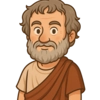
For thousands of years, humans looked up at the clouds and wondered about me. They didn't have microscopes or satellites, so they created incredible stories to explain my existence. In ancient Greece, they imagined me as a tool of the mighty god Zeus, who would hurl me down from Mount Olympus with his lightning bolts when he was angry or pleased. In the cold northern lands, people believed it was the thunder god Thor, crashing his great hammer Mjölnir to create storms. I was seen as a gift for their crops or a punishment for their actions, a divine mystery they tried to understand through myths and rituals. But slowly, a different kind of curiosity began to stir. Around 340 BCE, a brilliant thinker in Greece named Aristotle started to watch the world with a new kind of focus. He noticed how water on the ground seemed to vanish into the air on a hot day and how clouds formed and eventually released me. He wrote down his ideas, suggesting that the sun played a role in lifting water into the sky. It was one of the very first steps away from myth and toward science. Many centuries passed, and this scientific curiosity grew stronger. During the 16th and 17th centuries, thinkers in Europe decided to move beyond just ideas and started to measure and test things. A French potter and scientist named Bernard Palissy argued passionately that I was the one true source for all springs and rivers, challenging the old belief that they somehow bubbled up from the sea through underground channels. Then came two other French pioneers, Pierre Perrault and Edme Mariotte. They did something revolutionary. In the 17th century, they carefully measured the amount of water I dropped over the Seine river's watershed and compared it to the amount of water flowing in the river. Their calculations proved it. There was more than enough of me falling from the sky to account for every single drop in the river. They had solved the ancient puzzle. I wasn’t a mysterious force from the gods, but a measurable, understandable part of a grand system. This is my journey: the sun's warm rays lift me up from oceans, lakes, and even the dewy leaves on trees in a process called evaporation. High in the cool air, I transform from an invisible vapor into tiny water droplets, gathering with countless others to form the clouds you see floating by. This is condensation. When we all get cozy and the cloud becomes too heavy to hold us anymore, we fall back to Earth as precipitation to say hello again. This amazing, never-ending trip is called the water cycle.
My arrival is a celebration of life. I am the reason the world is painted in shades of green, from the tallest redwood tree to the softest blade of grass. I trickle down through the soil to nourish the seeds, helping them sprout and grow into the fruits and vegetables that feed you. I fill the vast reservoirs, the deep lakes, and the winding rivers where fish swim and boats sail. Every sip of cool, clean water you drink is a gift from me, a part of my journey delivered to your home. Think of a farmer, whose livelihood depends on me, looking at the sky with hope. When I finally arrive, their face breaks into a smile as I soak into their thirsty fields, promising a healthy harvest. I wash the dust and grime from city streets, leaving them clean and shiny, reflecting the lights like a million scattered jewels. But my gifts are not just for survival. I inspire wonder and creativity. When the sun peeks out just as I am finishing my work, I help create the most beautiful magic trick in the sky: the rainbow. I have been the subject of countless songs that make you want to dance, poems that capture my quiet melancholy, and paintings that show my dramatic power. The steady sound of me falling can be the most peaceful soundtrack for reading a book, thinking deep thoughts, or drifting off to sleep. In your modern world, you have noticed my patterns are changing, and it is more important than ever to understand and protect my cycle. I am a symbol of renewal, connection, and life itself. Every single drop of me is part of a grand, continuous story that links every plant, animal, and person on the planet. I will always be here to help the world wash clean and begin anew.
Activities
Take a Quiz
Test what you learned with a fun quiz!
Get creative with colors!
Print a coloring book page of this topic.