

 English

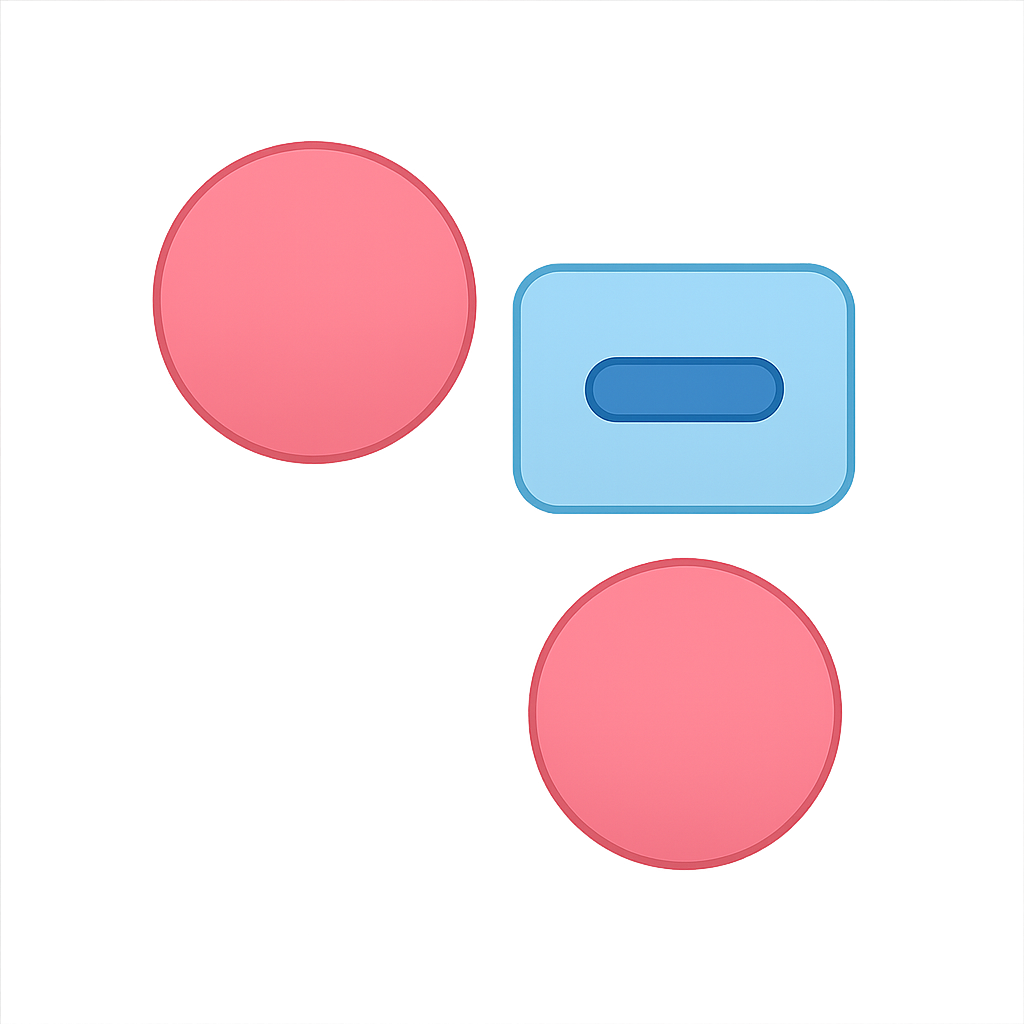
The Art of Taking Away
Imagine a sculptor standing before a giant, unformed block of marble. With each tap of the chisel, a chip of stone falls away, not as a loss, but as a step toward revealing the masterpiece hidden within. Think of a chef, standing before a pantry full of ingredients, carefully selecting only what is needed, leaving the rest behind to create the perfect flavor. Picture the ocean tide pulling back from the shore, a great and gentle removal that uncovers the shimmering treasures of the sand—the spiraled shells and smooth, worn sea glass. In each of these moments, something beautiful is created not by adding, but by taking away. This is my magic. I am the quiet space in a bustling room, the focused thought that emerges when distractions fade. I am the feeling of a heavy backpack being set down after a long day, the relief of clearing a cluttered desk, the clean slate that allows for a new beginning. I bring clarity by removing the excess, I reveal truth by stripping away what isn't essential. People have known my power for longer than they have known my name. I am Subtraction, the art of taking away to find what remains.
My story is as old as human thought itself, though it took a very long time for people to give me a proper name and symbol. In prehistoric times, long before written language, people understood my essence. A hunter might have tracked his arrows by starting with a pile of ten stones and removing one for each arrow he shot. A forager, gathering berries, could tell how many had been eaten from her basket by the number of pebbles she took away from a special counting pile. Archaeologists found a clue to this early thinking on a tool called the Ishango bone, carved around 20,000 BCE. Its carefully etched tally marks suggest that people were already tracking quantities, noting when numbers went up or down. My first real portrait, you could say, appeared in ancient Egypt. On the Rhind Mathematical Papyrus, a scroll from around 1550 BCE, scribes drew me as a hieroglyph of feet walking away from something. It was a perfect image for my action: removal, departure, leaving something behind. For thousands of years, I was shown in different ways across different cultures, but I was still waiting for my universal signature. That moment finally arrived in a book printed on the 29th of April, 1489 CE. A German mathematician named Johannes Widmann was writing about commercial arithmetic. He needed a quick way to show when a crate was underweight or a merchant had a deficit. And so, he drew me: a simple, elegant horizontal line. I was the minus sign (-), a symbol that meant something was taken, owed, or less than expected. Finally, I had a name that everyone, everywhere, could recognize.
To think of me as just 'less' is to see only a shadow of my true self. My real power is in revealing the concept of 'difference.' I am the tool you use for comparison, the silent judge in every race and every measurement. When you stand back-to-back with a friend to see who is taller, the space between the tops of your heads is me. I am the number of points your favorite team needs to score to win the championship. When you buy a snack and hand the cashier a bill, I am the change that jingles back into your hand—the difference between what you gave and what you owed. In this grand mathematical world, I am not alone. I have a partner, a perfect opposite who helps me make sense of everything: Addition. We are what mathematicians call 'inverse operations.' It sounds complicated, but it's really quite simple. We undo each other. If you take away 3 from 10 to get 7, you can add 3 back to 7 to prove you started with 10. We are a team, constantly checking each other's work, ensuring every calculation is balanced and true. Together, we solve complex equations, build bridges, and even send rockets into space. Our relationship is a dance of balance, a secret code that unlocks the logic of the universe.
Every day, you and I work together, even when you don't notice. I am there when you calculate how much of your allowance is left after buying a new book. In the world of video games, I am the reason a health bar shrinks when a character takes damage, creating the thrill of the challenge. I am the quiet countdown of days, weeks, and months as you anticipate a birthday or a summer holiday, each passing day bringing the celebration closer. My influence reaches far beyond numbers on a page. In science, I am the critical difference between a feverish temperature and a healthy one. In art, I am the 'negative space'—the empty areas in a painting or drawing that make the subject stand out, proving that what isn't there can be just as important as what is. So you see, I am not about loss. I am about gaining clarity, understanding change, and seeing the world with precision. By taking things away, I help you focus on what is truly important. I give you the power to analyze, to compare, and to make the smart decisions that will help you build a better, more thoughtful future.
Activities
Take a Quiz
Test what you learned with a fun quiz!
Get creative with colors!
Print a coloring book page of this topic.








 Free for Educators