English
 Continue with Google
 Continue with Apple

The Story of Trade
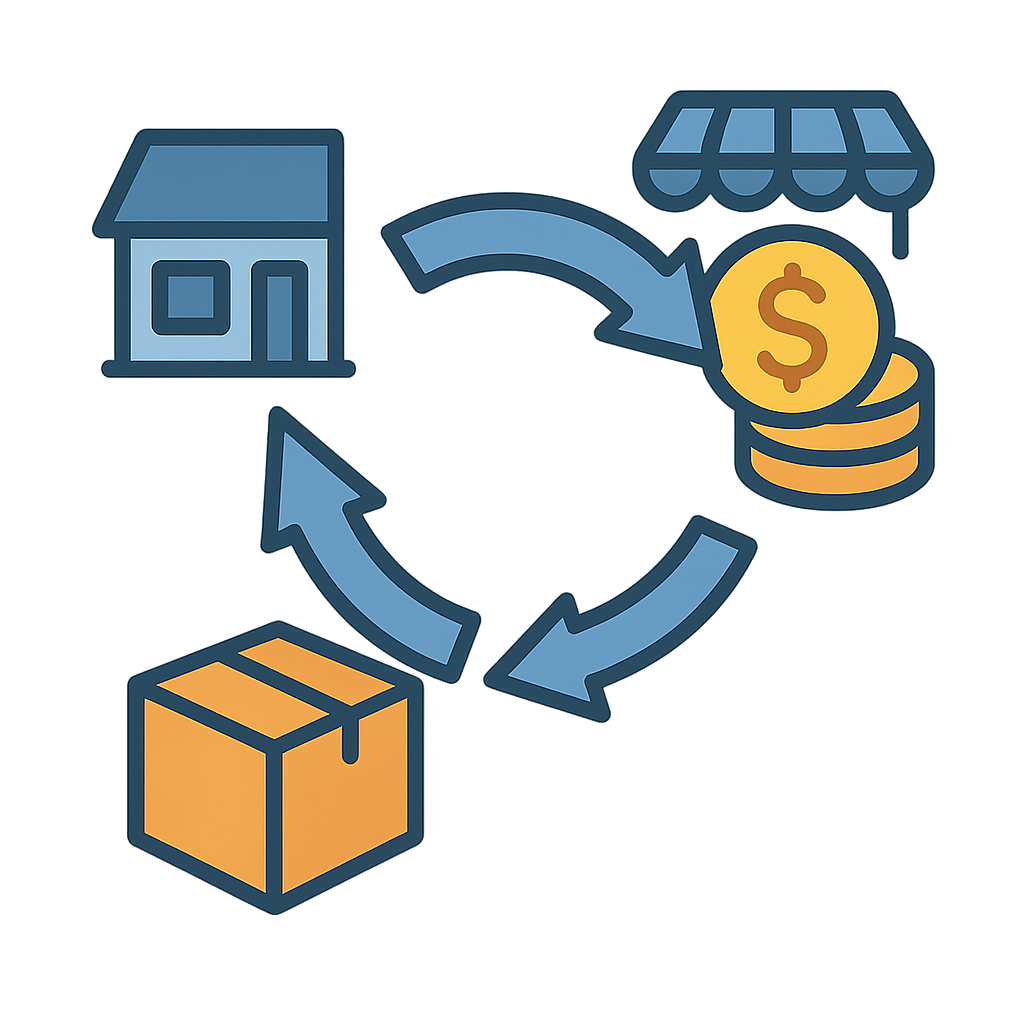
Have you ever had too many of one toy but really wanted a different one that your friend had? Or maybe you baked a dozen cookies when you only wanted one, and your brother had a big, juicy apple you were craving. That feeling—that little spark that makes you think, 'Hey, maybe we can switch!'—is where I come alive. I’m the idea that helps you get what you need by giving away something you have extra of. For a long, long time, I didn't have a name. I was just a quiet understanding between people. Imagine a fisherman with a net full of silvery fish, more than his family could ever eat. A little way away, a farmer has baskets overflowing with bright red berries. The fisherman needs fruit for his children, and the farmer wants fish for dinner. They meet, they smile, and they swap. Fish for berries. Simple, right? That was my beginning, a simple exchange called bartering. I existed in every corner of the world, a silent agreement that made life a little easier and a little more varied. Before there were stores or money, I was the only way to get something you couldn't make or grow yourself. I was built on trust and the simple human need for connection. I am Trade, and I am one of the oldest and most powerful ideas in the world.
As people built bigger villages and then cities, swapping became more complicated. What if the berry farmer didn't want fish? What if he needed new shoes, but the shoemaker didn't want berries? This is when people got clever and invented a go-between: money. At first, it was things everyone agreed were valuable, like shiny cowrie shells, special stones, or even blocks of salt! Then, around the 7th century BCE, people in a kingdom called Lydia, in modern-day Turkey, started making the first coins from a metal mix called electrum. Suddenly, the fisherman could sell his fish for coins and use those coins to buy anything he wanted—berries, bread, or a new pair of sandals. I grew bigger and started to travel. I created famous paths like the Silk Road, which wasn't one single road but a whole network of trails stretching for thousands of miles. Starting around 130 BCE, I helped people carry precious silk from China all the way to Rome, and in return, they sent back glass, wool, and gold. But I didn't just carry things; I carried stories, ideas, religions, and recipes. Travelers like Marco Polo followed my paths centuries later, bringing back tales of incredible cultures that fired up Europe's imagination. I sailed across vast oceans. During the Age of Discovery, starting in the 15th century, brave explorers crossed the Atlantic. This led to something called the Columbian Exchange, which began after Christopher Columbus's voyage on October 12th, 1492. I brought tomatoes, potatoes, corn, and chocolate from the Americas to Europe, Africa, and Asia. Can you imagine Italian food without tomatoes? It was a world-changing moment. In the other direction, I brought horses, wheat, and coffee to the Americas. I completely changed what people ate, how they farmed, and how they lived, connecting continents in a way that had never happened before. I was in the bustling markets of Venice, on the camel caravans in the Sahara Desert, and on the tall ships crossing the sea. I was the reason people learned new languages, tried new foods, and saw that the world was much bigger than their own backyard.
Today, I am faster and bigger than ever. I am in the giant cargo ships that carry thousands of cars and millions of sneakers across the Pacific Ocean. I am in the airplanes that fly fresh flowers from Colombia and fruit from New Zealand to another country overnight. I am even in the invisible signals that let you download a game made by a developer on the other side of the planet. When you go to the grocery store, you can see me everywhere. The bananas might be from Ecuador, the cheese from France, the coffee from Ethiopia, and the rice from India. I make it possible for you to enjoy things from all over the world, things that people centuries ago could only dream of. But I'm also right there in your town, at the local farmers' market where you buy honey from a beekeeper who lives just a few miles away, or when you swap a video game with your neighbor. I am all about connection, big and small. I work best when people are fair, respectful, and curious about each other. I show us that we all have something valuable to offer and that we are stronger, more knowledgeable, and richer in experiences when we share. I am the simple, powerful idea that a fair exchange can make life better for everyone. So the next time you share your snack with a friend or buy a souvenir on vacation, remember me. I am Trade, and I’ll always be here, helping to bring the world and its people a little closer together.
Reading Comprehension Questions
Click to see answer