

 English

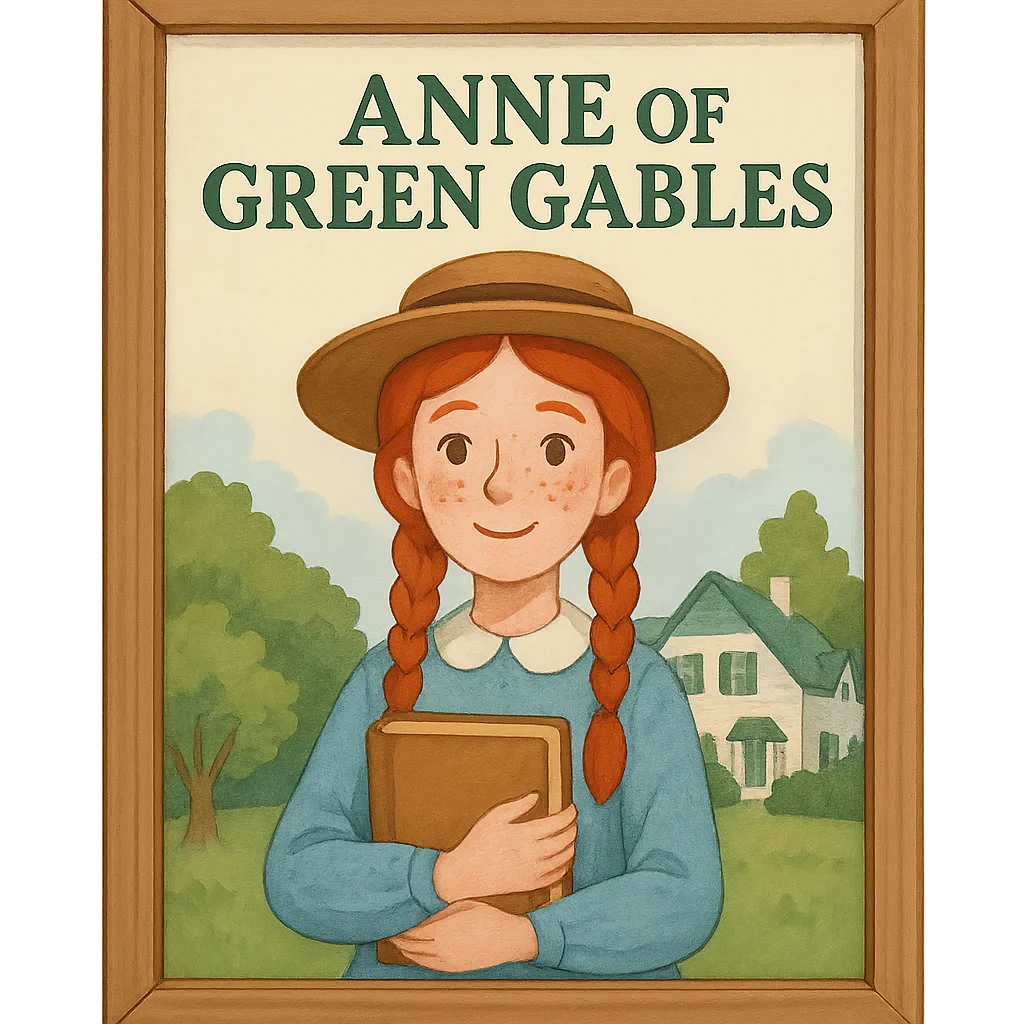
The Story of a Girl Named Anne
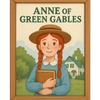
Before I had a cover or pages, I was just a feeling, an idea floating on the salty air of a beautiful island. Imagine a place with roads the color of rich, red earth, where the wind whispers through fields of green and the sea crashes against dramatic cliffs. Picture orchards bursting with apple blossoms in the spring, their sweet scent carried for miles. This was the world I was born from. In the mind of a thoughtful woman looking out her window, a story began to take shape. It was the story of a girl. Not just any girl, but one with fiery red hair, a spirit full of wonder, and a mind overflowing with dreams and big words. She was an orphan, a lonely child who desperately wanted a place to belong, a real home. She had a temper as bright as her hair and an imagination that could turn a simple path into the 'White Way of Delight' or a small pond into the 'Lake of Shining Waters'. She was a mistake, you see. The family that was waiting for her had asked for a boy to help on their farm, but they got her instead. For a while, it seemed her story might end before it even began. But what a tragic waste that would have been. I am the story of that girl. I am the novel, Anne of Green Gables.
My creator was a brilliant woman named Lucy Maud Montgomery, though her friends and family simply called her Maud. She knew the island I just described because it was her home, too. She lived and breathed the beauty of Prince Edward Island in Canada, and she poured all of its magic onto my pages. The idea for me came from a small note she had jotted down in a journal years earlier. The note said: 'Elderly couple apply to orphan asylum for a boy. By mistake a girl is sent them.' That tiny seed of an idea stayed with her. Then, in the spring of 1905, she sat at her desk, looked out at the blossoming landscape she loved so dearly, and began to write. She dipped her pen in ink and brought Anne Shirley to life. Through that spring, summer, and into the autumn of 1906, Maud wrote my story. She wove in her own memories of growing up on the island, her own feelings of loneliness, and her powerful belief in the importance of imagination. The descriptions of Green Gables, with its gabled roof and surrounding trees, were inspired by a real farmhouse owned by her cousins. She understood what it felt like to be a 'kindred spirit' searching for connection, and she gave that feeling to Anne, and to me.
Once Maud finished writing my last chapter in the autumn of 1906, my journey was far from over. In fact, the most difficult part was just beginning. Maud carefully packaged my manuscript and sent me off to publisher after publisher, hoping someone would see the magic in my story. But one by one, they all sent me back. They said I wasn't what people wanted to read. I was rejected so many times that Maud grew discouraged. She packed me away in an old, dusty hatbox and left me on a closet shelf. For months, my story sat in the dark, my pages silent, almost forgotten. I could have stayed there forever. But one day, while cleaning, Maud stumbled upon the hatbox. She pulled me out, blew the dust off my cover, and decided to read me one more time. As she read, she remembered the love and hope she had poured into me. She decided to give me one last chance. She sent me to a new publisher in Boston called L. C. Page & Company. This time, the answer was different. They said yes. It was a thrilling moment. After all that waiting, I was finally going to be shared. My official 'birthday' was in June of 1908, when I was printed, bound, and placed on bookstore shelves, ready for the world to meet Anne Shirley.
My arrival was met with more love than Maud ever could have imagined. Almost overnight, I became a bestseller. Readers everywhere, from young girls to grown men, fell in love with Anne Shirley. They adored her dramatic speeches, her comical mishaps, and her fierce loyalty to her friends. They understood her longing for a family and celebrated when she finally found one with the Cuthberts, Marilla and Matthew, at Green Gables. Anne was a character who wasn't perfect; she was impulsive and sometimes made big mistakes, but her heart was always in the right place. People saw a piece of themselves in her—in her dreams, her insecurities, and her ability to find joy and wonder in the smallest things. Readers from all over the world wrote letters to Maud, begging to know what happened next. They didn't want their friendship with Anne to end. So, Maud continued my story, writing a whole series of books that followed Anne as she grew up, became a teacher, and started a family of her own. I wasn't just a book anymore; I was the start of a lifelong connection between readers and the unforgettable girl from Prince Edward Island.
Today, more than a century after I was first tucked away in that hatbox, my story continues to travel the world. My pages have been translated into over 36 languages, allowing Anne to find kindred spirits in places Maud never dreamed of. My story has been brought to life on stage in plays, on screen in movies, and in popular television series, introducing new generations to the world of Avonlea. The real farmhouse on Prince Edward Island that inspired Green Gables has become a beloved landmark, visited by thousands of fans each year who want to walk where Anne walked. I am more than just words on a page. I am proof that imagination can build a home, that friendship can be found in the most unexpected places, and that even a mistake can turn into the most wonderful adventure. I hope I remind everyone who reads me to look for the beauty in their own lives and to always leave a little 'scope for the imagination'.
Activities
Take a Quiz
Test what you learned with a fun quiz!
Get creative with colors!
Print a coloring book page of this topic.










 Free for Educators