

 English

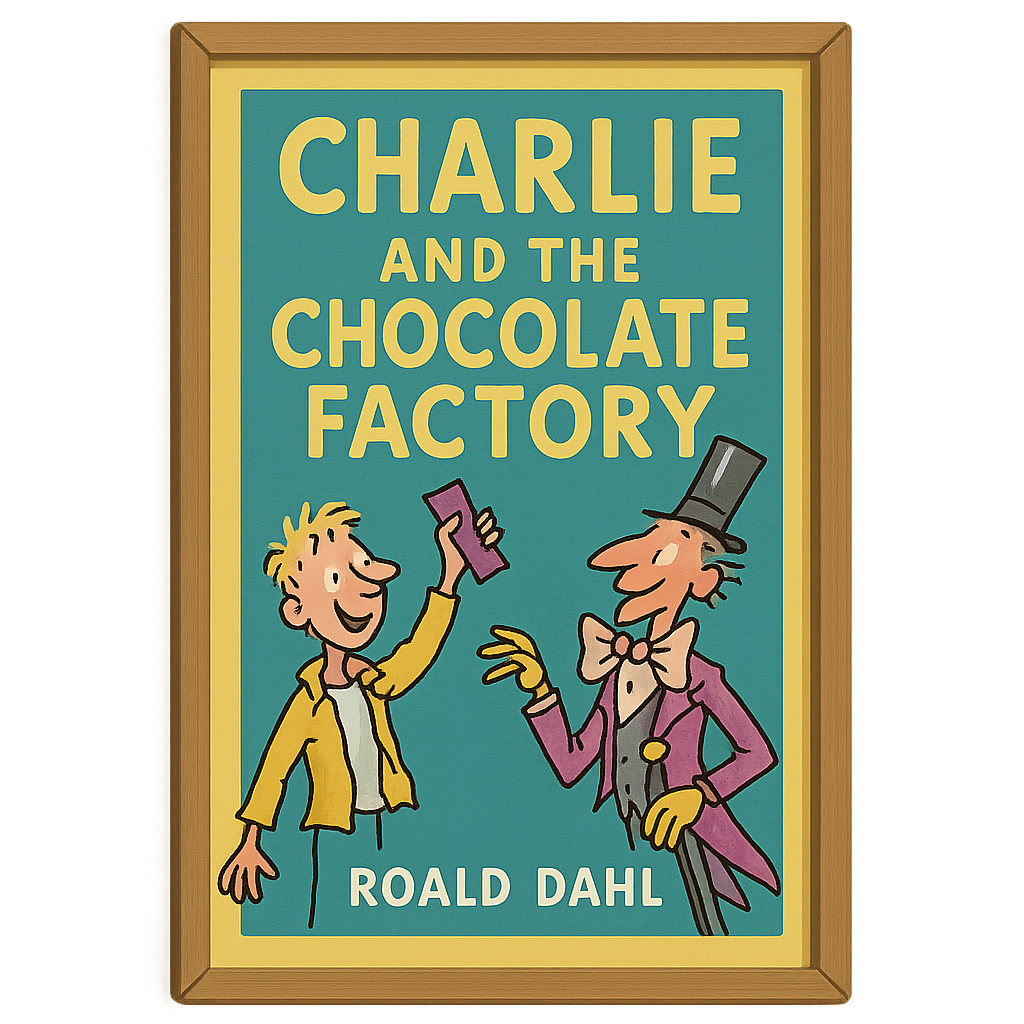
The Golden Ticket's Tale
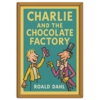
Before you ever turned my first page, I was a whisper, a promise of something magical held between my covers. If you could press your ear to my spine, you might hear the gentle, steady rush of a chocolate river, thick and brown and wonderful. If you could breathe me in, you would smell the sweet, sugary scent of Whipple-Scrumptious Fudgemallow Delight, the sharp fizz of a drink that could make you float, and the earthy richness of a three-course-meal-in-one stick of chewing gum. Within my pages hums a strange, rhythmic song, sung in a language you’ve never heard, by workers no taller than your knee. I hold the secret to a world locked away behind enormous iron gates, a place where the grass is made of minty sugar and waterfalls churn candy into a creamy froth. This world was dreamed up by an inventor, a magician, a candymaker more extraordinary than any other: the one and only Willy Wonka. For years, his factory was a mystery, until one day, a promise was made. Five golden tickets were hidden inside five ordinary candy bars, and for the children who found them, a tour of the factory and a lifetime supply of chocolate awaited. A grand prize beyond imagination was promised to just one of them. I hold the story of that contest, of greed and goodness, of magic and hope. I am the story of Charlie Bucket. I am Charlie and the Chocolate Factory.
My life began in a small brick hut in a garden in Buckinghamshire, England. My creator was a tall man with a mischievous spark in his eyes named Roald Dahl. He wasn't just a writer; he was a grand inventor of worlds. The idea for me was planted long before he ever put pencil to paper, back when he was a schoolboy at Repton School in the 1930s. Every so often, the famous chocolate company, Cadbury, would send boxes of their newest chocolate inventions to the school for the boys to test. Roald and his friends would taste them and give them marks. This experience sparked a question in his mind: what secrets were hidden inside those giant chocolate factories? What would it be like to invent a completely new chocolate bar that would stun the world? This question simmered for decades until he was ready to create me. He would sit in his mother's old armchair, propping a writing board on his lap, and bring me to life on yellow legal pads with his favorite pencil. He carefully crafted my characters. There was the kind, starving, and endlessly hopeful Charlie Bucket, who lived with his loving family in a tiny, drafty house. Then came the eccentric genius, Willy Wonka, a man who was both brilliant and bewildering. And, of course, there were the four children who would serve as warnings against bad behavior: the greedy Augustus Gloop, the spoiled Veruca Salt, the obsessive Violet Beauregarde, and the television-rotted Mike Teavee. After years of dreaming and writing, I was finally ready. I was first shared with the world in the United States on January 17th, 1964.
Once I was published, my journey truly began. I traveled from that little writing hut across the oceans, my words translated into dozens of languages. I found homes on the shelves of libraries, in classrooms, and on the bedside tables of children all over the world. Readers saw themselves in Charlie’s quiet strength. They understood what it felt like to hope for a miracle in a world that often seemed unfair. They cheered for his goodness, for the love of his family that kept him warm even when their little house was cold. In 1971, my world burst into vibrant color and song with the movie 'Willy Wonka & the Chocolate Factory'. Suddenly, my chocolate river was something you could see, and the Glass Elevator truly soared across a bright blue sky. The Oompa-Loompas, with their green hair and orange skin, danced and sang their cautionary tales for everyone to hear. Their rhyming lessons on the dangers of greed, selfishness, and impatience became famous. They weren't just funny little workers; they were the moral compass of the factory, reminding everyone that poor choices have consequences. Through these adventures, readers and viewers discovered my central theme. I am not just a story about candy and a magical factory. I am a story about the power of hope, the unbreakable bond of family, and the profound truth that being a good, kind, and honest person is a prize far more valuable than all the chocolate in the world.
My story has grown far beyond my original pages. I have been reimagined in new films, brought to life on grand theater stages with dazzling songs and sets, and have even inspired real-life candy creations that try to capture a piece of my magic. Decades have passed since my first publication, but I continue to invite children to let their imaginations run wild, to believe that even in an ordinary world, extraordinary things are possible. I am a reminder that you don’t need a lot of money or power to have a rich life; sometimes, all you need is a loving family and a hopeful heart. My chocolate river never stops flowing, my Everlasting Gobstoppers never lose their flavor, and my Great Glass Elevator is always ready to soar into the clouds. My pages will always be here, waiting to remind you that a little bit of goodness is like a golden ticket, capable of unlocking the most wonderful adventures. And the best stories, just like the best sweets, are meant to be shared with everyone.
Activities
Take a Quiz
Test what you learned with a fun quiz!
Get creative with colors!
Print a coloring book page of this topic.




 Free for Educators