

 English

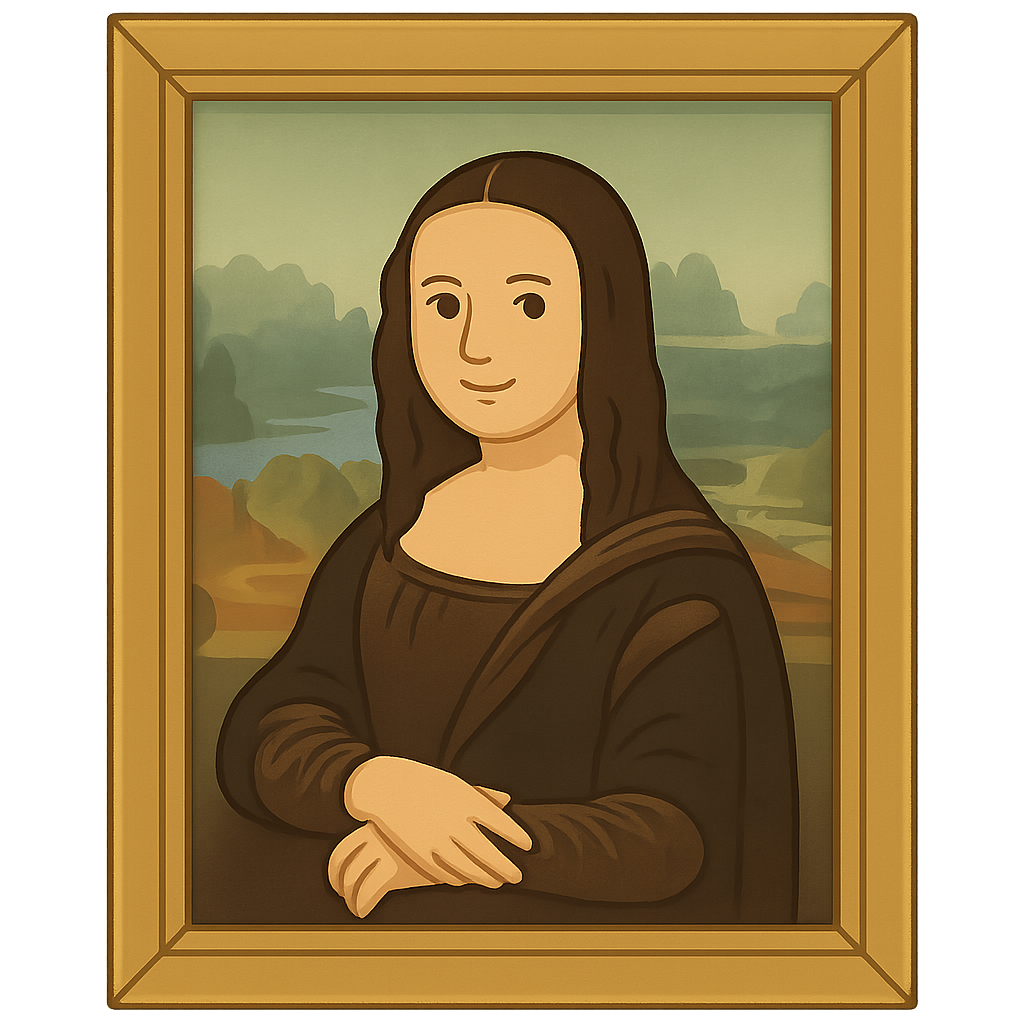
The Girl in the Frame
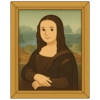
I hang in a grand, cavernous hall, but my world is a quiet one, lived behind a wall of clear, protective glass. Beyond it, a constant river of humanity flows past me every day. I hear a soft symphony of whispers in a hundred different languages, the quiet shuffle of feet on polished floors, and the endless clicking of cameras trying to capture a piece of my mystery. The light is always gentle on my face, carefully designed to preserve the delicate layers of oil paint that make me who I am. For centuries, I have watched people gaze at me. Their heads tilt, their brows furrow, and they search my eyes for a secret. They are all trying to solve the same puzzle: am I happy or sad? Is my smile genuine or hiding something? They look from my face to the hazy, dreamlike landscape behind me—a world of jagged rocks and winding rivers that seems to exist only in a dream. This strange backdrop only adds to their questions. Who am I, and what am I thinking? Before you know my name, know this: I am not just a portrait painted on a thin panel of poplar wood. I am a question that has been asked for over five hundred years, and in the not knowing, people find a connection to the past and to each other.
My name is Lisa Gherardini, but the world knows me as the Mona Lisa, or La Gioconda in Italian. My story begins not in this grand museum in Paris, but in a cluttered, sunlit workshop in Florence, Italy, around the year 1503. My creator was a man whose mind was as vast and fascinating as the landscapes he painted: Leonardo da Vinci. He was so much more than an artist; he was a scientist, an engineer, an inventor, and a philosopher, endlessly curious about how the world worked. He wanted to understand everything, from the flight of a bird to the intricate muscles that form a human smile. And I became the canvas for his obsession with understanding life itself. He painted me using a revolutionary technique he perfected called 'sfumato,' which means 'smoky' in Italian. Instead of drawing sharp, clear outlines, he applied dozens of incredibly thin, almost transparent layers of paint. This allowed him to blend light and shadow seamlessly, giving my skin its soft glow and blurring the corners of my eyes and mouth. This is the secret to my ambiguous expression; there are no hard lines to tell you exactly how I feel. Leonardo worked on me for years, so slowly and patiently that I became less of a commission and more of his constant companion. He carried me from Florence to Milan, and then to Rome, adding a microscopic brushstroke here, a subtle glaze there. I was never finished in his eyes; I was a perpetual experiment in capturing the essence of being human.
In 1516, my master Leonardo was an old man, and he accepted an invitation from the young King of France, Francis I, who was a great admirer of Italian art and science. Leonardo packed his most treasured possessions for the long journey over the Alps, and I was one of them. I left my sunny homeland of Italy forever and entered a new world of royal splendor in France. King Francis I adored Leonardo and gave him a beautiful manor house, the Château du Clos Lucé, where my master spent his final years. The king would visit often, and he was captivated by me, spending hours discussing my creation with Leonardo. After Leonardo died in 1519, I was acquired by the king and became part of the French royal collection. For generations, I lived in magnificent palaces like Fontainebleau and Versailles, admired by kings, queens, and nobles. My life changed dramatically after the French Revolution, which began in 1789. The monarchy was overthrown, and the new government declared that the royal treasures should belong to the people. The Louvre Palace was transformed into a public museum, and I was moved there. For the first time, I was no longer the private property of a king but a work of art for any citizen to come and see.
My quiet life as a celebrated painting took a dramatic turn on August 21, 1911. That morning, the museum staff discovered an empty space on the wall where I was supposed to be. I had been stolen. The news exploded across the globe, and my face was printed in newspapers everywhere. For two years, I was gone, hidden away in a small apartment in Paris by an Italian handyman named Vincenzo Peruggia, who mistakenly believed he was returning me to my rightful home, Italy. When I was finally recovered in 1913 and made my triumphant return to the Louvre, the world celebrated. That theft, ironically, made me the most famous painting on Earth. Today, millions of people make a pilgrimage to see me each year. They wait in long lines, hoping for a moment to look into my eyes. My true value isn't in the paint or the wood, or even in my fame. It is in the quiet conversation that happens between you and me. I am a reminder that the most profound beauty often lies in mystery, not in easy answers. My smile connects a brilliant Renaissance master to a child with a smartphone, bridging a gap of five centuries with a single, timeless human expression. I show that a work of art can do more than just hang on a wall; it can hold the world's gaze and reflect back its unending wonder.
Activities
Take a Quiz
Test what you learned with a fun quiz!
Get creative with colors!
Print a coloring book page of this topic.










 Free for Educators