

 English

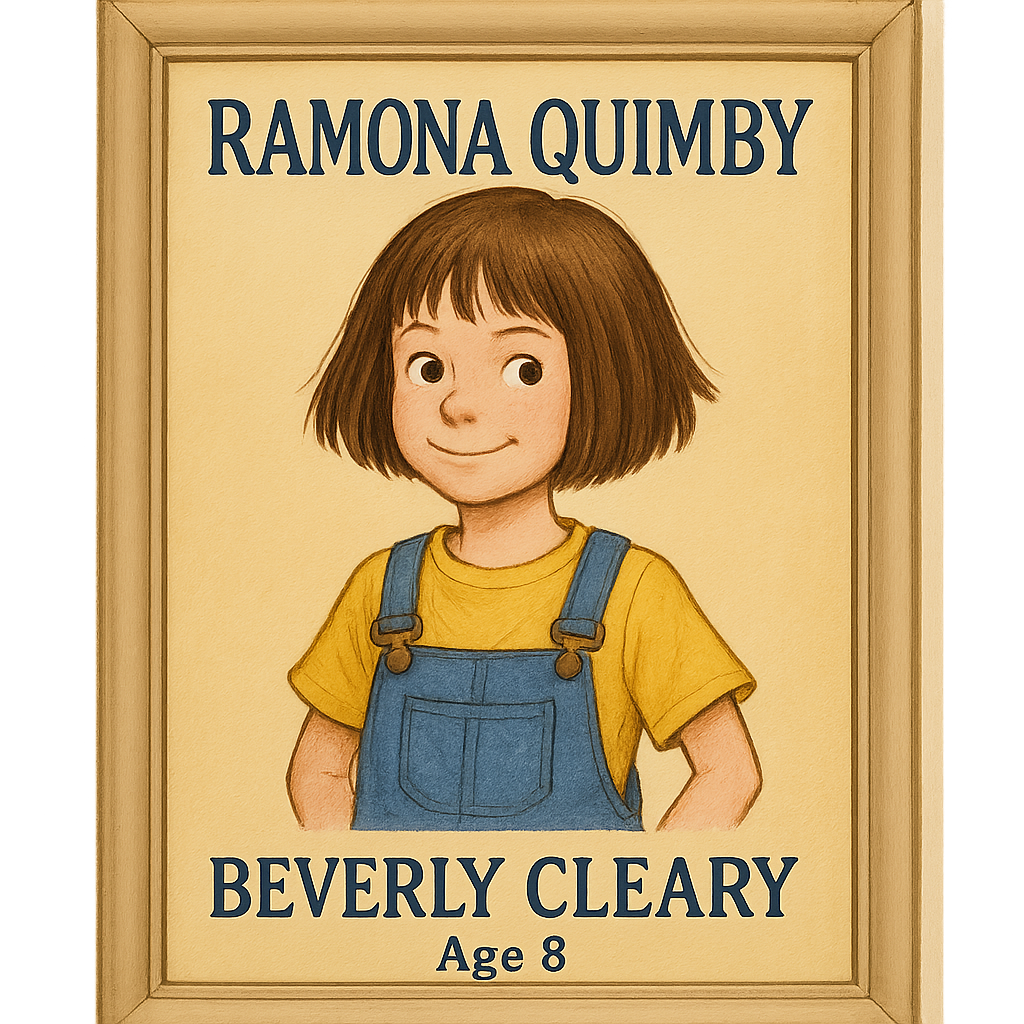
The Story of Ramona Quimby, Age 8
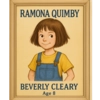
Feel the smooth, sturdy texture of my cover, the slight weight of me in your hands. When you open me, you can hear the gentle rustle of my pages, each one whispering a promise. I smell of ink and paper and the faint, sweet scent of countless adventures waiting to be discovered. Within my pages live the echoes of a bustling house on Klickitat Street, the sting of a scraped knee on unforgiving pavement, and the gigantic, often confusing, but always real feelings of being an eight-year-old girl trying to navigate the world. I am a universe built from ordinary magic, where a simple misunderstanding with a teacher can feel like a catastrophe and a hardboiled egg can become an instrument of spectacular disaster. My world is one of relatable chaos, earnest intentions, and the powerful bonds of a family facing challenges together. I am a book, and my name is Ramona Quimby, Age 8.
My story began not with a grand idea for a hero, but with a quiet observation. My creator was a woman named Beverly Cleary, and she was more than just a writer; she was a profound listener. During her time as a children's librarian in the 1940s, she met countless young readers who came to her with a simple, yet powerful, request. They were tired of stories about flawless children in faraway lands. They wanted to read about kids like themselves—kids who weren't always perfect, who sometimes argued with their siblings, who felt misunderstood by adults, and whose lives were messy, funny, and wonderfully ordinary. Beverly Cleary listened, and she understood. She decided to write the books that those children were searching for, books that would serve as mirrors to their own experiences.
She imagined a spirited, imaginative, and sometimes exasperating girl named Ramona Geraldine Quimby. Ramona wasn't a pest on purpose; she was a girl brimming with creative energy and good intentions that often took a wrong turn. Beverly chose every word with precision, crafting a world that felt completely authentic, from the layout of the Quimby house to the dynamics of a third-grade classroom. She worked alongside an illustrator named Alan Tiegreen, whose simple, expressive line drawings gave Ramona a face and brought her vibrant world to life. Finally, on September 28th, 1981, I was published, my pages filled and my cover bright, ready to share Ramona's unforgettable year with the world.
Every time a reader opens me, I get to live my life all over again. I relive the mortification of the raw egg incident, when Ramona, trying to imitate a commercial, confidently cracked what she thought was a hardboiled egg on her head at school. I can still feel the cold, gooey shock of the yolk sliding down her hair and the wave of embarrassment that followed. I experience her frustration during Sustained Silent Reading, where the pressure to simply sit still and read felt like an impossible task. I feel her righteous determination as she creates anti-smoking signs to convince her parents to quit, a campaign born from both love and worry. Her anxiety becomes my own when her father loses his job and the whole family has to adjust, a heavy reality that many children face.
These moments are the heart of my story. They aren't just silly anecdotes; they are pivotal learning experiences. The egg incident taught Ramona about humility and the difference between television and reality. Her struggles with reading and her family's financial troubles showed readers that it's normal to feel anxious and that families can grow stronger by facing hardship together. Through Ramona's triumphs and tribulations, I whisper a crucial message to every child who turns my pages: it is perfectly okay to make mistakes. It is okay to feel grumpy, to be misunderstood, and even to be, as Ramona’s teacher once called her, a bit of a “nuisance.” These are the moments that shape you.
Since my publication in 1981, my journey has been remarkable. I have traveled from printing presses to warehouses, then to the shelves of countless libraries, bookstores, schools, and private bedrooms across the globe. My spine has been creased and my pages have been gently worn by generations of readers—children who grew up and then shared me with their own kids. In Ramona, they found a friend who understood the complex world of being a third grader. They saw their own families, with all their imperfections and love, reflected in the Quimbys.
My true purpose has never been just to entertain, but to validate. I am a mirror, held up to show children that their feelings are legitimate, their problems are real, and their everyday lives are absolutely worthy of a story. I offer reassurance that even when you feel like a nuisance, you are loved and you are important. My ultimate message is one of empowerment. Just like Ramona, every reader is the protagonist of their own unique story. The greatest adventures aren't always found in fantasy worlds, but in the everyday moments of growing up, learning, and discovering who you are. And that is the most exciting journey of all.
Activities
Take a Quiz
Test what you learned with a fun quiz!
Get creative with colors!
Print a coloring book page of this topic.




 Free for Educators