English
 Continue with Google
 Continue with Apple

The Symphony Born in Silence
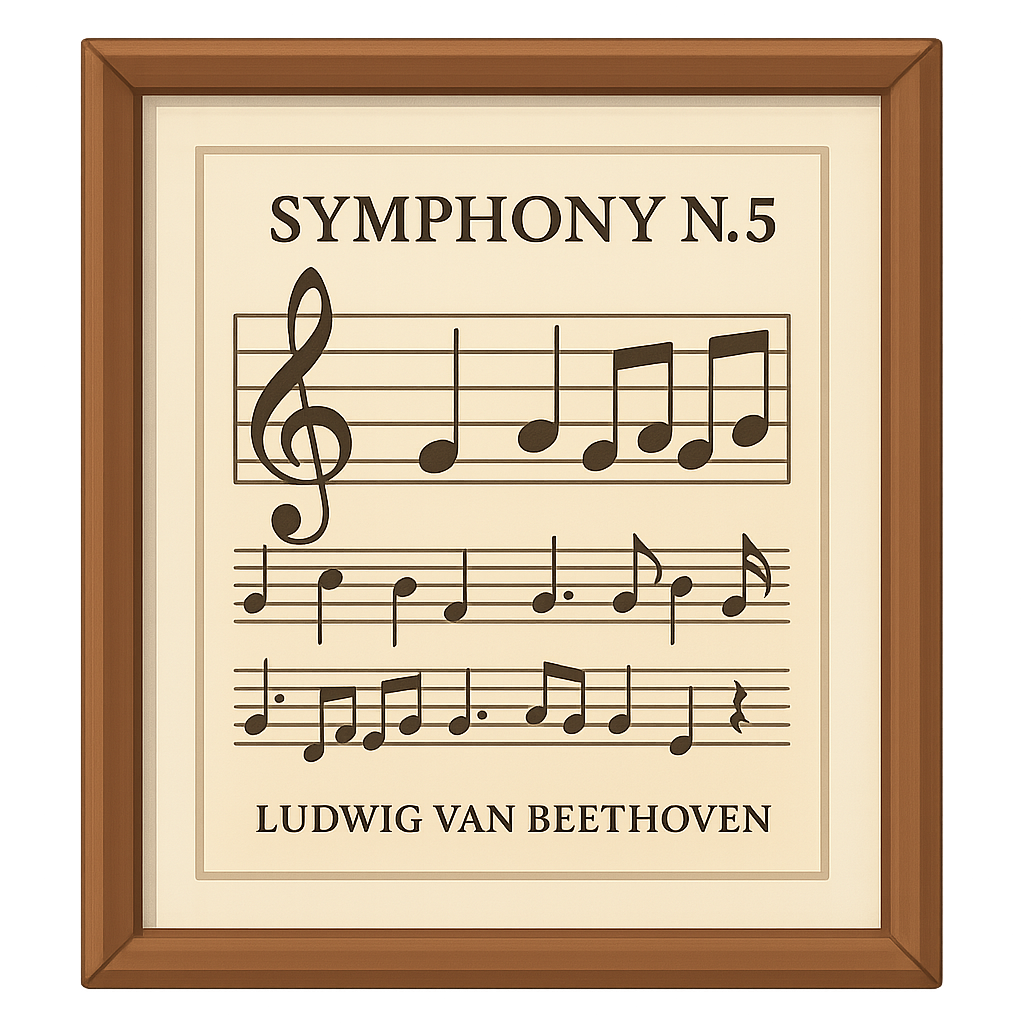
Have you ever felt a sound? Not just heard it, but felt it in your bones, like a shiver or a sudden jolt of electricity. That is how I begin. Da-da-da-DUM. It is a knock at the door of the universe, a question asked by thunder. Four notes, three short and one long, that arrive like a gathering storm. They are the sound of a racing heartbeat, of a challenge being declared to the world. They are the sound of fate itself. Those four notes are my signature, the very essence of my being. They are a promise of the dramatic story I am about to tell, a journey from darkness into brilliant, blazing light. But I am not a character in a book, and you cannot see me hanging in a museum. I am not made of paint or stone. I am a river of sound, a feeling that travels through time, an idea that can fill the largest concert hall or the smallest pair of headphones. I am Symphony No. 5.
My creator, the man who dreamed me into existence, was a brilliant and intense genius named Ludwig van Beethoven. He lived in Vienna, Austria, a city filled with music, but for him, that world was slowly fading into silence. Imagine being a painter whose vision is blurring, a chef who is losing their sense of taste. That was the profound challenge Beethoven faced in the early 1800s. He, one of the greatest musicians alive, was going deaf. But his spirit was a fortress that would not surrender. From 1804 to 1808, he wrestled with me, pouring his frustration, his sorrow, and his unbreakable will onto the page. He couldn’t hear the notes from the outside world, but he heard them perfectly inside his mind, a raging orchestra playing only for him. He would sit at his piano, pressing the keys and feeling their vibrations through the floorboards, imagining the magnificent sound they would produce. For four long years, his notebooks filled with furious scribbles, corrections, and bursts of inspiration as he shaped me. I was born from his struggle. I am made of four parts, called movements. The first is that famous, stormy knock of fate. It is full of tension and conflict. The second is calmer, a moment of reflection and quiet hope. The third begins mysteriously, building suspense until it erupts without pause into the fourth and final movement. This last part is a glorious, triumphant explosion of sound, a musical sunrise that declares victory over despair. I am the story of his fight, moving from the dark, uncertain key of C minor into the bright, heroic key of C major.
My first night in the world was December 22nd, 1808. The setting was the Theater an der Wien in Vienna, but it was far from a glamorous debut. The night was bitterly cold, and the heating in the theater was broken, so the audience sat shivering in their coats. The concert itself was over four hours long, and the orchestra, who had not had enough time to rehearse, was exhausted and made several mistakes. I was the grand finale of this marathon program. When the conductor finally raised his baton for my first notes to be played, the circumstances were far from perfect. But then, it happened. Da-da-da-DUM. The sound of fate filled the chilly air. Despite the cold and the tired musicians, the audience felt my power. They recognized that this was something new. This wasn't just pleasant background music; it was a raw, emotional narrative of the human spirit. I wasn't there to simply be heard; I was there to be felt. I was telling them a story of struggle and ultimate victory, a story they understood without a single word being spoken.
After that cold December night, my journey had only just begun. I traveled from Vienna across the world, my four notes becoming one of the most famous musical phrases ever written. My true power as a symbol, however, was forged in a time of global conflict. During World War II, more than a century after my birth, the Allied forces needed a sign of hope. Someone noticed that my opening rhythm—short, short, short, long—matched the rhythm of the letter 'V' in Morse code. 'V' stood for Victory. Soon, my powerful opening was broadcast by the BBC across Europe, a signal of defiance against tyranny and a promise of eventual triumph. I became the sound of hope in a world consumed by darkness. Today, you can still hear me everywhere. My dramatic opening announces something important in movies, adds humor to cartoons, and gives weight to television commercials. I have become a part of our shared culture, a sound that instantly communicates strength and determination. I am a reminder that out of one person’s immense, silent struggle, a voice can emerge that is powerful enough to give strength to millions, echoing forever through time.
Reading Comprehension Questions
Click to see answer