

 English

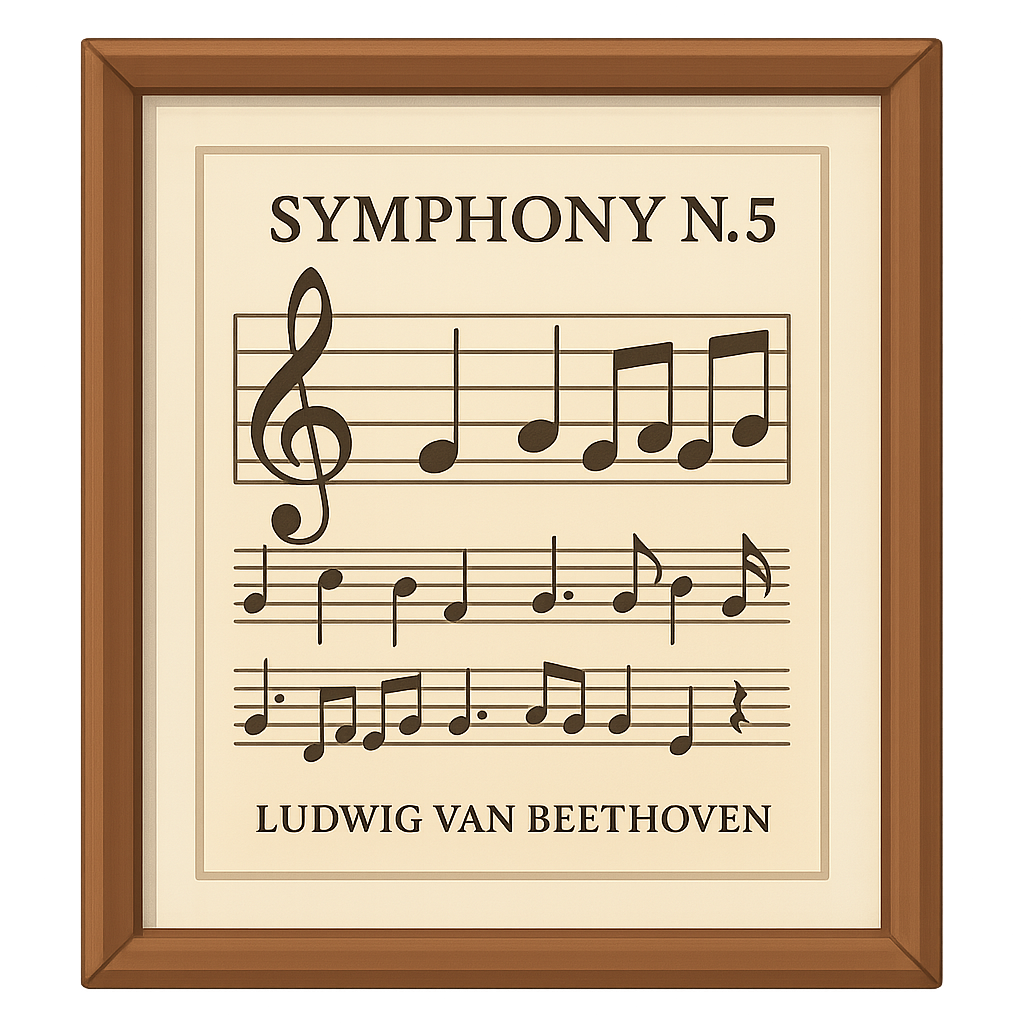
The Symphony That Knocked on the World's Door
Have you ever heard a sound that feels like a secret message just for you? A sound so powerful it feels like a knock on a giant, mysterious door? Da-da-da-DUM. It’s a sound that can make your heart beat a little faster, a call to adventure that echoes in the air. That’s me. I’m not something you can hold in your hands like a painting or a sculpture. I’m not built from stone or wood. I am made of sound, a story that comes alive when musicians gather with their violins, cellos, trumpets, and drums. I am an invisible force, a feeling that fills a room and travels through time. I am a symphony, a grand adventure in music. My full name is Symphony No. 5 in C minor, but you can just call me Symphony No. 5. My story begins with that unforgettable knock, a question that I spend the next thirty minutes answering with swells of strings, blasts of brass, and the thunder of timpani drums. I am the sound of a great struggle and an even greater victory.
My creator was a man with music in his soul, a brilliant and passionate composer named Ludwig van Beethoven. He lived in a city famous for its music, Vienna, Austria. Around the year 1804, he began to imagine me. But here is the most amazing part of my story. As Beethoven was carefully choosing every single one of my notes, the world around him was growing quieter and quieter. He was losing his hearing. Can you imagine creating a world of sound that you could barely hear with your own ears? It was a huge challenge, but Beethoven was full of determination. He didn't just hear music; he felt it. He would sit at his piano and feel my powerful sounds vibrate through the wooden floor and into his bones. He pictured every instrument, every melody, every crash of the cymbals entirely within his mind. It took him four long years to get me just right, arranging and rearranging my notes until my story was perfect. Finally, on a very cold winter night, December 22nd, 1808, I was performed for the very first time at the Theater an der Wien. The concert was long, and the hall was chilly, but when my first four notes rang out, a new kind of fire was lit in the world of music.
So, what is my story about? It’s a journey from shadow to sunshine. It begins with that famous, dramatic Da-da-da-DUM. Many people say those notes represent fate knocking at the door, bringing a great challenge that must be faced. My beginning is stormy and full of struggle, with the violins sounding like they are racing against time. But my music doesn't stay in the darkness. As I continue, my moods change. Sometimes I become quiet and thoughtful, like someone pausing to think about their next move. Other times, I build up with excitement and energy, with the horns and trumpets calling out like heroes gathering for a battle. The entire symphony is a musical adventure that leads to an incredible finale. In my last section, the music bursts out of the shadows and into a triumphant, joyful, and very loud celebration. It’s like throwing open the curtains on a bright, sunny morning after a long, difficult night. This journey in my music mirrored Beethoven’s own fight with his deafness and his belief that hope and courage could win against any challenge.
Long after Beethoven was gone, my voice continued to travel through time and all around the world. My opening knock, those four simple notes, became one of the most famous sounds ever written. You might have heard me in movies when something dramatic is about to happen, or in cartoons for a bit of silly fun. During a great conflict called World War II, people used my rhythm—three short notes and one long one—as a secret code for victory, because the letter 'V' in Morse code is dot-dot-dot-dash. I became more than just music; I became a symbol of strength and the will to never give up. Every time an orchestra plays my notes today, they are not just making beautiful sounds. They are retelling a story of human courage. I hope I remind everyone who listens that even when you face a huge, door-knocking challenge in your life, you have the power to create something beautiful and strong that can inspire people forever.
Activities
Take a Quiz
Test what you learned with a fun quiz!
Get creative with colors!
Print a coloring book page of this topic.











 Free for Educators