English
 Continue with Google
 Continue with Apple

I Speak for the Trees
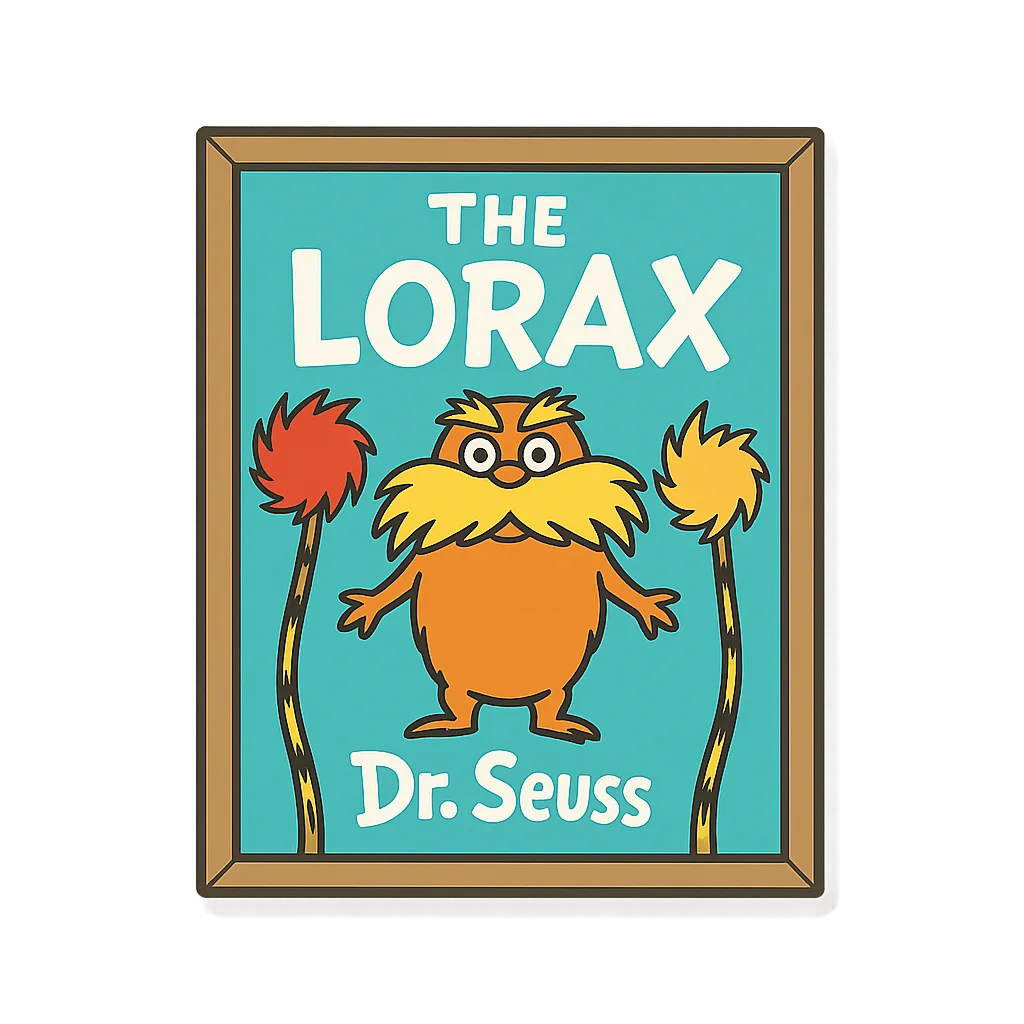
Before you even learn my name, you might notice my scent, a crisp and comforting perfume of paper, ink, and a hint of old glue holding my spine together. When someone opens my cover, I feel a gentle rustle, a whisper of pages turning. Inside me is a world unlike any other, bursting with color and sound. It’s a place where the whisper-soft tufts of the Truffula Trees sway in the breeze, colored like candy and softer than silk. You can almost hear the cheerful chirps of the Swomee-Swans as they fly through the bright blue sky, or the gurgle of the Humming-Fish splashing in their crystal-clear pond. But there is another voice inside me, a grumpy yet determined one. It belongs to a small, mustachioed guardian, a creature who is short in stature but immense in spirit. He is the protector of this vibrant paradise. My world begins as a song of nature, a symphony of life. But as you turn my pages, you will see a growing grayness creep in. The sky darkens with smog, the water turns sludgy, and the sweet scent of Truffula fruit is replaced by the sour smell of industry. The song of nature fades into a sorrowful silence. I am more than just words and pictures bound together; I am a question asked of every single person who opens me. I am a choice. I am a warning. I am a book, and my story is called 'The Lorax'.
I was given my voice by a man with a mind that danced with rhymes and a hand that drew the most wonderful, wobbly creatures imaginable. His name was Theodor Geisel, but the world knows him best as Dr. Seuss. I was born in a time of great change, on March 2nd, 1971. In the years leading up to my creation, people were beginning to look at the world around them with new eyes and growing concern. They saw the thick smog choking the air in big cities and the pollution clouding the rivers. The very first Earth Day had just been celebrated on April 22nd, 1970, and a powerful new environmental movement was taking shape. My creator felt a deep sense of frustration with the carelessness he saw, the thoughtless destruction of the natural world for the sake of profit. He wanted to write a story about conservation, but he struggled to find a way to do it without sounding like a boring lecture. The spark of inspiration came during a trip to Africa. As he watched the unique, flat-topped acacia trees dotting the landscape, an image formed in his mind: the Truffula Trees. Filled with a sudden, urgent passion, he returned home and, in a single afternoon on August 12th, 1971, wrote nearly my entire story. He poured all his worries and his hopes onto my pages. He drew the proud, sad Lorax to be the conscience of the land, and the greedy, regretful Once-ler to represent the relentless march of industry. He wasn't just creating characters; he was giving a face and a voice to a timeless argument between humanity and nature.
When I first reached the hands of readers, my bright colors and bouncing rhymes drew them in immediately. Children loved the funny-looking Bar-ba-loots and the fantastical world of the Once-ler’s Thneed. But as they reached the end, the mood shifted. They felt the weight of my message. I wasn't just another playful Dr. Seuss story; I was a fable for modern times, a cautionary tale about what happens when progress moves forward without looking back at the consequences. I showed, in stark, simple terms, how a beautiful world could be unmade, one Truffula Tree at a time. My message made some people uncomfortable, even angry. In towns across America where logging was a major industry and cutting down trees provided jobs and supported families, some felt I was an unfair attack on their way of life. They argued that my story was biased and didn't show the full picture. I was even challenged in some school libraries by people who wanted me removed from the shelves. But this controversy only proved that my words had power. I had started a conversation, and it was a conversation that needed to happen. In classrooms and in homes, I became a catalyst for discussion about our planet, our resources, and our responsibility to protect the creatures who cannot speak for themselves.
My story does not end when you close my back cover. In fact, that is where it truly begins. Over the decades, my small, orange hero has become a global symbol for environmental protection. My warning, 'I speak for the trees,' has become a rallying cry for activists, young and old, who fight to protect forests, clean the oceans, and preserve the planet's biodiversity. My story has been retold in animated television specials and even a major motion picture, carrying my message to new generations in new ways. The problems I speak of—deforestation, air and water pollution, and habitat loss—are even more urgent today than they were in 1971. That is why I do not offer a simple 'happily ever after.' I end with a challenge and a single, precious Truffula seed, a small emblem of hope. This hope is not left in the hands of the Lorax or the now-regretful Once-ler. It is left in yours. My final words, 'Unless someone like you cares a whole awful lot, nothing is going to get better. It's not,' are a direct appeal. They are a reminder that my story's true ending is written not on my pages, but in the choices you make every day. I am a promise that one small person, with one small seed of care, can bring back a forest.
Reading Comprehension Questions
Click to see answer