

 English

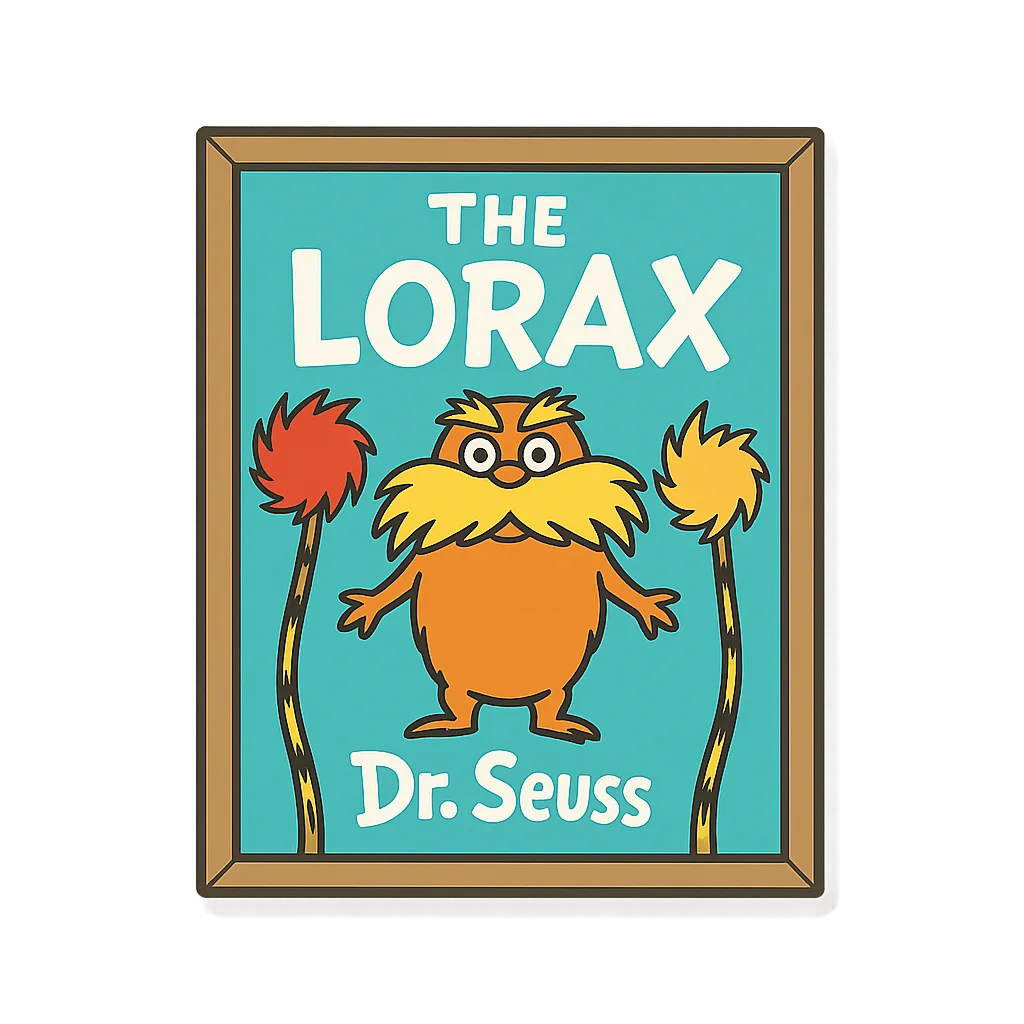
The Story of The Lorax
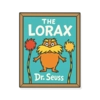
Feel my cover. It’s smooth and bright, isn’t it? Now, listen closely as you turn my pages. Can you hear them whisper? They rustle with secrets of a world you’ve never seen, a world filled with color and wonder. Inside me, the air smells of sweet butterfly milk, and the wind hums a soft tune as it blows through the silky tufts of the Truffula Trees. These trees are magnificent, with trunks as straight as a pole and tops that are softer than any blanket you’ve ever snuggled. They come in colors your crayon box can only dream of. In this land, cheerful Brown Bar-ba-loots tumble and play, eating the sweet Truffula Fruits that fall to the ground. Up above, the Swomee-Swans sing their beautiful, humming songs, and down in the pond, the Humming-Fish splash about without a care. Can you imagine such a perfect place? It’s a world built from rhyme and rhythm, a peaceful paradise of soft edges and happy sounds. But my story isn’t just about this beautiful place. It’s also about what happens when it’s gone. I hold a memory of this world, a warning about losing it, and a tiny seed of hope for bringing it back. I am a story, a warning, and a promise. I am the book called The Lorax.
My life didn’t begin in a forest of Truffula Trees, but in the scribbly, brilliant mind of a man named Theodor Geisel. You probably know him by his famous name, Dr. Seuss. He was a master of wonderful nonsense, a wizard with words who could make you laugh while also making you think. The idea for me was planted in his mind far from his drawing desk. Around the year 1970, he took a trip to the country of Kenya in Africa. He sat on a vast plain and saw herds of elephants walking past beautiful, umbrella-shaped acacia trees. He thought they were the most amazing trees he had ever seen, and a worried thought sprouted in his head: What if someone came along and decided to chop them all down? That worry followed him all the way home. Back in his studio, he picked up his pencils and began to draw. First came a short, grumpy-looking fellow with a big, bushy, yellow mustache. This little guy looked like he had something important to say. He would become the Lorax, the one who speaks for the trees. Then came the greedy Once-ler, with his tall green hat and even taller ambitions. Dr. Seuss spent months weaving my story together, making every word rhyme and every picture pop with color. He wanted my message to be serious, but he wrapped it in a fun, silly world so that everyone would want to listen. Finally, on August 12th, 1971, I was ready. My pages were printed, my cover was glued, and I was sent out into the world to speak my truth.
When I first landed on bookshelves and in libraries, I made quite a stir. Some people thought I was just a funny story with silly creatures. But others, especially grown-ups, understood that I was talking about real problems, like smoggy air from factories and what happens when we take too much from nature without giving anything back. My story made them think, and sometimes, it made them a little uncomfortable. As the years went by, I became more than just a book. I became a symbol for taking care of our planet. Every year on Earth Day, teachers and parents pull me from the shelf to share my story with new generations. They read about the Brown Bar-ba-loots getting the crummies in their tummies and the Swomee-Swans getting smog in their throats. They see the last Truffula Tree fall. But they also see the very last seed, left behind with a single, powerful instruction. That’s my most important part, the line that lives on even after you close my cover: “Unless someone like you cares a whole awful lot, nothing is going to get better. It's not.” I am not just paper and ink. I am an idea, a challenge, and a little seed of hope that I plant in the heart of every person who reads me. I am a reminder that you have the power to speak for the trees and help build a greener, kinder world.
Activities
Take a Quiz
Test what you learned with a fun quiz!
Get creative with colors!
Print a coloring book page of this topic.












 Free for Educators