

 English

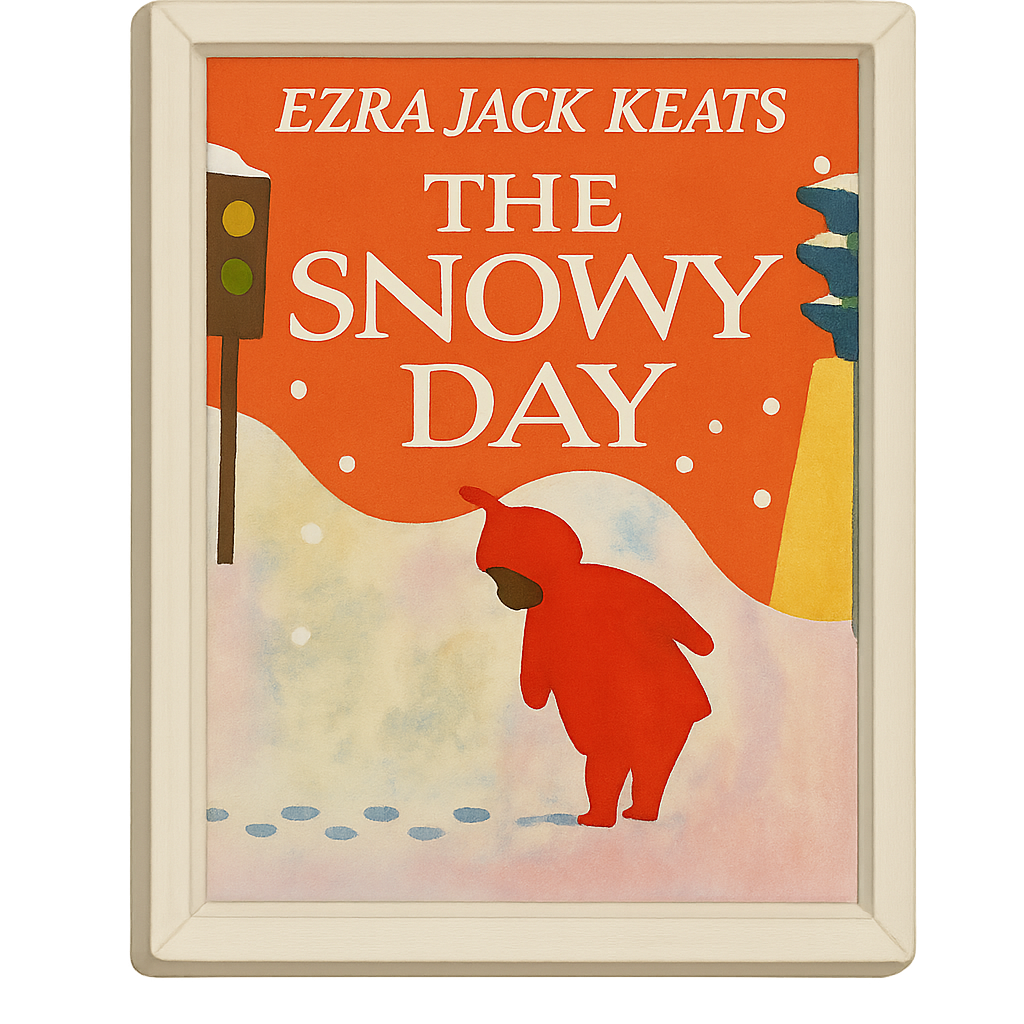
The Snowy Day
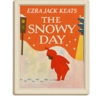
Before you even see my pictures, you might feel me in your hands. You might hear the gentle swish of a page turning. That’s when my world opens up. It’s a world blanketed in white, a city hushed and transformed by a thick layer of freshly fallen snow. Imagine the quiet magic that hangs in the air after the first big snowfall of winter, when every sound is muffled and the world seems to be holding its breath. The air is so crisp it almost tingles. Within my pages, a small figure emerges into this peaceful scene. He’s a little boy named Peter, snug in a bright red snowsuit that stands out like a berry against the endless white. His dark skin is a warm and welcome contrast to the cold landscape he’s about to explore. You can almost feel his delight as he steps out his front door. His boots make a satisfying crunch-crunch-crunch in the deep snow, leaving a trail of perfect footprints behind him. He discovers the simple fun of smacking a snow-laden tree with a stick, watching with wide eyes as a heap of white plops down on his head. It’s a story of pure, simple, universal joy—the kind that every child feels on a snow day. I am not just a story of snow. I am a window, a mirror, and a memory. I am a book, and my name is The Snowy Day.
My story began long before my pages were ever printed, in the mind and heart of my creator, Ezra Jack Keats. Ezra was an artist who didn't just see the world; he felt it in shapes, colors, and textures. He was born in Brooklyn, New York, and grew up knowing that art was his language. My own journey started not with a pen or a paintbrush, but with a memory he held onto for over two decades. Back in 1940, Ezra was looking through an issue of Life magazine when he saw a strip of four photographs of a little African American boy, about three or four years old, getting ready for a vaccination. He was struck by the boy's expressive face and the universal emotion he showed. Ezra cut out that photo strip and kept it, knowing that one day, that little boy deserved a story of his own. For twenty-two years, that boy’s face looked out at Ezra from his studio wall. Finally, in the early 1960s, Ezra knew it was time. He sat down in his studio to bring me to life. He didn't just draw me. He crafted me with a revolutionary technique called collage. He cut and pasted colorful, patterned papers to create the cozy wallpaper in Peter's apartment. To make the delicate snowflakes that drift across my pages, he used his own handmade stamps. And for the snow itself, the very heart of my story, he spattered black India ink with a toothbrush to give it a gritty, realistic texture that you can almost feel. On October 2nd, 1962, I was finally published, and my hero, Peter, stepped out into a world that had rarely seen a child like him as the star of his own story.
My arrival was quiet, but my impact was deeply felt. In the America of 1962, it was extraordinarily rare to find a children's picture book with a Black child as the main character. The few that existed often relied on harmful stereotypes. But my story was different. It wasn't about a grand struggle or a lesson on race. It was about something every single child could understand and connect with: the profound wonder and simple adventures of a snowy day. Peter packs a snowball to save for later, makes snow angels, and slides down a giant hill of snow. His adventure was universal. Soon after I was published, letters began pouring in to Ezra from librarians, teachers, and parents all across the country. They wrote about how children’s faces would light up with recognition and joy when they saw Peter. For many Black children, it was the first time they had ever seen themselves on the colorful pages of a mainstream book, celebrated as the hero of an everyday adventure. Then, in 1963, something wonderful happened. I was given a shiny, round, gold sticker to wear on my cover. It was the Caldecott Medal, awarded to the most distinguished American picture book for children published that year. This prestigious award wasn't just for my unique art. It was a powerful statement celebrating the idea that every child’s story is important, valuable, and deserves to be told with beauty and care. I became a quiet pioneer, gently opening the door for more diverse characters to lead their own adventures in the world of books.
My journey has continued through many decades since those first snowy footprints were made. My pages have been turned by millions of small hands, my story read aloud in countless classrooms and at bedsides in countries all over the world. I have been translated into many languages, proving that the magic of a snow day needs no translation. Peter’s adventure didn’t end with me. Ezra Jack Keats wrote more books where Peter grew up, learned to whistle, and even got a baby sister, allowing my readers to grow up alongside him. My legacy has been celebrated in many ways. In 2017, the United States Postal Service honored me and Peter with a series of postage stamps, sending my story across the country in a new way. I have also been brought to life in an animated movie, where Peter’s red snowsuit and his crunching footsteps dance across the screen. But my greatest legacy lives not on stamps or screens, but in the hearts of those who read me. I am more than just paper and ink. I am a lasting reminder that the simplest joys of life—the satisfying crunch of snow underfoot, the cozy warmth of home, and the hopeful dream of a new day—are the threads that connect us all. I show that a hero can be anyone, and that a quiet, snowy day can hold the biggest adventure of all, helping us connect to the shared wonder of childhood, no matter who we are or where we come from.
Activities
Take a Quiz
Test what you learned with a fun quiz!
Get creative with colors!
Print a coloring book page of this topic.







 Free for Educators