

 English

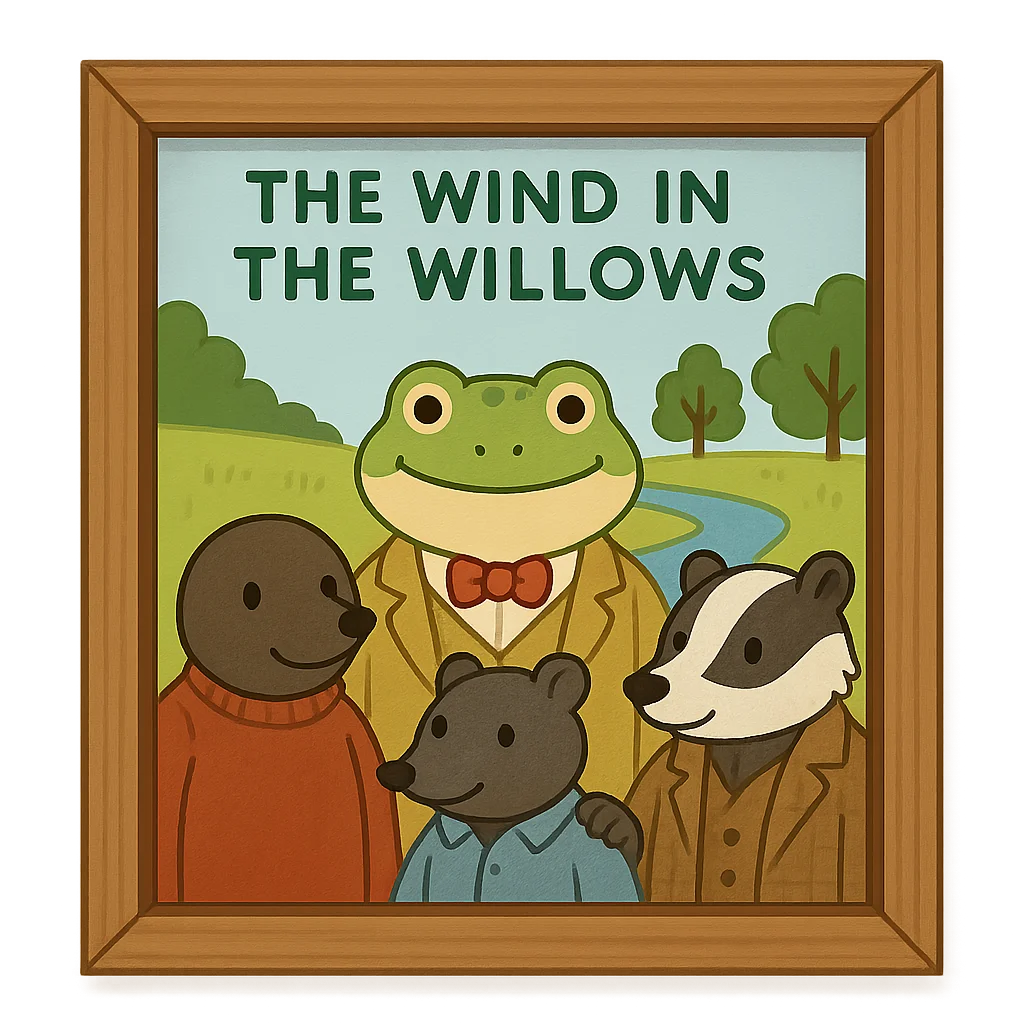
The Wind in the Willows
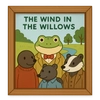
Before I had a title, I was a feeling—the feeling of cool grass under your feet and the gentle 'plop' of a water vole diving into a stream. I was the smell of damp earth in a cozy burrow and the cheerful chaos of a picnic by the water's edge. Have you ever felt a sudden urge for a grand adventure, but also a deep longing for the comfort of home. That is the feeling I hold in my pages. I began as stories whispered at bedtime to a young boy named Alastair, tales of loyal friends and grand, silly quests along a riverbank. I am the sound of wind rustling through the reeds, a promise of both peace and excitement. I am the story of shy Mole, who leaves his underground home for the first time; kind Ratty, who loves nothing more than his river; wise old Badger, who protects his friends from the Wild Wood; and the wonderfully wild Mr. Toad, whose love for adventure gets him into all sorts of trouble. I am The Wind in the Willows.
My creator was a man named Kenneth Grahame. He wasn't a full-time author at first; he worked at the Bank of England, a very serious job in the busy city of London. But his heart was always in the English countryside, along the River Thames, where he had grown up. He invented my world for his son, Alastair, whom he nicknamed 'Mouse.' Alastair was a small boy with poor eyesight, but he had a big imagination. Starting around 1904, his father would tell him stories about the animals who lived along the riverbank. When Alastair had to go away to the seaside for his health, he missed the stories terribly. His father didn't want the adventures to stop, so he promised to keep them going. Between 1904 and 1907, he wrote his son fifteen wonderful letters, each one a new chapter in the lives of Mole, Ratty, and especially the boastful Mr. Toad. Those letters, filled with a father's love and a dreamer's imagination, became my very bones.
After years of storytelling just for his son, Kenneth Grahame decided to gather all the letters and bedtime tales together so children everywhere could visit my world. He put all the adventures in order, from Mole's first trip out of his burrow to the grand battle to reclaim Toad Hall from the wicked weasels and stoats. On October 8th, 1908, I was finally published as a book in London, with a simple green cover and no pictures inside. Can you imagine a book without pictures. At first, some grown-up critics didn't know what to make of me. A story about a toad who steals a car and ends up in jail. It seemed very silly to them. But readers, especially families who read me aloud by the fire, fell in love with my charm. They loved exploring the scary Wild Wood, messing about in boats with Ratty, and cheering for Mr. Toad's daring escape. I became a cozy escape, a place where the biggest problems could be solved with courage and the help of good friends.
For more than a century, my pages have been turned by hands young and old. My story has jumped out of the book and onto stages as plays and onto movie screens as films and cartoons. Though cars are much faster now than Mr. Toad's first motorcar, the feelings I share are timeless. I am a reminder that friendship is a grand adventure, that home is a precious comfort, and that there is nothing—absolutely nothing—half so much worth doing as simply messing about in boats. And so, the wind still whispers my stories through the willows, for anyone who wishes to listen and dream of a life on the riverbank.
Activities
Take a Quiz
Test what you learned with a fun quiz!
Get creative with colors!
Print a coloring book page of this topic.







 Free for Educators