

 English

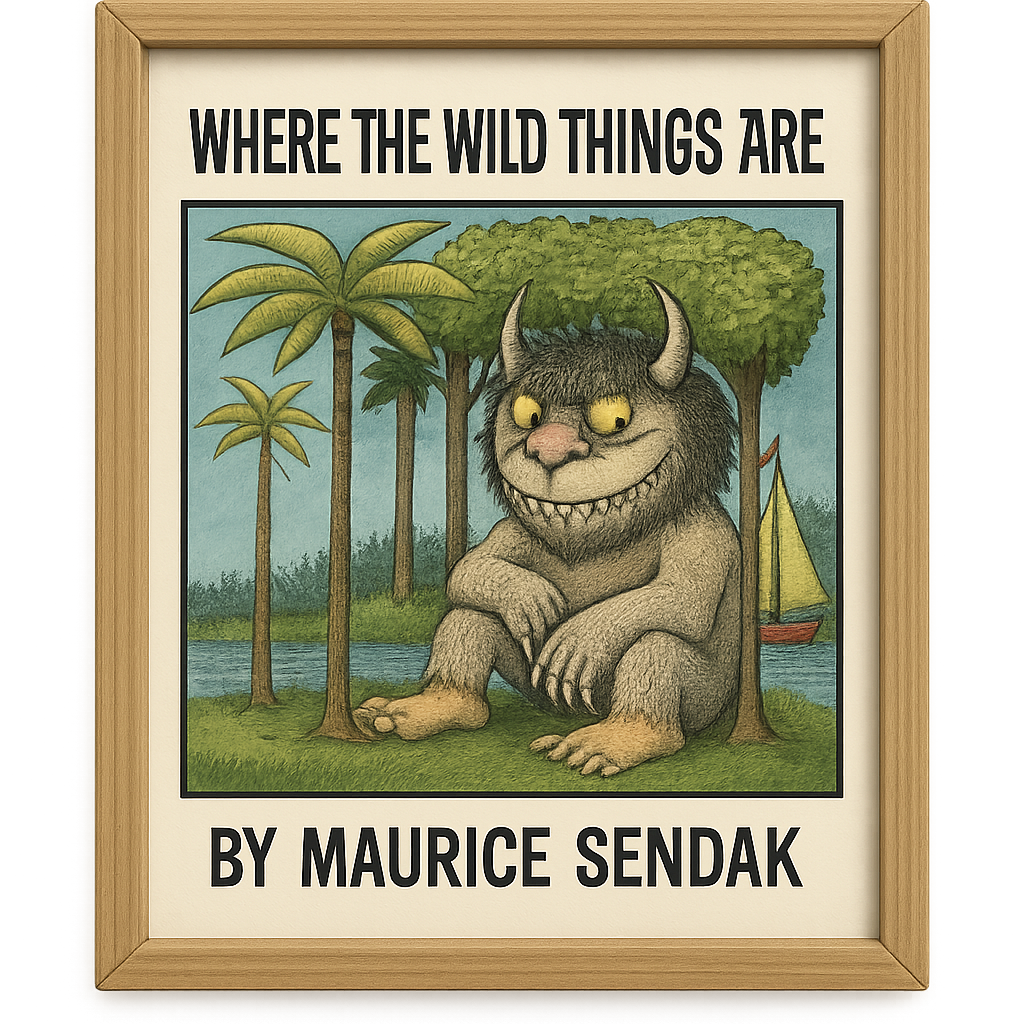
Where the Wild Things Are
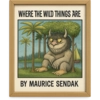
Before you even know my name, you feel me in your hands. I am a landscape of paper and ink, smelling faintly of old forests and new adventures. My cover is a promise of mischief, showing a sleepy monster and a little boat waiting just for you. When you open me, you don't just see a story; you enter a world. You hear the rustle of leaves as a forest grows inside a little boy's room, its vines climbing the walls and its trees touching the ceiling. You feel the gentle sway of a private boat on a vast, moonlit ocean, carrying you across time and space. You can almost smell the salty air as a year-long journey unfolds in just a few pages. I am a safe place for big, messy feelings—the kind that make you want to gnash your terrible teeth and roll your terrible eyes. Within my pages, anger isn't something to hide; it is an adventure waiting to begin. I am proof that your imagination is a wild and wonderful place. I am the book, 'Where the Wild Things Are.'
I was brought to life by a man named Maurice Sendak, a storyteller who remembered exactly what it was like to be a child. He understood that being young meant being full of love, but also full of frustration and anger that could feel as big and untamable as a monster. Maurice grew up in Brooklyn, New York, and his own childhood, often spent indoors due to illness, was filled with stories and drawings that helped him make sense of the world. He created me in his studio in New York City, and on November 13th, 1963, I was finally shared with everyone. Maurice didn't just write my words; he drew my very soul with his pen and ink. He used a special technique called cross-hatching, where he drew layers of tiny, intersecting lines to create shadows and textures. This made the Wild Things look both fearsome and strangely vulnerable, with their shaggy fur and clumsy feet. He wanted to show that even when you feel wild and make mischief, you are still worthy of love. When I was first published, some grown-ups were worried. They thought my monsters were too scary and that my main character, a boy named Max, was too naughty for putting on his wolf suit and shouting at his mother. But children understood me immediately. They didn't see a bad boy; they saw a hero who sailed through his anger, tamed his fears, and became the king of his own wild world.
My journey didn't stop in the 1960s. The year after I was born, in 1964, I was given a very special award called the Caldecott Medal, which celebrated my illustrations. It was a sign that people were beginning to understand my true message about honoring the full emotional lives of children. Over the decades, I have traveled to millions of homes and libraries, been translated into dozens of languages, and sat on countless laps for bedtime stories. My story of Max and his Wild Things has been turned into an opera and even a spectacular movie, which was released on October 16th, 2009, bringing my monsters to life on the big screen with incredible realism. I showed the world that children's books could be more than just simple, happy tales. They could be honest, complex, and profound, exploring the complicated feelings that every person has. I teach every reader that it's okay to have a wild rumpus in your heart. Your imagination can be a boat to sail away on, a place to face your own Wild Things and become their king. But most importantly, I remind you that after any adventure, no matter how far you go, there is always a way back home, where someone loves you best of all, and your supper is waiting for you... and it's still hot.
Activities
Take a Quiz
Test what you learned with a fun quiz!
Get creative with colors!
Print a coloring book page of this topic.




 Free for Educators