

 English

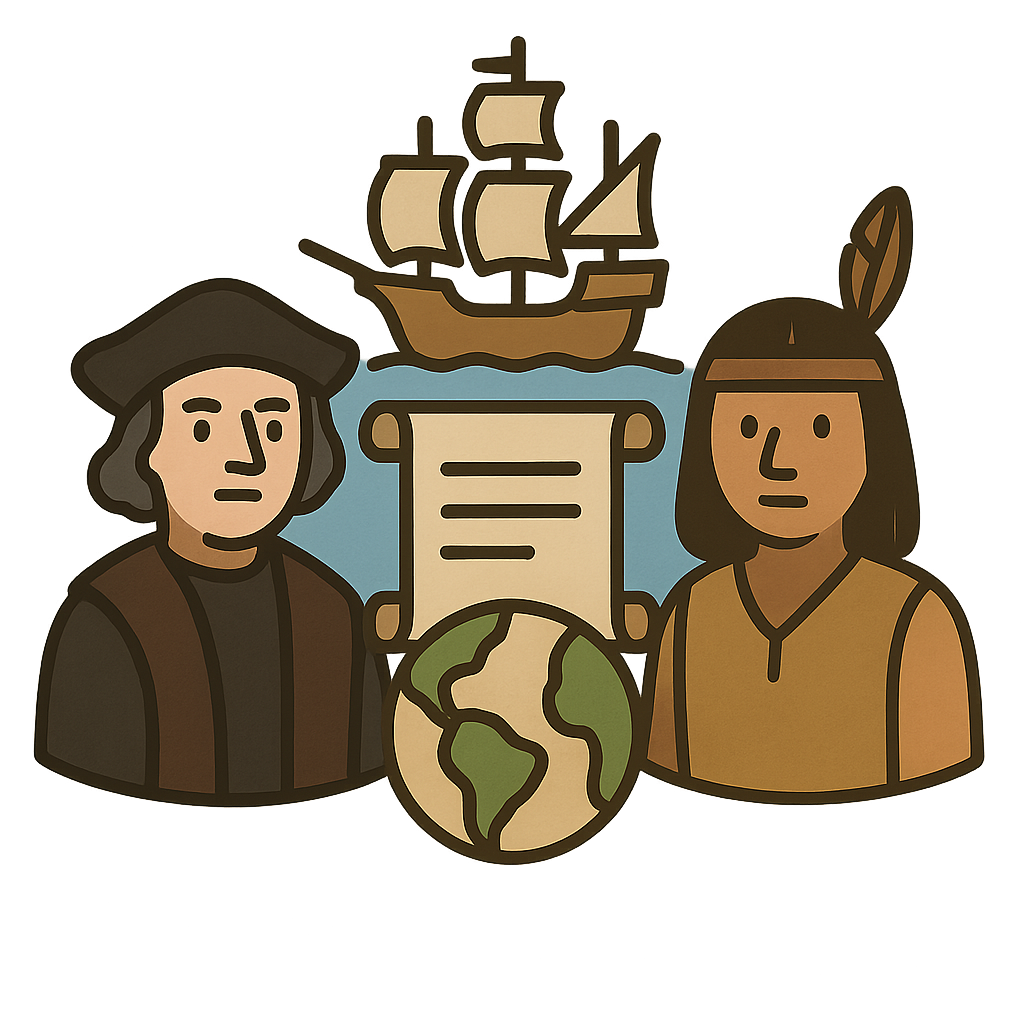
The Voyage of Discovery
My name is Christopher Columbus, and for as long as I can remember, the sea has called to me. I was born in Genoa, a city buzzing with ships and sailors, and I spent my youth poring over maps and listening to tales of faraway lands. But I had an idea that many thought was foolish, even impossible. The great explorers of my time all sailed east to reach the riches of the Indies—the lands of spices, silks, and gold. I believed there was another way. I was certain that if one sailed west, across the great Atlantic Ocean, one would eventually reach those same shores. For years, I carried this dream in my heart. I presented my idea to the kings of Portugal and England, but they dismissed me. They said the ocean was too vast, the idea too radical. It was a difficult time, filled with rejection, but my belief never faltered. Finally, in Spain, I found someone who would listen. After much persuasion, the wise Queen Isabella and her husband, King Ferdinand, agreed to fund my expedition. My joy was immeasurable. Their belief in me was the wind I needed in my sails. We made our preparations in the port of Palos. The air was thick with the smell of salt and tar, and the docks were a flurry of activity as we loaded provisions. I was given command of three ships: the large and sturdy Santa María, and two smaller, nimbler caravels, the Pinta and the Niña. On the morning of August 3rd, 1492, with a determined crew and a heart full of hope, we raised our anchors and sailed out into the unknown. The dream I had held for so long was finally becoming a reality.
The first few weeks at sea were filled with good winds and high spirits. We sailed past the Canary Islands and then pointed our bows directly west, into a part of the ocean no European map had ever charted. The sea was a vast, shimmering blue emptiness that stretched to the horizon in every direction. Days turned into weeks, and the sight never changed. There was nothing but water and sky. The initial excitement of the crew began to curdle into fear. They were brave men, but this was a voyage into nothingness. They muttered amongst themselves, their eyes scanning the horizon for any sign of land, only to be met with the same endless blue. They worried we had sailed off the edge of the world. They missed their homes and families and began to doubt my calculations. It was my duty as captain to keep their hope alive. I would stand on the deck of the Santa María, my astrolabe in hand, and show them how I navigated by the stars. I spoke of the riches and glory that awaited us in the Indies. I reminded them that great achievements require great courage. I had to be a rock for them, even when my own heart felt a flicker of doubt in the darkest nights. There were false alarms that tested our resolve. One evening, a sailor shouted that he saw land, but it was only a strangely shaped cloud. The disappointment was heavy. Tension grew so thick you could feel it in the humid sea air. Then, just as despair began to set in, small miracles started to appear. On October 7th, we saw huge flocks of birds flying southwest, a sure sign that land was near. A few days later, a sailor on the Niña fished a branch out of the water, and it was covered with fresh, pink berries. Another man found a carved stick, clearly shaped by a human hand. Hope surged through the ships like a fresh wind. The men’s faces, once grim with fear, were now bright with anticipation. We knew we were close. The endless ocean was not endless after all.
The final days were a blur of nervous energy. Every eye was fixed on the western horizon. We had been at sea for over two months, and our faith was about to be rewarded. In the very early hours of October 12th, 1492, a lookout on the Pinta, a man named Rodrigo de Triana, shattered the night's silence with a cry I will never forget: "¡Tierra! ¡Tierra!". Land. Land. The words echoed across the water, and a cheer erupted from all three ships. Men wept, they hugged, they fell to their knees in prayer. The long, perilous journey was over. As the sun rose, it revealed a beautiful island, lush and green against the turquoise water. I rowed ashore with my captains, Martín and Vicente Pinzón, and we planted the royal banner of Spain in the sand. I named the island San Salvador, which means "Holy Savior," in gratitude for our safe passage. Soon, people emerged from the trees. They were the Taíno people, and they approached us with a gentle curiosity that matched our own. They had kind faces and wore no armor or weapons of war. We could not understand each other's words, but we communicated through gestures and smiles. I offered them red caps and glass beads, which they accepted with delight, and they gave us colorful parrots and balls of cotton in return. It was a peaceful and wondrous first meeting. We spent the next few months exploring the nearby islands, marveling at this new world. Our journey was not without hardship, however. On Christmas Eve, my flagship, the Santa María, ran aground on a reef and had to be abandoned. It was a sad loss, but with the Pinta and the Niña, we knew it was time. We had to sail back to Spain and share the incredible news of our discovery.
The return voyage was stormy and difficult, but we finally reached the port of Palos in March of 1493. The welcome we received was fit for heroes. The entire country celebrated our success, and I was brought before Queen Isabella and King Ferdinand to tell them of the new lands I had claimed for Spain. My voyage had not led me to the Indies as I had planned, but it had done something far more significant. It had revealed a whole new part of the world, a "New World," that no one in Europe knew existed. Our journey on those three small ships had forever changed the map and created a bridge between two worlds that had been separate for all of history. Looking back, I want you to remember that every great journey begins with a single, bold idea. People may tell you that your dream is impossible, that the sea is too wide, or that the risk is too great. But if you hold onto your curiosity, trust in your knowledge, and persevere through the darkest nights, you can discover new worlds of your own.
Activities
Take a Quiz
Test what you learned with a fun quiz!
Get creative with colors!
Print a coloring book page of this topic.





 Free for Educators