

 English

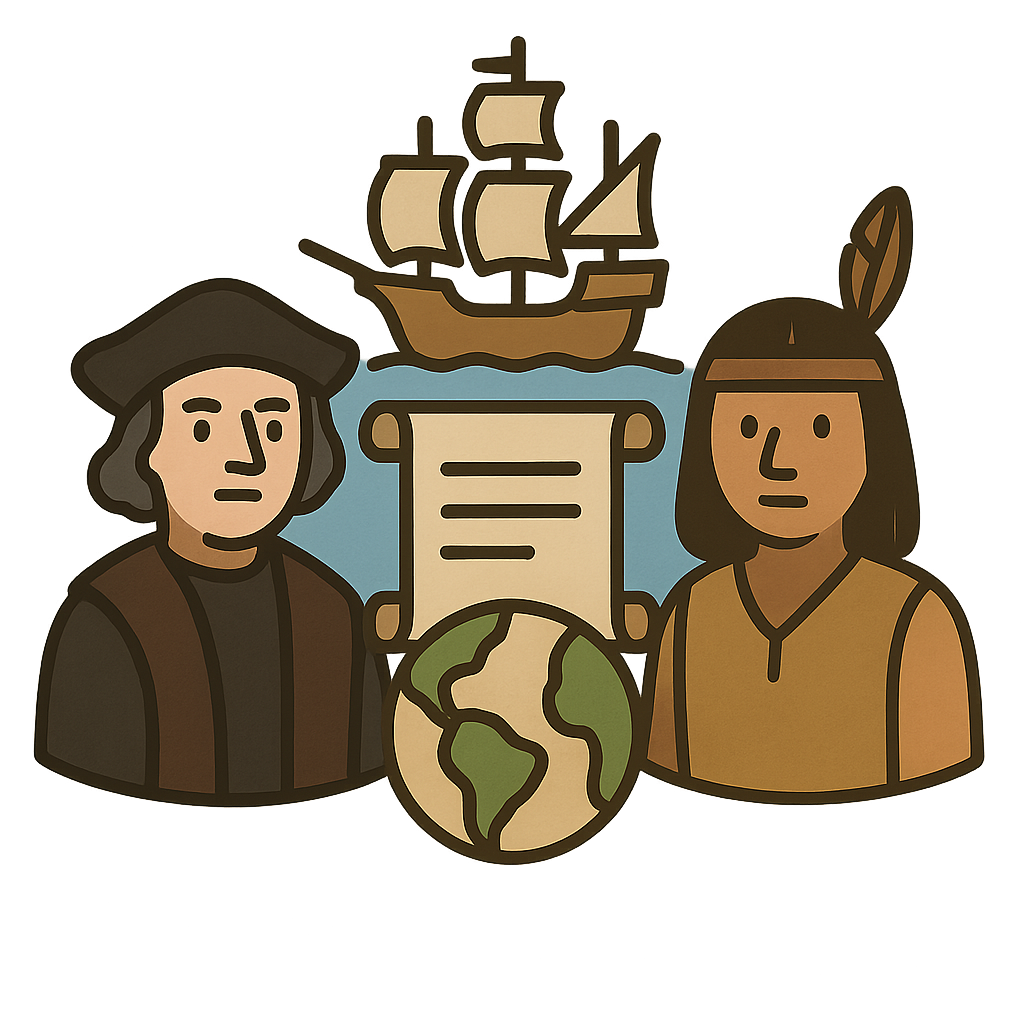
Christopher Columbus: Sailing to a New World
My name is Christopher Columbus, and ever since I was a boy in Genoa, I have loved the sea. Its vastness and mystery always called to me. For years, I had an idea that tickled my brain like a feather. Everyone knew the world was round, like a giant orange. So, I thought, if you wanted to get to the rich lands of the East, like India and China, why not sail west. You would just circle the globe and pop up on the other side. It seemed so simple to me. But when I told this to other sailors and wise men, they laughed. 'The ocean is too big,' they'd say. 'You'll run out of food and water before you ever see land.' They called me a foolish dreamer. Their words were like strong winds trying to push my ship off course, but my dream was my anchor, holding me steady. I spent years trying to find someone who would believe in me. I traveled all over Europe, carrying my maps and my charts, showing them to anyone who would listen. Finally, I came to Spain and spoke with the powerful Queen Isabella and King Ferdinand. It took a long time to convince them. I explained how my voyage could bring them great riches and new lands for their kingdom. I showed them my calculations, my studies of the stars, and the maps I had collected. After many meetings, they saw the spark of possibility in my eyes. They agreed to give me three ships and a crew. My heart soared like a seagull on the wind. My impossible dream was finally setting sail.
On the morning of August 3rd, 1492, my three small ships, the Niña, the Pinta, and my flagship, the Santa María, left the port of Palos, Spain. The docks were crowded with people waving goodbye. A mix of excitement and fear churned in my stomach like the waves of the sea. As the shore faded into a thin line and then disappeared completely, a great silence fell over the crew. We were truly alone, with nothing but an endless blue ocean ahead of us. The days turned into weeks. The sun beat down on our wooden decks, and the wind filled our sails, pushing us farther and farther into the unknown. At first, the men were hopeful, but as time went on, their hope began to fray like an old rope. They would stare at the horizon, searching for any sign of land, but there was only water. 'We are lost,' some whispered. 'We should turn back before it’s too late.' The sea itself tested us. Sometimes it was as calm as a pond, and other times it raged with storms that tossed our little ships around like toys. I had to be strong for them. Every night, I would stand on the deck of the Santa María and look at the stars. They were my map, my faithful guides in the dark emptiness. I would tell the men stories of the treasures and spices we would find. I pointed out birds flying overhead and seaweed floating in the water, telling them these were signs that land was near, even when my own heart felt a flicker of doubt. We saw strange lights in the sky and felt the pull of unusual currents. The journey was longer than I had predicted, and every day was a battle to keep faith alive. Then, after more than two months at sea, it happened. It was late at night on October 12th, 1492. A sailor high up on the mast of the Pinta, a man named Rodrigo de Triana, squinted into the darkness. Suddenly, his voice rang out across the water, a sound I will never forget: '¡Tierra! ¡Tierra!'. Land. Land. Everyone rushed to the side of the ships. In the moonlight, we could see a dark shape on the horizon. It was real. A cheer erupted from the sailors, a sound of pure joy and relief that echoed across the quiet ocean. We had done it. We had crossed the great unknown.
The next morning, we rowed ashore to a beautiful island covered in lush green trees I had never seen before. The sand was white and soft beneath my boots. As we explored, people came out from the trees to greet us. They were the Taíno people. They had kind faces and were curious about us, our strange clothes, and our large ships. We could not speak each other’s languages, but a smile is understood everywhere. We used our hands to communicate, pointing and gesturing to show we came in peace. They were generous and welcoming. We offered them simple gifts we had brought from Spain—shiny glass beads, small brass bells that tinkled merrily, and red caps. Their eyes lit up with delight. In return, they gave us gifts from their home: colorful parrots that chattered on our shoulders, balls of soft cotton, and delicious fruits. We spent many weeks exploring this new land, which I believed was the coast of Asia. It was a world so different from my own, full of new sights, sounds, and wonders. When it was time to return to Spain, we sailed home as heroes. The news of our discovery spread like wildfire across Europe. We had not found a new way to India, but something even more incredible: a world that Europeans never knew existed. My journey had connected two parts of the world that had been separated for thousands of years. Looking back, I see that our voyage was more than just a search for gold and spices. It was a journey of courage, of daring to believe in an idea that everyone else called impossible. It taught me that sometimes, to find something new, you have to be brave enough to sail off the edge of the map.
Activities
Take a Quiz
Test what you learned with a fun quiz!
Get creative with colors!
Print a coloring book page of this topic.




 Free for Educators