

 English

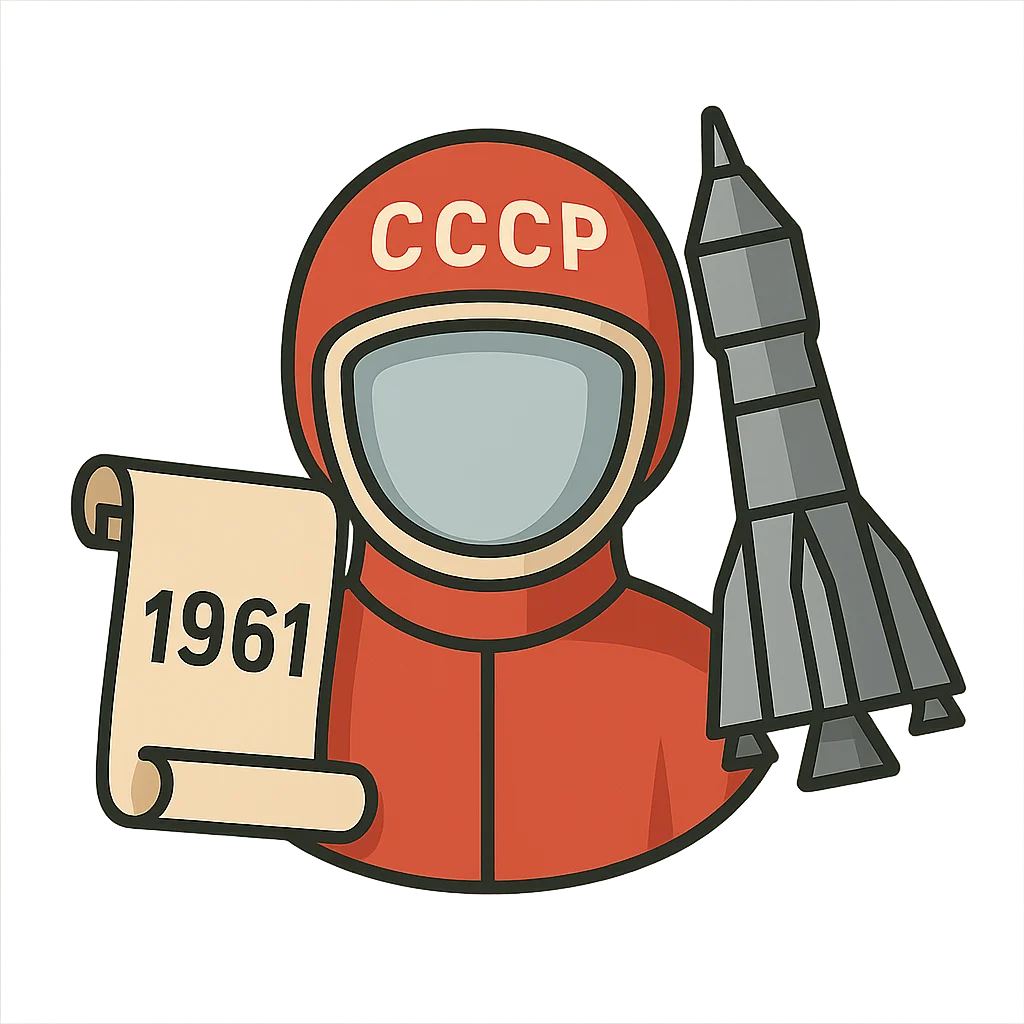
My Flight to the Stars
My name is Yuri Gagarin, and I was the first person to ever see our planet from space. But before I was a cosmonaut, I was just a boy with a dream, born in a small village called Klushino on March 9th, 1934. My childhood was shaped by the great struggles of World War II, but one memory from that time set the course for my entire life. I was playing outside when two Soviet fighter planes were forced to land in a field right near my home. I had never seen anything so powerful or magnificent. The pilots, who seemed like heroes from another world, let me sit in the cockpit. In that moment, surrounded by dials and levers, a powerful idea took root in my heart: I wanted to fly. I wanted to touch the sky.
That dream followed me everywhere. It pushed me to study hard at technical school, where I learned about tractors and machines, but always kept my eyes on the clouds. I joined a flying club and finally earned my wings, becoming a military pilot. Flying a jet was thrilling, but I soon heard whispers of a new, secret program. Our country was looking for pilots to fly something much higher than a jet, something that could go beyond the sky itself. In 1960, I was one of twenty men selected for the first cosmonaut corps. The training was the hardest thing I had ever done. We were spun in centrifuges to test our bodies against extreme forces, spent hours in isolation chambers to test our minds, and practiced every possible emergency. We were all competitors, but we were also comrades, bound by a shared, impossible dream: to be the first human among the stars.
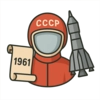
On the morning of April 12th, 1961, the world felt still and full of possibility. I woke up knowing this was the day. After a final check-up, my backup, Gherman Titov, and I put on our bulky orange spacesuits. On the bus ride to the launchpad, the mood was quiet but electric with anticipation. I waved to the small crowd, feeling the weight of my nation's hopes on my shoulders. At the base of the massive Vostok rocket, I had a final word with our Chief Designer, Sergei Korolev. He was a brilliant man, a visionary who had guided our entire program. He looked at me with an intensity I will never forget and wished me a good flight. His confidence gave me strength. Climbing the gantry and squeezing into the tiny Vostok 1 capsule, which I nicknamed my 'little ball,' I felt surprisingly calm. I was where I was meant to be. The hatch was sealed, plunging me into a world of humming electronics and the scent of metal and oxygen. Through my small porthole, I could see a sliver of the Kazakh steppe. I listened to the mission controllers through my headset, their voices a steady presence as the final countdown began. Ten. Nine. Eight. My heart was pounding, a drumbeat for history. Three. Two. One. Ignition.
An immense roar erupted beneath me, a sound so powerful it felt like the world was tearing itself apart. The rocket shuddered and groaned as it fought against gravity. I was pressed deep into my seat by a force so intense I could barely lift my arm. This was the G-force we had trained for, but nothing truly prepares you for it. As the rocket climbed higher and higher, I shouted into my radio, 'Poyekhali.'. It means 'Let's go.'. It was a simple phrase, but it captured all the excitement, all the hope, all the years of hard work that had brought us to this single moment. Suddenly, the crushing pressure vanished. The roaring stopped, replaced by a profound silence. I felt a strange lightness, and I realized my pencil was floating gently in front of my face. I was weightless. I was in space. I drifted toward the porthole and looked out. What I saw took my breath away. There it was. Earth. It wasn't a map or a globe; it was alive. A perfect, beautiful, blue marble hanging in the blackest velvet I had ever seen. I saw the gentle curve of the planet, the swirl of clouds over the deep blue oceans, and the continents without any borders or lines drawn on them. We were all just people on one single, fragile planet. I reported back to the ground, 'The Earth is blue. How wonderful. It is amazing.'. For 108 minutes, I orbited our world, a silent, lonely, and privileged witness to a sight no human had ever seen before.
My journey around the world was over all too quickly. The time came to return home. Re-entry was a fiery, violent affair. The capsule shook and vibrated intensely as it slammed back into the atmosphere. Through the porthole, I could see flames licking at the heat shield, a terrifying and beautiful sight. The engineering held. The parachutes deployed with a jolt, and after ejecting from the capsule as planned, I drifted down under my own parachute toward the ground. I didn't land where the recovery crews expected. Instead, I touched down in a freshly plowed field near a small village. The first people to see the first man back from space were a farmer named Anna Takhtarova and her young granddaughter, Rita. They stared at me, this strange figure in a bright orange suit and a large white helmet. I must have looked like a creature from another planet. Anna cautiously asked, 'Have you come from outer space?'. I smiled and shouted back, 'Yes, but don't be alarmed. I am a Soviet citizen.'.
News of my flight spread across the globe like wildfire. I had become a hero, but the real victory belonged to every scientist, engineer, and worker who made the flight possible. My 108-minute journey had opened a new door for humanity. It showed us that there were no limits to what we could achieve when we worked together and dared to dream. We had taken our first small step into the vast universe, and it filled people not with fear, but with wonder and hope. My journey started with a boy's dream in a small village, and it ended with a message to all the children of Earth: never stop looking up. Reach for the stars, work hard for your dreams, and you too can achieve the impossible.
Activities
Take a Quiz
Test what you learned with a fun quiz!
Get creative with colors!
Print a coloring book page of this topic.










 Free for Educators