English
 Continue with Google
 Continue with Apple

John Smith and the Jamestown Colony
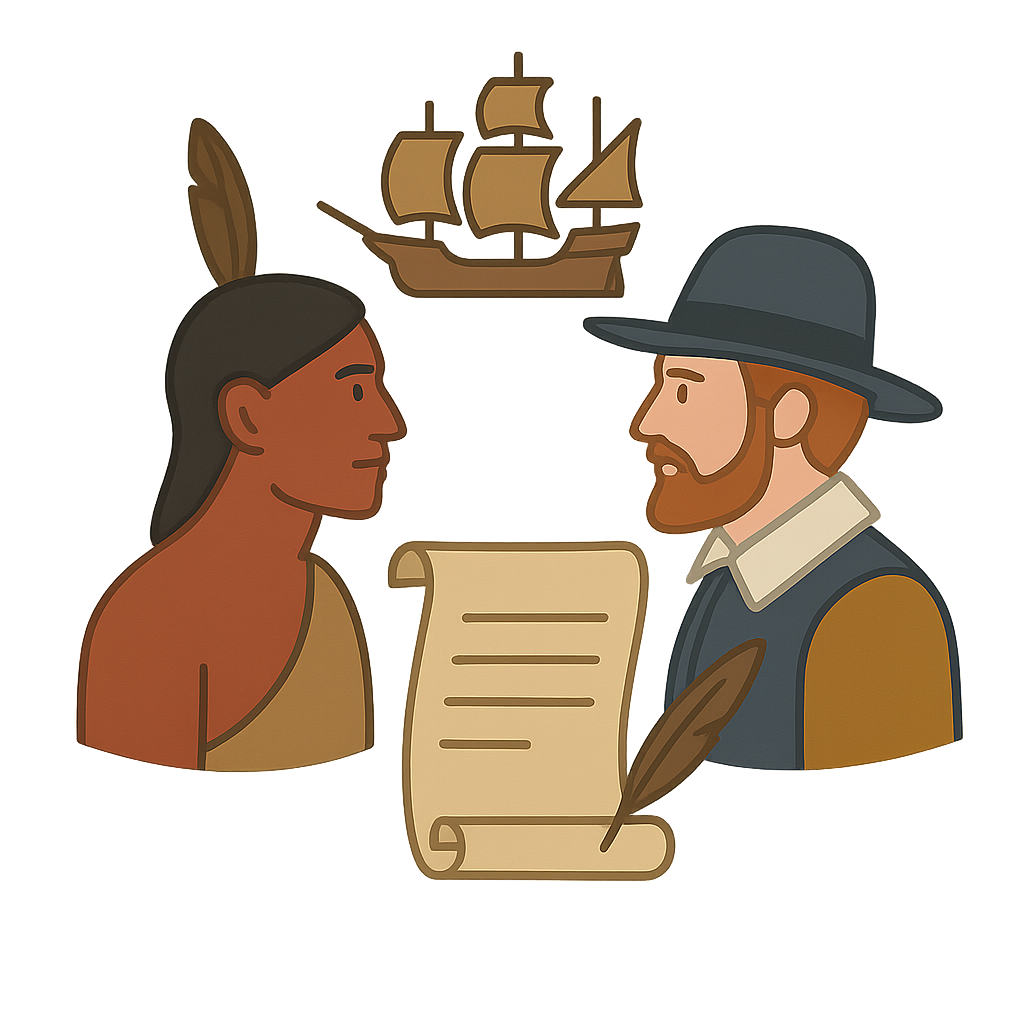
My name is Captain John Smith, and my life has been one long adventure. Before I ever saw the shores of America, I had been a soldier, a sailor, and even a captive. But the greatest adventure of all began on a chilly London morning, December 20th, 1606. I stood on the deck of a ship, one of three—the Susan Constant, the Godspeed, and the Discovery—bound for a land most of us had only heard of in whispers and tales. We were part of the Virginia Company, a group of investors and dreamers who believed a New World across the Atlantic held untold riches. Some of the gentlemen on board with me spoke of mountains of gold and a quick passage to the Orient. They imagined a life of ease and glory. I knew better. I was a practical man, a farmer's son who had learned that nothing worthwhile is ever gained without sweat and toil. As our small wooden ships creaked and groaned across the vast, unforgiving ocean, I looked at the faces around me—the hopeful, the fearful, the ambitious—and wondered what future we would build together. For four long months, the sea was our world. We were a tiny, floating village filled with the enormous hopes of England, sailing toward a destiny none of us could truly predict.
We finally sighted land in late April of 1607, a coastline of breathtaking green that seemed to promise a paradise. On May 14th, we chose a spot on a peninsula along a river we named the James, in honor of our king. We called our new home Jamestown. At first, its beauty was all we could see. But paradise soon revealed its hidden dangers. The land was swampy, a breeding ground for mosquitos that carried deadly fevers. The river water near our settlement was brackish—a mix of salt and fresh water—and unsafe to drink. Sickness spread like wildfire through our camp. Our biggest problem, however, wasn't the land; it was the men. Many of the 'gentlemen' who had come on the voyage considered physical labor beneath them. They spent their days digging for gold that didn't exist while our food supplies dwindled and our defenses remained unbuilt. I watched as men grew weak from hunger and disease, and I knew that our glorious expedition was on the verge of complete failure. I had been appointed to the colony's council, and I decided to use my authority. I declared a simple, unbendable rule: 'He that will not work shall not eat.' This shocked the gentlemen, but it saved us. I organized the colonists into work groups. We chopped down trees to build a strong, triangular fort. We dug a well to find fresh water. We planted gardens and learned to fish. It was grueling, relentless work, but for the first time since we arrived, we were not just surviving; we were building a home.
Our survival, however, did not depend on our efforts alone. This land was already home to a powerful nation of native peoples, the Powhatan Confederacy, ruled by the shrewd and mighty Chief Powhatan. Our first encounters were tense and uncertain. We were strange invaders in their world, and we needed their help to survive, especially as the weather grew colder. In December of 1607, while exploring a river for a new source of corn, I was ambushed and captured by a Powhatan hunting party. I was taken to their capital, Werowocomoco, and brought before Chief Powhatan himself. He sat surrounded by his warriors, his expression impossible to read. I was a prisoner, and I fully expected my life to end right there. They forced my head down onto two large stones and raised their clubs to strike. In that terrifying moment, a young girl darted from the crowd. It was Pocahontas, the chief's beloved daughter, perhaps only eleven or twelve years old. She threw herself over me, placing her head on mine to shield me from the blows. Her incredible act of bravery stopped the execution. Chief Powhatan spared my life, and this single event opened a door between our two worlds. A fragile peace was formed. Pocahontas and her people began to visit Jamestown, bringing us life-saving gifts of food. Their corn and knowledge of the land got us through that first brutal winter. Without her courage, and the trade that followed, our colony would have surely perished.
My time in Virginia came to an unexpected end. In 1609, I suffered a severe injury from a gunpowder explosion and had to return to England for medical care. I left Jamestown, the rugged home I had fought so hard to build, never to see it again. From across the ocean, I heard tales of the terrible 'Starving Time' that followed my departure, a period of immense suffering for the colonists. Yet, they endured. Jamestown survived. It held on to become the first permanent English settlement in North America, a tiny seed from which a great nation would one day grow. Looking back, I feel a deep pride in what we accomplished against all odds. We were not perfect, but we were pioneers. My story is a reminder that building something new and lasting is never easy. It requires courage, hard work, and the willingness to lead when others falter. The greatest treasures are not the gold you can dig from the ground, but the communities you can build with your own two hands.
Reading Comprehension Questions
Click to see answer