

 English

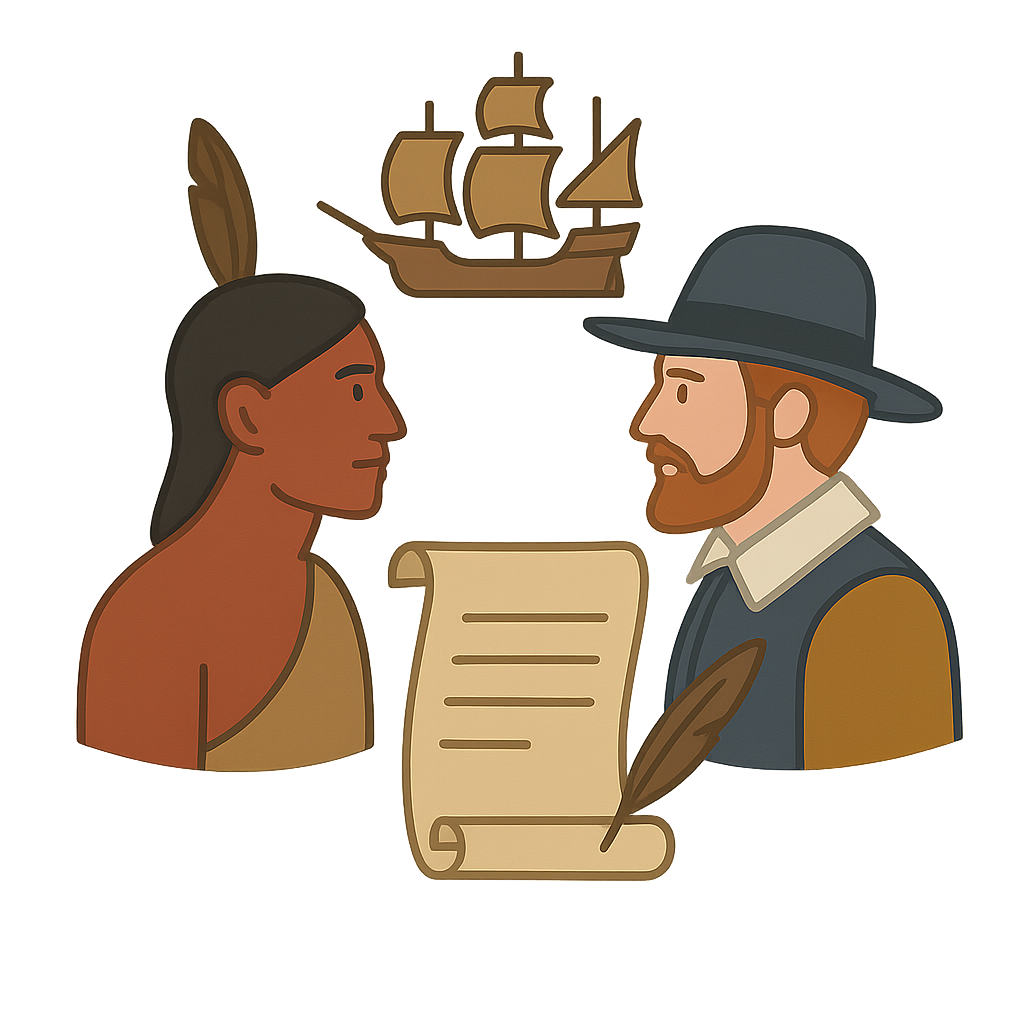
Captain John Smith: Building a New World
Hello there. My name is Captain John Smith, and I want to tell you a story about a great adventure. It all began back in England, a place that felt too old and too crowded for a man like me who dreamed of exploration. Our king, King James I, gave a group of us permission to sail across the vast Atlantic Ocean to build a new colony in a land called Virginia. We were looking for gold, a new route to Asia, and a chance to build a better life. In December of 1606, we said our goodbyes and climbed aboard three small, creaky ships: the Susan Constant, the Godspeed, and the Discovery. The journey was much harder than I ever imagined. For months, we were tossed about by stormy seas, and our little ships felt like corks bobbing in a giant bathtub. Below deck, it was dark, cramped, and smelled of salty air and damp wood. We ate hard biscuits and salted meat, and we dreamed of solid ground. After four long months, a sailor high up on the mast shouted the words we had all been waiting for: “Land ho.”. I rushed to the deck. There, on the horizon, was a beautiful sight. It was the coast of Virginia, a brilliant green line of endless trees stretching as far as my eyes could see. It was April of 1607, and our new life was about to begin.
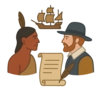
After exploring the coastline, we chose a spot along a river, and on May 14th, 1607, we began to build our new home. We named it Jamestown, in honor of our king. But our new home was not as friendly as it first appeared. The land was swampy, which meant there were swarms of biting mosquitoes that carried strange illnesses. Many of our men grew sick. Worse still, many of the gentlemen who came with us had never done a day of hard labor in their lives. They wanted to search for gold, not chop wood or plant corn. Our food supplies dwindled, and I knew I had to do something. So, I made a rule that became famous: “He who will not work shall not eat.”. It was a tough rule, but it was fair. If we were to survive, everyone had to help. It was during these difficult times that we met the people who had lived in this land for centuries, the Powhatan people. Their leader was the powerful Chief Powhatan. At first, we were unsure of each other, but I soon met his young daughter, Pocahontas. She was full of curiosity and had a brave spirit. She wasn't afraid of us and would often visit our fort, bringing food and showing us how to plant native crops like corn and beans. She became a bridge between our two worlds, and her kindness helped us through our most difficult days.
Our little colony clung to life by a thread. We faced hunger, sickness, and fear. After I was injured in a gunpowder accident, I had to sail back to England in 1609 to heal. The winter that followed my departure was the worst of all, a period the survivors called the “Starving Time.”. But because of the hard work we had started and the knowledge we had gained from our Powhatan neighbors, the colony did not give up. It held on. Looking back, I see that our small, struggling settlement was more important than any of us could have ever known. We didn't find mountains of gold, but we found something more valuable: a foothold in a new world. Jamestown became the very first permanent English settlement in North America. It was like a tiny seed that we planted in the wild Virginia soil. And from that one little seed, a great nation, the United States of America, would one day grow. My story shows that with courage, hard work, and a little help from new friends, even the most difficult beginnings can lead to something grand.
Activities
Take a Quiz
Test what you learned with a fun quiz!
Get creative with colors!
Print a coloring book page of this topic.










 Free for Educators