

 English

My Window to the Universe
My name is Nancy Grace Roman, and I have loved the stars for as long as I can remember. When I was a little girl in Nashville, Tennessee, my mother would take me outside on clear nights and show me the constellations. She would point out the glowing band of the Milky Way and tell me the stories behind the patterns in the sky. I was completely captivated. When I was 11 years old, my friends and I started our own little astronomy club. We would meet once a week to learn about the stars and draw our own charts of the constellations. My dream was to become an astronomer, even though very few women did that kind of work back then. As I grew up and became a scientist at NASA, I never lost that sense of wonder. But I also knew we had a big problem. Trying to see distant stars and galaxies from Earth is like trying to read a book from the bottom of a swimming pool. The water would make the words shimmer and blur. Our planet’s atmosphere, the air we breathe, does the same thing to starlight. It’s a beautiful shield for our planet, but for an astronomer, it’s a blurry, wobbly window that distorts our view of the universe. I knew that to truly see the cosmos clearly, we had to get above that window. We needed to put a telescope in space. It was a huge, expensive, and daring idea, and I spent years explaining to people why it was so important. I championed the project so much that some people started calling me the “Mother of Hubble.”
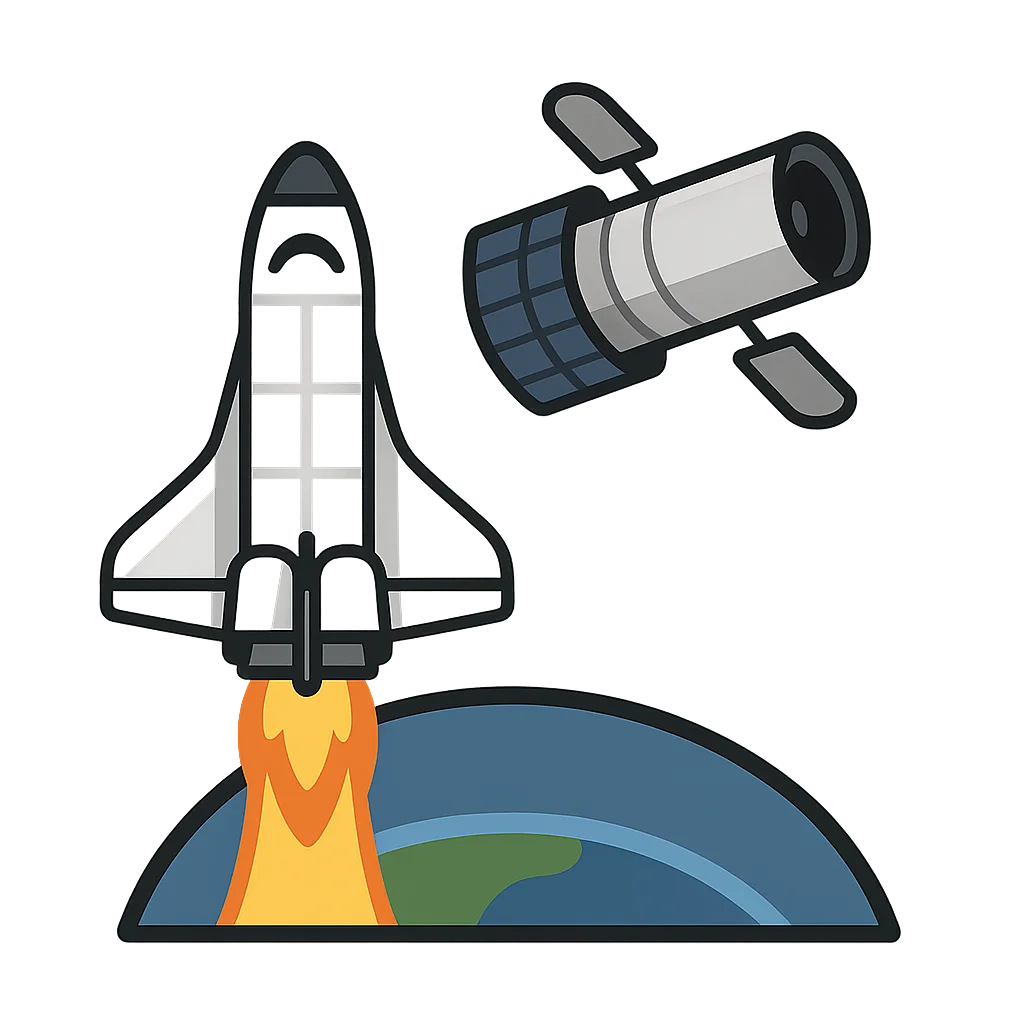
Building the Hubble Space Telescope was one of the most complicated projects humanity had ever attempted. It wasn't like building a telescope for your backyard. This one had to be strong enough to survive the bone-shaking rumble of a rocket launch and then work perfectly in the freezing cold and searing heat of space, all while orbiting Earth at over 17,000 miles per hour. It required a massive team of thousands of brilliant engineers, scientists, and technicians from all over the world. It was a global effort, a symphony of science and engineering. The journey was long and full of challenges. We started designing it in the 1970s, and there were many times when we thought it might never happen. Then, on January 28th, 1986, a terrible tragedy struck. The Space Shuttle Challenger broke apart just after its launch. It was a heartbreaking day for NASA and the entire world. Our hearts ached for the brave astronauts we lost. For our project, it meant all shuttle flights were stopped for several years. Our beautiful telescope, which was almost ready, had to be carefully packed away in a special clean room. It was a time of great sadness and uncertainty, but we never gave up on the dream. We knew we had to honor the memory of the Challenger crew by making spaceflight safer and continuing our mission to explore. Finally, after years of waiting, the new launch day arrived. On April 24th, 1990, the Space Shuttle Discovery stood ready, with our precious telescope nestled safely in its cargo bay. My heart was pounding with a mix of fear and exhilarating hope.
The next day, April 25th, we all watched in the control room as the shuttle’s giant robotic arm gently lifted Hubble from the cargo bay and released it into orbit. It was a breathtaking sight, a shimmering silver giant floating against the profound blackness of space. We all cheered and hugged. Our window to the universe was finally open. But our celebration was short-lived. When the first images came back from the telescope, our hearts sank. They were blurry. All those years of work, all that hope, and the pictures were fuzzy and out of focus. We were devastated. We soon discovered the problem: the telescope's main mirror, its giant eye, had been polished to the wrong shape. The flaw was microscopic, smaller than the width of a single human hair, but in the precise world of astronomy, it was a catastrophe. Some people in the news called our telescope a failure. But we refused to give up. The best minds at NASA came together and designed an incredible solution: a set of corrective lenses, just like a pair of eyeglasses for the telescope. We called the instrument COSTAR. The only problem was figuring out how to put glasses on a telescope that was flying 340 miles above the Earth. In December of 1993, the crew of the Space Shuttle Endeavour flew a daring mission to fix our vision. For five days, astronauts performed some of the most difficult spacewalks ever attempted. It was like performing delicate surgery while wearing bulky spacesuits, with the whole world watching from below. It was a risky and incredible mission of repair.
When the astronauts returned safely to Earth, we anxiously turned Hubble back on. We held our breath as the first new image was transmitted down to the control center. And then, it appeared on the screen. It was perfect. It was sharp, brilliant, and crystal clear. A collective gasp of relief and joy filled the room. There were tears in many eyes, including my own. Our blurry window was now the sharpest eye humanity had ever turned toward the heavens. Since that day, Hubble has shown us wonders we never dared to imagine. It has taken breathtaking pictures of stellar nurseries, where baby stars are born from swirling clouds of gas and dust. It has peered deep into space and time, showing us galaxies that are billions of light-years away. It helped us discover that the universe is expanding faster and faster. I passed away in 2018, but I left this world knowing that our dream had come true. The Hubble telescope is more than just a machine. It is a testament to human curiosity, perseverance, and our ability to fix our mistakes. It shows what we can achieve when we work together and refuse to let setbacks defeat us. So, the next time you look up at the night sky, remember our story. Keep asking questions, keep dreaming, and never stop wondering what lies beyond.
Activities
Take a Quiz
Test what you learned with a fun quiz!
Get creative with colors!
Print a coloring book page of this topic.









 Free for Educators