

 English

A New Eye on the Universe
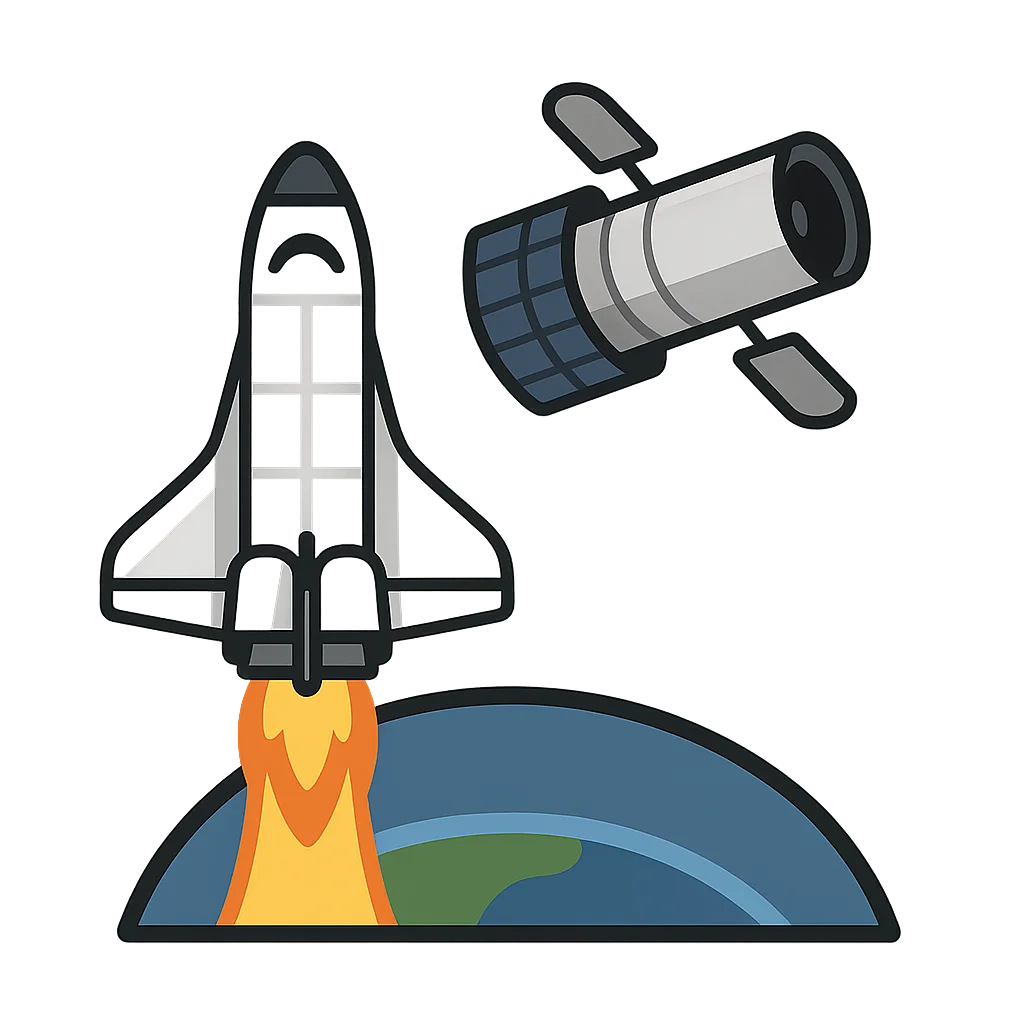
Hello there. My name is Kathryn D. Sullivan, but you can call me Kathy. I've always been a curious person, an explorer at heart, and that curiosity led me to become an astronaut for NASA. For years, scientists had a magnificent dream. Imagine trying to see a tiny fish at the bottom of a wavy, rippling pond. It’s hard, right? That’s what it’s like for astronomers looking at stars through Earth’s atmosphere. Our air, which gives us life, also makes the stars twinkle and blurs our view of the universe. The dream was to put a giant telescope up in space, above all that air, where it could see everything perfectly clearly. This special telescope was named after a brilliant astronomer, Edwin Hubble. When I was chosen to be on the crew of the Space Shuttle Discovery for mission STS-31, the mission to launch Hubble, my heart felt like it was going to soar right out of my chest. For years, my crewmates and I trained for this moment. We spent thousands of hours in simulators, practicing every single step until it was perfect. We had to learn how to work together as a team, because in space, teamwork is everything.
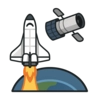
Finally, the big day arrived. On April 24th, 1990, my crew and I were strapped into our seats aboard the Space Shuttle Discovery. I could feel the whole shuttle rumbling and shaking around me. Then, with a mighty roar that I felt deep in my bones, the rockets ignited and pushed us toward the sky. The force was incredible, pressing me back into my seat as we climbed faster and faster, leaving the ground far behind. Soon, the rumbling stopped, the engines cut off, and we were floating. We were in space. I unbuckled my seatbelt and drifted over to the window. Below us, our home, Planet Earth, was a stunning swirl of blue oceans, white clouds, and green and brown land. It was the most beautiful sight I had ever seen. But we had a very important job to do. The next day, on April 25th, it was time to give the universe its new eye. In the shuttle’s huge cargo bay sat the Hubble Space Telescope, which was as big as a school bus. Our mission commander, Loren Shriver, and pilot, Charles Bolden, carefully maneuvered the shuttle into the perfect position. My crewmate Bruce McCandless and I got to work controlling the shuttle’s long robotic arm. It was like a delicate dance in zero gravity. Very slowly and carefully, we lifted the giant telescope out of the bay. Everyone was focused. We had to be so gentle. We held our breath as we released Hubble into the vast emptiness of space. Then, we watched as its giant solar panels unfolded like shiny, golden wings, ready to power its journey of discovery.
Watching Hubble float away on its own was a moment I’ll never forget. It looked small and lonely against the blackness of space, but I knew it was about to do something incredible for all of humanity. It was our new window to the stars. Now, things weren’t perfect right away. When Hubble started sending back its first pictures, scientists realized its main mirror had a tiny flaw, making its vision a little blurry, almost as if it needed a pair of glasses. But we don't give up that easily in the space program. A few years later, another brave crew of astronauts flew a mission to fix it, giving Hubble the sharp vision we had all dreamed of. Looking back, I am so proud of what my team and I accomplished. Hubble has shown us breathtaking pictures of colorful galaxies being born, sparkling star nurseries, and mysteries of the universe we never knew existed. It taught me that with a big dream, a lot of hard work, and a team you can trust, you can do anything—even give humanity a brand new way to see the cosmos.
Activities
Take a Quiz
Test what you learned with a fun quiz!
Get creative with colors!
Print a coloring book page of this topic.






 Free for Educators